
Independent 'Freedom Movement' Universities - how authentic are they?

I've researched and published extensively about how and why academia is so broken. In my presentation recently to the Omniwar 4 Symposium, I also touched on the emerging 'solutions' to this problem. To set some context, over the last 18 months, other authors and I discovered how new, independent, alternative media, claiming to be part of the 'freedom movement' are not quite what they seem. Many platforms, it turns out, are funded by the same Globalists' agendas they purport to be fighting against. Perhaps my most relevant article about this topic is the financial conflicts of interest in my case study of Prof Angus Dalgleish. So can we expect anything different for education?
Two questions I want to address in this article are:
Is it credible that academic dissidents (like me) have been ignored by the Globalists - that we don't need to be provided with any [fake] saviours or 'groups'?
How realistic is it for professors to retain their roles deep inside the machinery of academic totalitarianism, whilst simultaneously 'fighting for freedom'?
If you agree that the 'changing from within' is feasible, either as an employee or other role, how deeply embedded within that machinery, with its toxic forces that compromise values and ethics, can an individual be, before their authenticity is questioned? Please post your thoughts about that dilemma.
Are some of the 'freedom movement's so-called 'intellectuals' and 'educationalists', those 'big names' (with flamboyant personalities and/or big bow-ties for example) in 'dissident academia', no more than cardboard cut-outs; plastic pawns in a game that has captured so many seeking genuine truth? Are bad actors creating attractive seemingly intellectually-challenging ingroups? What is the truth behind these new academic 'tribes', their affiliated (IP-capturing?) 'publishing houses' with growing memberships of [gagged] academics-in-exile ?

Let me start this article by listing some of these entities which ask for donations - do they really deserve our valuable time, financial (tax-paid) dollars and support? I will delve deeper into just one of these entities today, then (with help) I will take time to look at others, over the next few weeks.
'Freedom University' Options
There are surprisingly limited possible entities for those students and academics seeking-out alternatives to the usual Higher Education (HE) research and studying options. Are these 'freedom movement' universities truly what they purport to be - centres of independent, unbiased learning for critical-thinkers? In alpha-order the four main ones that come to mind are:
- Academia Libera Mentis (Previously Nova Libertis)
- Brownstone Institute
- Hillsdale College, USA
- University of Texas at Houston (UTX)
So for today, let's start at the top:
Academia Libera Mentis
Academia Libera Mentis (ALM) - a physical chateau in Belgium - is marketed as a 'free-thinking studying oasis for the 'elite of the elite'. Originally called Nova Academia, ALM was founded in 2023 by Professor Paul Frijters, his wife, ex-BigPharma consultant Erika Turkstra PhD and others listed here. There are no formal qualifications on offer, no national framework/curriculum and no academic library. ALM's Academic Advisory Board consists of Prof Gigi Foster, James Corbett and Jeffery Tucker (coincidentally, also Director of the Brownstone Inst. another problematic entity I'll to return to another day). To keep this article on point let's keep the above two research questions front of mind, so (for now) I'll focus on these two ALM protagonist professors - Paul Frijters and Gigi Foster. Why? Because...
Prof Paul Frijters says of their ALM project:
Why should we be trusted? We should not, at least not immediately. Look us up, check us out, see if we merit trust. I can tell you that I and my wife Dr Erika Turkstra put our life-savings towards setting up this alternative, and I can tell you that I am a good guy with a good academic record who did not need to go into this direction, but I know that I wouldn’t trust what I read here. [source] (My emphasis)
Well, at their invitation, I did 'check them out' . And what I found out was problematic and confusing because... well, you'll understand in a moment...
Who is Prof Paul Frijters?
Paul Frijters, originally from The Netherlands is [still] a current Emeritus Professor of Wellbeing Economics at the London School of Economics (LSE) . His Dept of Social Policy is arguably seen as the 'hub' connecting 'Nudge Units' (including MINDSPACE authors) in the LSE disciplines of economics and psychology (example). One example of this in action is a topic I've written about before, Covert Facial Recognition: is it harming our eyes? a specialism included in this PR video from LSE's Masters in Behavioural Science (4 mins):
As expected for a senior LSE academic, Prof Frijters advises the UK Government. Nothing new in that. His specific expertise being cost-benefit-analyses (CBA) in ways to implement economically ‘sustainable’ ‘wellbeing policies’ at the national and regional levels. Prof Frijters' specialism is in applied micro-econometrics, including labour studies, (pseudo)measurements of ‘happiness’ (more on that in a moment), and health economics...some completely theoretical which he explicitly acknowledges in one interview as ‘flawed, but we have to start somewhere’. He is a prolific author and is frequently cited alongside prominent senior Nudge Unit staff, including the founder, Sunstein (example) (more on that below, too). This context fits with my presentation for NZDSOS about the rapid commercial expansion of international Nudge Units and their involvement in covid era policies (1 hour):
In Sept 2021 [note that date], Profs Fosters and Frijters and Baker published via the Brownstone Inst 'The Great Covid Panic: What Happened, Why, and What To Do Next' heavily promoted by all the usual Freedom Movement™ 'celebrities':
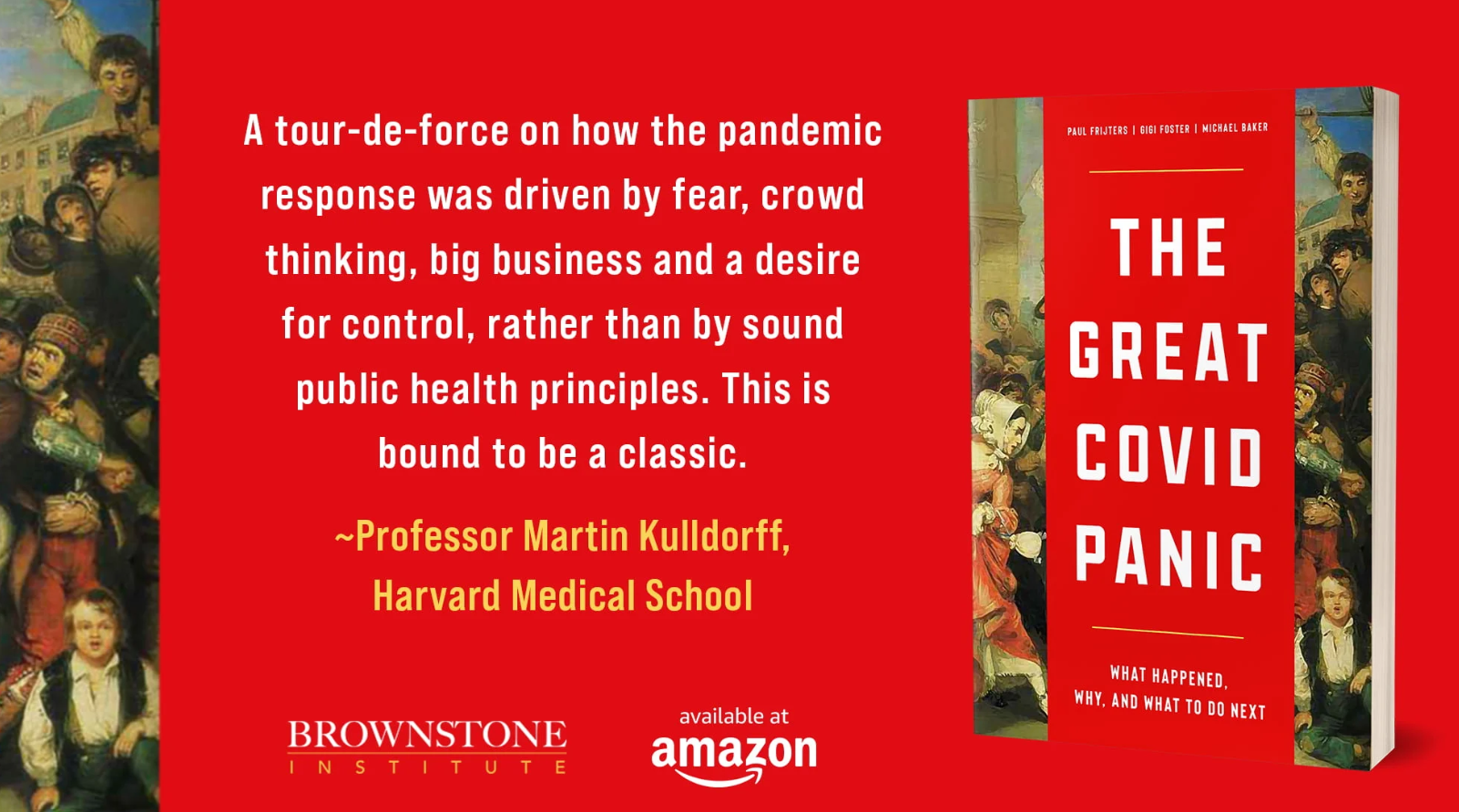
The full title is important - 'what to do next' provides 'advice' for 'the next pandemic'. The authors' overall theme in this book is that familiar Camp 2 narrative...Mistakes Were Made (btw they definitely were NOT). Government (apparently) will be held accountable. We will (all) learn important lessons, blah, blah, blah... Here is a quote from that book to give you the gist of the full (boring) content:
"The disruption to vaccination programs for measles, diphtheria, cholera, and polio, which were either cancelled or reduced in scope in some 70 countries. [...]. This depressive effect on vaccination programs for the poor is expected to lead to large loss of life in the coming years." [source] [reviews]
Alongside Prof Frijters extensive commitments he has also recently taken on a professorship at Prince Mohammad Bin Salman College in Saudi Arabia. Interestingly, especially in light of my research into 15-minute cities in China, he was the Research Director of the decades-long ‘Rural-Urban Migration in China’ (Rumici) Project sponsored by The World Bank, Australian Ministry of Foreign Aid (AusAid), Ford Foundation and other partner entities. The project tracks the lives of >20,000 individuals moving from rural areas into the [15-min] cities (Source). This surveillance data could provide useful info that feeds into the WEF-SDG Agenda 2030 plans for managed retreat and 15-min cities. Throughout the world, rural populations are constantly 'nudged' to move away from natural areas into SMART cities. And this research is closely linked to another aspect of Agenda 2030. For instance, we know we're supposed to 'own nothing and be happy' by 2030...BUT:
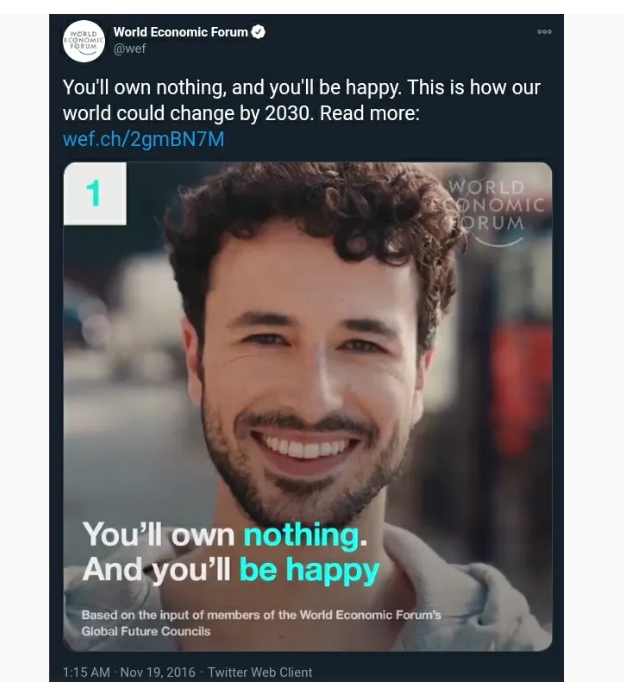
HOW is our 'happiness' going to be measured? And perhaps more importantly, what happens to us if we are labelled 'UNhappy' ?! In recent years, Prof Frijters specifically focused on developing and publishing his theoretical modelling of the 'measurement' of a quality of life years (QLY) concept that he called WELBY. What is that?
“The WELBY is a measure of individual subjective wellbeing, as judged by individuals themselves, capturing both the quality of life and the length of life. We outline its use for measuring social progress and for social welfare analyses by governments, businesses, and NGOs..” (source) (my emphasis)
and a ...
“…measure of social value and progress, which can contribute to the assessment of progress towards the wellbeing of the economy and steer towards activities with the most wellbeing per financial resources invested.” (source)
This is what that measurement formula looks like:
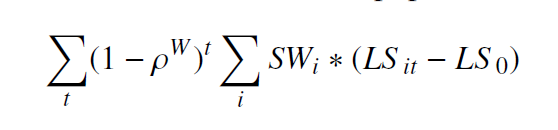
In short, the monetised value of our life (or death) is calculated according to (AI?) modelling calculations based on assumed subjective levels of our 'happiness'. Misery increases if we are unemployed, obese, homeless or lonely (you don't say?). What's new in this model is the way that our subjective happiness can be manipulated with (for example) a negative impact of 'envy', to provide a predicted cost-benefit-analysis (CBA) of how worthwhile (or worthless) our future lives might be. Biologyphenom has illustrated how important those end-of-life protocols were during the covid era propaganda, and this topic deserves further investigation.
'Happiness' as Defined by Your Caring Government
How will our future 'happiness' be measured and why? AI modelling will clearly be a convenient solution to that 'complex dilemma'. Over the years, LSE outputs from these WELBY-type projects were presented to WEF and World Governments Summits (Source). Direct applications of Frijters' theoretical model of 'happiness' can be seen in a British social welfare project called What Works Wellbeing (WWW) (archived) - a large Public Private Philanthropic Partnership (PPPP) involving LSE with multi-agency Government entities (Depts of Defence and Health), NGOs and commercial sponsors (amongst others, Behavioural Insights Team (BIT)/Nudge) assessing levels of subjective 'happiness'. One the WWW project's partners, Nesta's Mark Swift, explained 10 years ago how...
"...there has been a sizable shift in policy thinking too; one which has seen policy makers consider the ways in which the pulleys and levers of the state can be used to bring about social change." [source]
One strategy of these 'pulleys and levers' during covid was incentivizing 'lockdown volunteering' (e.g. doing a neighbour’s shopping). All the usual suspects were promoting/funding it, which involved downloading an NHS-based App that encouraged a data record of 'volunteering' by posting virtue-signalling selfies as participants supported the vulnerable in their community.

Data collected from these kinds of projects allowed LSE economists to calculate CBA modelling of the lockdown policies, for instance when assessing potential funds for...you guessed it, a Universal Basic Income. The London Assembly (Sadiq Khan’s office) expanding the live facial recognition by the Met Police – was a partner sponsor in this £multi-million research project. The project team (including Frijters) served as 'expert advisors' to UK Government in connection with this and similar projects to the Ministry of Defence and Intelligence.
Back in New Zealand, by June 2022, over six months had passed since the coercive no-jab, no-job policies across our nation. By this time, many non-complying Kiwis had already been sacked. Even if they'd managed to hang on to their jobs, many were getting desperate - teachers, doctors, nurses, corrections staff and so many others had reached the end of the line trying to use-up holiday, sickness, unpaid leave or any other option available. Support from unions and other professional bodies was absent. Homelessness was a reality for many who could no longer afford their rent or mortgage payments. This wasn't just within public sectors, it was throughout commercial industries too. Fonterra was one of many big corporates which had signed secret agreements with NZ Government before the mandates began.
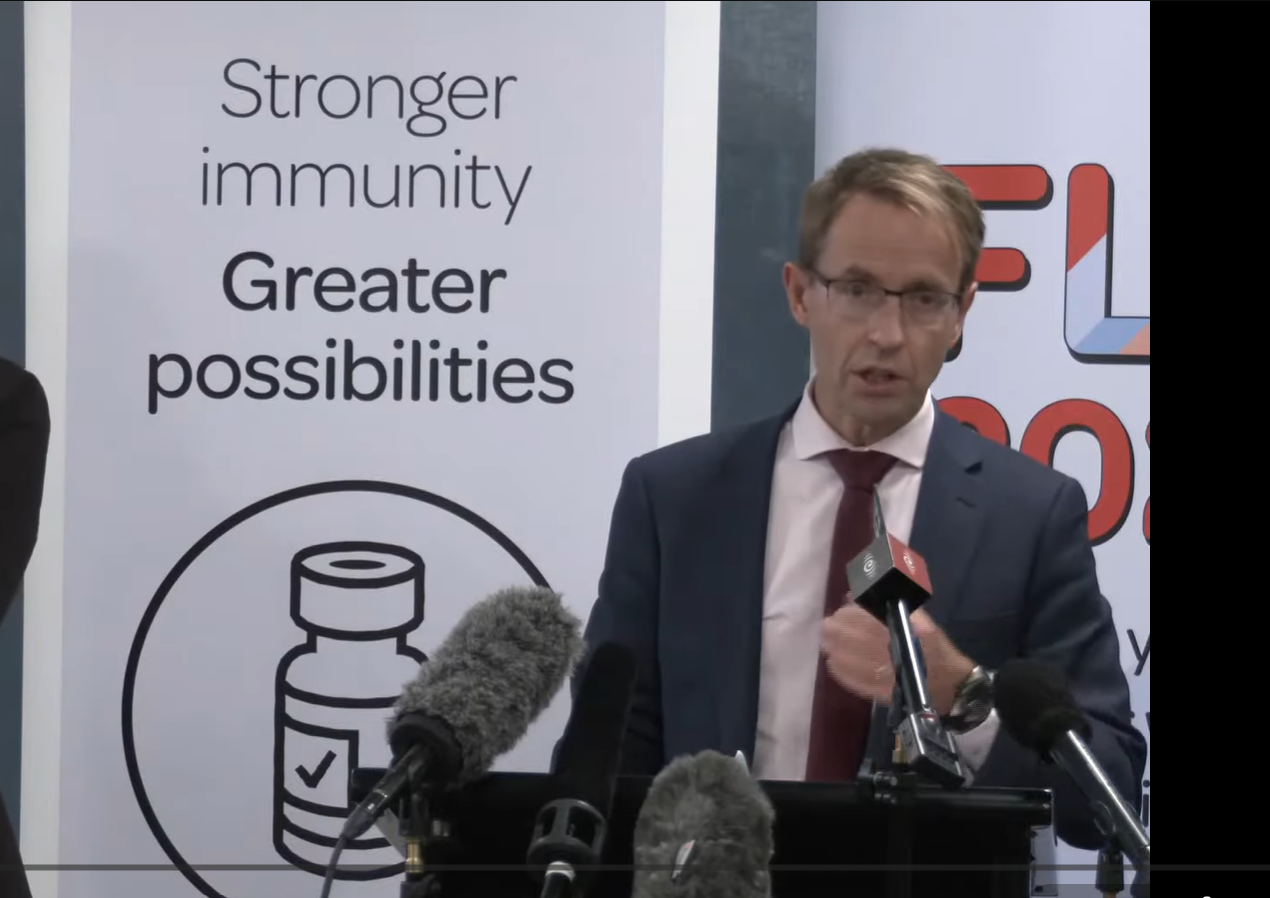
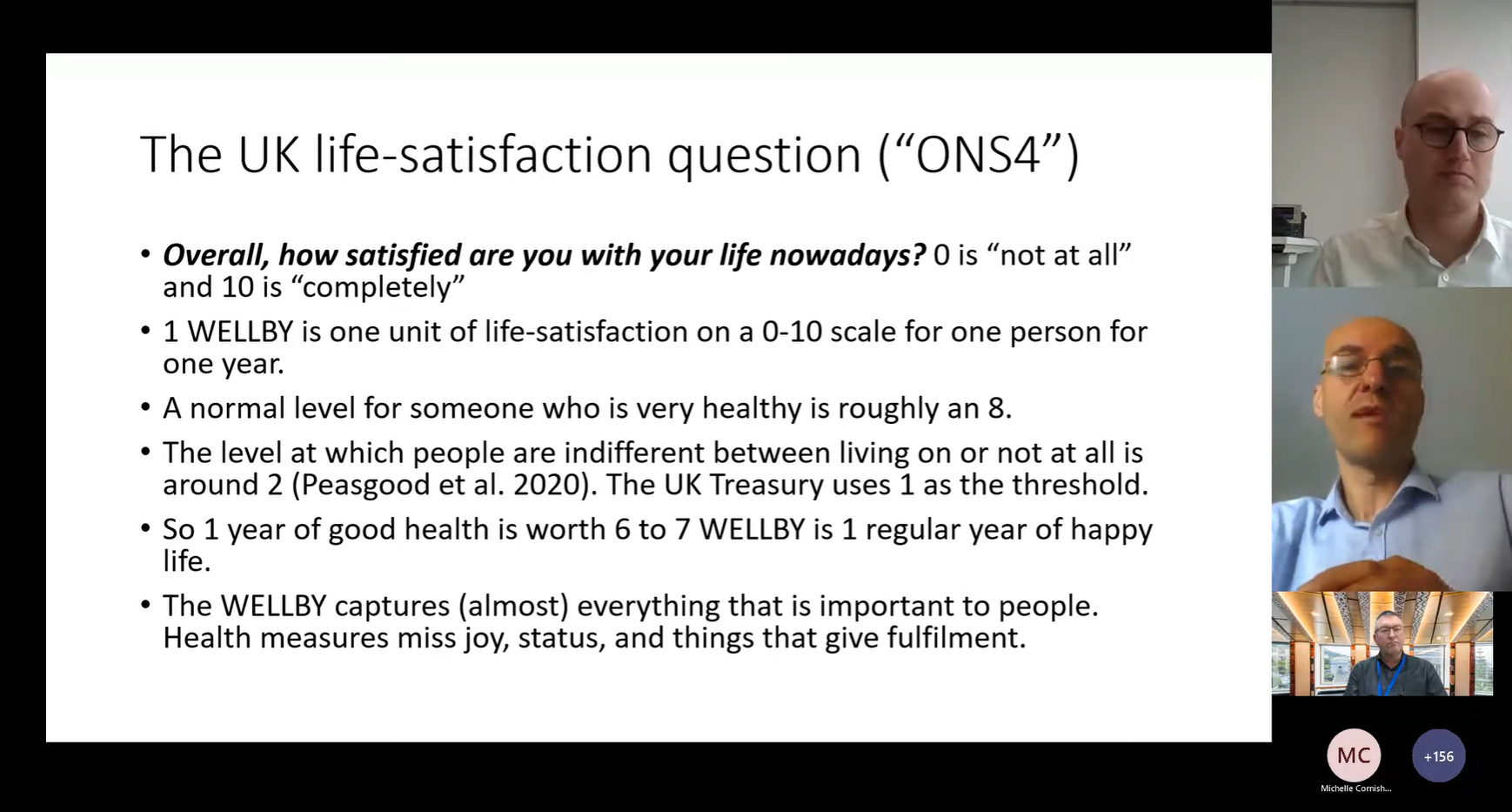
Strange then, during this unprecedented period of anxiety, grief, desperation and widespread unhappiness that on Jun 10, 2022, Prof Frijters appears as an ‘expert’ to a NZ Treasury online event where he explains to these public servants, his version of measuring citizen's 'happiness' in his Quality of Life (WELBY) methodology? There was an enormous elephant in the room during this NZ meeting - the unethical, divisive, totalitarian covid policies and trauma Kiwis were suffering. Yet Frijters apparently unaware of this context, sells his NHS-partnered policy project as a successful 'cost saving' opportunity:
Let's be generous and give these academics the benefit of the doubt - everyone is on their own journey of awakening. Frijters, Foster and Baker's covid book was published very early on in the covid era (2021), and maybe later work evidenced a deeper understanding? Maybe these academics have since realised the long-term goals of UN Agenda 2030 SDGs are NOT as well-meaning as they appear? Maybe recently Prof Frijters has awakened fully to the Globalists' nefarious intentions and is a true 'dissident academic' speaking truth to power? Other than words describing ALM as a space for 'true academic freedom', I can find no evidence to support this idea.
As recently as 2024, Frijters was publishing articles about this WELBY project in mainstream [propaganda-strewn] journals such as Nature. And reading through Frijters and his ALM colleagues' profiles, supposedly guiding prospective ALM 'elite of the elite' students seeking potential academic mentors, it's clear that the 'all-Governments-made-mistakes-during-covid' narrative is dominant throughout. Research students should apparently be seeking 'better ways to prepare for the next pandemic', including investigating a CBA of medical devices and that these academic outputs should ideally be commercially viable (!) So much for academic freedom and learning for learnings' sake...Now let's move on to the other protagonist of ALM.
Who is Professor Gigi Foster?
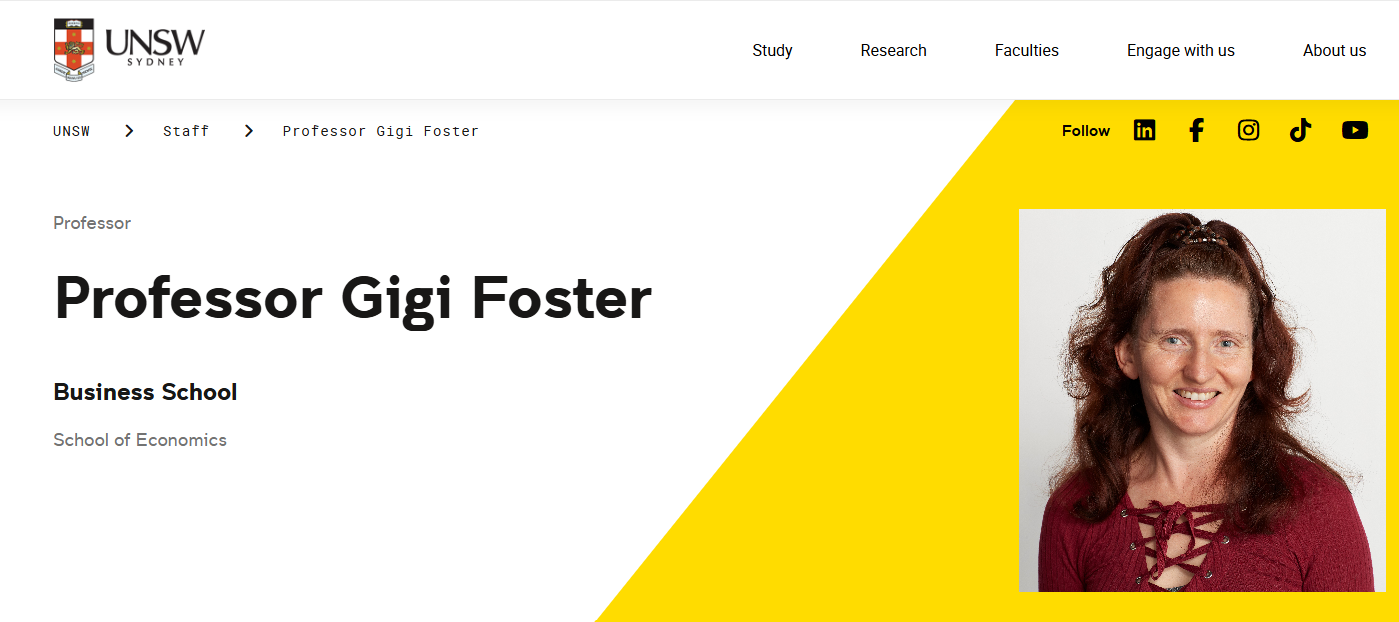
I first came across Prof Fosters when I joined Australians for Science and Freedom (ASF) at its launch, which she heads. Another collaborator-connection is here too: Prof Frijters is 'Ambassador' for ASF. I let my membership lapse because their direction of travel wasn't quite what I expected (reasons for that may become clear in a moment). Prof Foster's Wikipedia page is somewhat bland for a 'conspiracy theorist' - and she also still holds her Professorship - at the University of New South Wales (UNSW). Is there evidence she's been deplatformed or even shadow-banned after speaking-out against the covid era policies? I couldn't find any. UNSW is highly significant to this topic, as you can see here - but I'll return to that UNSW entity another day.
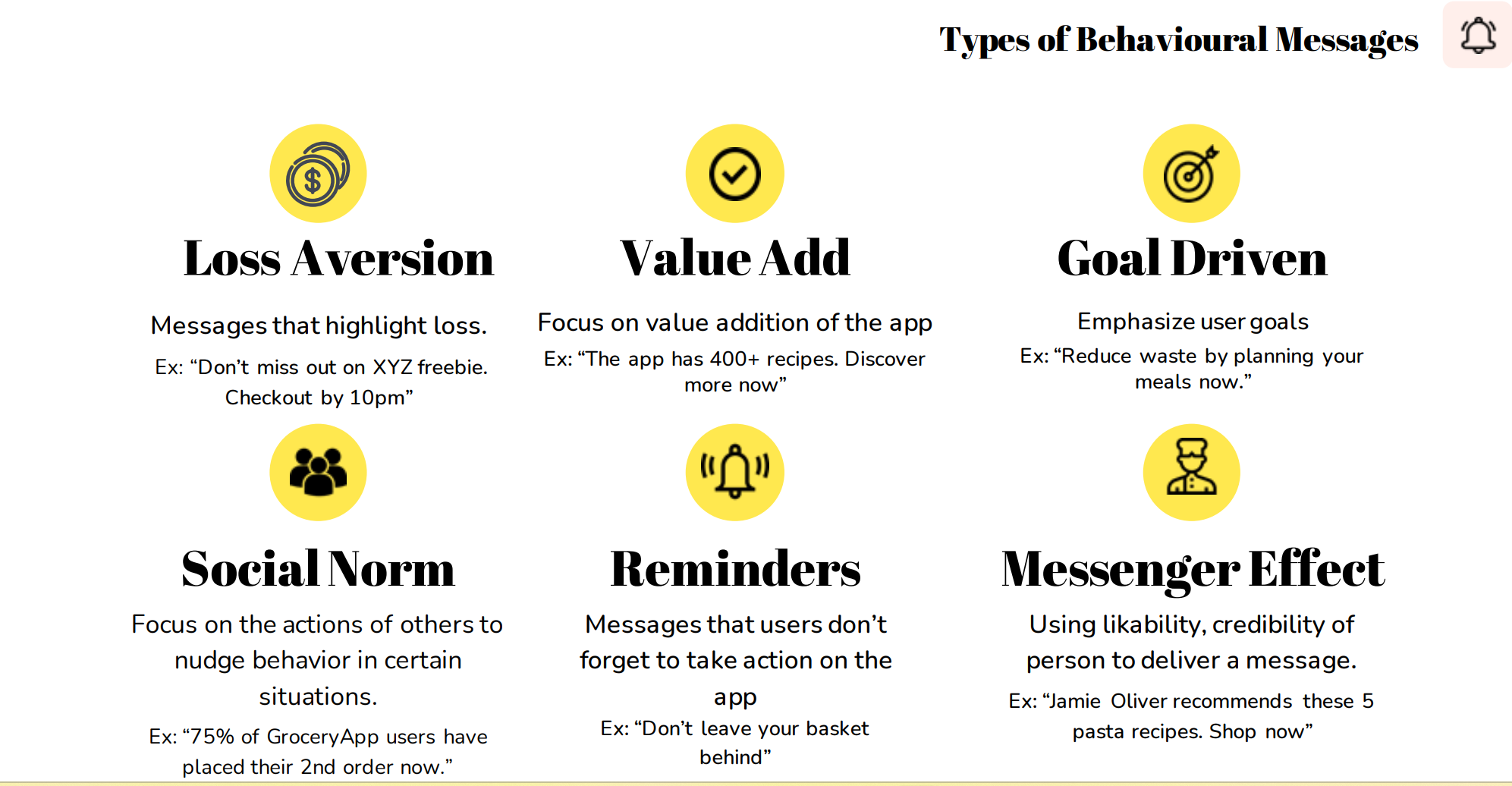
During (and prior to) the covid era, Prof Foster was co-developer, coordinator and instructor of the UNSW Masters course ‘Policy Applications of Behavioural Economics’. Her expertise is in ‘anthropology’ of economics, including analysis of QLYs and application to social behavioural policy ‘problems’. Prof Foster is also the developer, coordinator and co-instructor of the first-year compulsory undergraduate course ‘Economic Perspectives’. Prof Foster's three largest research grant funds awarded over the past 15 years have all been focused on behavioural insights/economic nudges from the Australian Government. Here is a slide from a MINDSPACE-based BIT students' presentation about Nudge strategies:
Nudgeathon & Vaxxathon: Training New Nudgers
As I summarised in my NZDSOS presentation about the Nudge Units, it was 2015 when endorsement by the Obama administration Executive Order paved the way for full expansion of the BIT worldwide. One of these expansions included Australia's BETA, the Behavioural Economics Team of the Australian Government. (Unlike in NZ, BETA remains a Government entity rather than a commercial consultancy). On BETA's Academic Advisory Panel is one of the Prof Foster's colleagues in psychology, Prof Ben Newell at UNSW.
I wonder why a new 'Freedom' university is run by senior (tenured) academics who are closely associated with global Nudge Units? For instance, according to Prof Fosters published CV she was involved in debating competitions, eg The Great BX 2018 Debate at the BETA-sponsored Behavioural Exchange Conference (BX2018), arguing against the proposition, ‘There are no more “easy wins” in applied behavioural insights’. Prof Frijters' co-author Cass Sunstein was a keynote speaker. (Sydney ICC, 2018).
Much of Prof Foster’s work centres on the foundations of the BIT’s policies – providing the immeasurable with measurements (whether theoretically ambiguously or totally arbitrary, it matters not). Covid era policies demonstrated how modelling from potentially flawed data seems to be the bedrock of these behavioural economists' approach. Attempts to measure levels of 'happiness' and relating it to quality of life data seems so simplistic to be laughable. And to illustrate my point perfectly, one of the Amazon customer reviews (from a colleague!) about Foster's co-authored book with Frijters "An Economic Theory of Greed, Love, Groups, and Networks" (a set textbook for one of her BIT courses) points this out:
“Probably the most difficult chapter for me to come to grips with is that of love, I am unsure if the abstraction of love into the cold mechanical process of nature is due to the inability of the authors to deal with it in any other manner or it is just that they do not understand love. As an extension of this abstraction I personally found Paul's notion of reciprocity or altruism a little off-putting.” (my emphasis)
In 2018, Foster was interviewed by BETA and was later a member of the judging panel for the annual Australian Nudgeathon (who knew?!) - a gathering of keen Behavioural Economics students' where innovations for new policy 'Nudges' compete, co-sponsored by QUT and BETA:
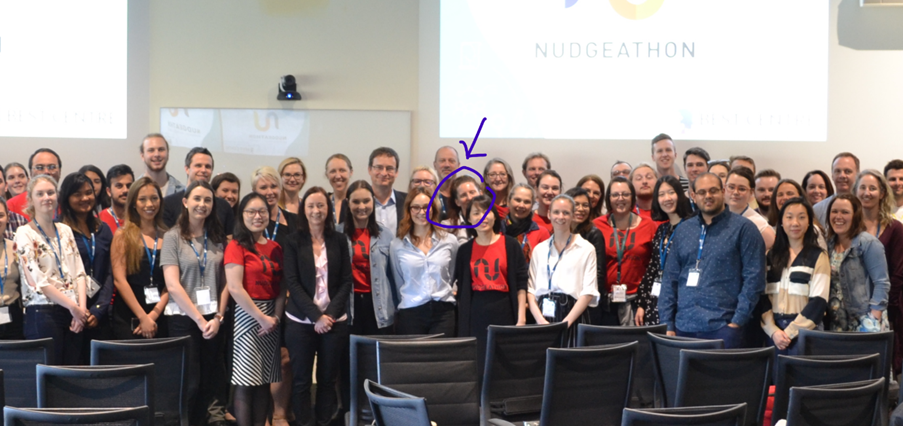
I wonder if freedom-loving, 'critical thinking' students enrolled at ALM will be researching Nudge Unit strategies? To get an idea of what Prof Foster's students are currently working on, here's one of the (utterly disgusting) 'winning pitches' for the Nudgeathon 2024 on the unethical topic of...encouraging youngsters' HPV vaccine uptake (4 mins):
Foster’s second textbook Biophysical Measurement in Experimental Social Science Research: Theory and Practice (Elsevier) is a ‘handbook’ for PhD students to learn how to use biophysical measurement devices in social science lab-based experiments. I was intrigued by this book - especially because its publication in 2019 was so close to the roll-out of the covid era nudges from the international behavourial economics entities - many of which were by then (predictably) profitable and privatised. Parallel to the LSE Masters course I posted a promo video of above, there's a chapter on measurements of eye-tracking as a way of understanding what an individual is thinking. This extract is from the Introduction:
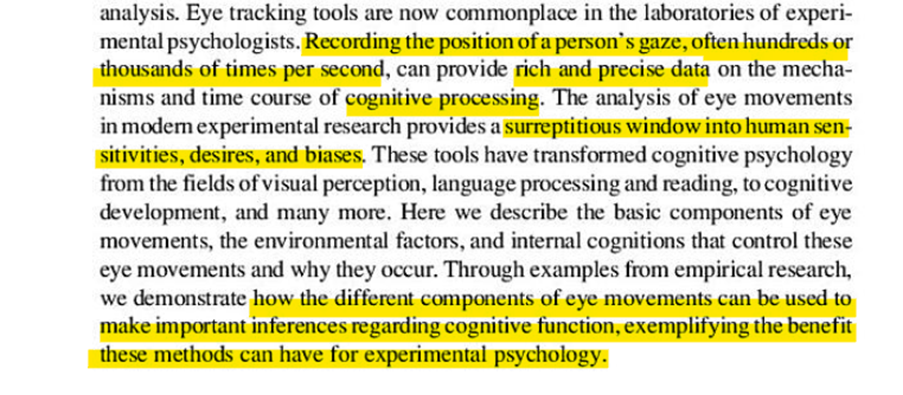
This AI-technology has developed significantly in the six years since this book was published. With thanks to one of my subscribers, I published an article about the serious health and ethical concerns of this BigTech experiment here:
 Ursula Edgington
As well as pupil-tracking devices, other chapters in the book edited by Prof Foster include laboratory sampling techniques for measuring skin (colour, temperatures etc), emotions, genetic data and brain activity. All very useful elements to the Nudge Units’ repertoire of measuring and manipulating our behaviours, especially via AI tools. Reading through Prof Foster's 'Conclusion' of this book, I was disappointed there was no mention of the lack of ethics involved in these experiments. Finally, returning to the questions I posed at the beginning of this article:
Is it credible that academic dissidents (like me) have been ignored by the Globalists - that we don't need to be provided with any [fake] saviours or 'groups'?
From this summary of research, I suspect not. Maybe ALM management are naive and beginning the journey towards a capture-free version of academic higher education? Certainly the rhetoric and marketing of ALM could be attractive to those who have been deplatformed and censored for their counter-narrative perspectives and non-compliant actions. Is it a coincidence that at least two of the senior protagonists of ALM were and remain intrinsically linked to BITs of the Five Eyes? Indeed, training the next generation of AI-enhanced 'Nudgers'? Could there be something else going on at this European 'independent academy'?
How realistic is it for professors to retain a role inside the machinery of academic totalitarianism, whilst simultaneously 'fighting for freedom'?
I've provided a brief summary of the publicly-accessible info of two professors Frijters and Foster, co-founder and academic advisor at ALM, who are also leaders at ASF. These academics have co-authored numerous publications together and have senior roles in the mechanics of the behavioural economic 'nudges' - directly connected to the covid era social policies and beyond. Unlike my fellow 'dissident academics' and I, Fosters and Frijters are not blacklisted; they retain their employment at their respective institutions, their research/publications continue alongside their senior roles in NGOs, think tanks, professional societies, media platforms and Government advisory boards. A recently-published book about ALM co-authored by Prof Frijters and Prof Foster's daughter, Sienna Baker, benefitted from an official book launch at LSE (!) and amongst other promotional advantages, an article in The Spectator. No censorship in sight for these researchers, then? I wonder whether ALM students have done their own CBA on ALM, and whether their experiences live up to their expectations? There's more to write about the wider topic of 'Freedom Universities' - do let me know your thoughts below (or privately).
[NB Prof Gigi Foster was given opportunities to respond to my queries about the ALM and her published work and declined to fully respond.]
This in-depth, independent (non-AI) research takes time and costs money. Thank you for reading and sharing this open-access article. I truly appreciate your support!