
Ways we are 'Nudged' into Paying [More] Tax
I've written before about the work of the Behavioural Insights/Economics teams, globally. Most recently, I've shown how these propaganda strategies have even infiltrated so-called 'Freedom Universities' overseas. In this article, I'll raise awareness of how these Nudge Unit tactics are being used on New Zealand taxpayers, often without us being aware we are participants in a global experiment. Knowing about these policies gives us more power and informed consent.
In New Zealand the Nudge Units are interfering in public policy as consultants, mainly through commercial Tick Consulting in Wellington, the "human behaviour experts":

The coordination of Nudges is also undertaken by a dept of Behavioural Science in the Justice Sector. These Ministry of Justice staff aim to investigate how:
...processes reflect the way people behave and make decisions. The team creates more accessible and culturally aware systems to improve outcomes for everyone who uses justice services in Aotearoa [NZ].
Another tentacle of the Nudge Units in NZ is Knowledge Auckland which promotes its propaganda via Auckland City Council's 'Research & Evaluation Unit'. Here, staff work on computer modelling and media messaging that supposedly encourages us to vote and also to use energy 'more efficiently'. [Yeah, nah...]

Last week the Ministry of Justice's arm of Nudging provided a presentation: "Influencing taxpayer behaviour" where Shelley Jacobson from Inland Revenue, shared the outcomes from a recent trial focused on obtaining payments. Here is a screenshot of the in-person event that was also livestreamed at Inland Revenue offices, Featherston Street, Wellington (looks like an engaged audience?!)
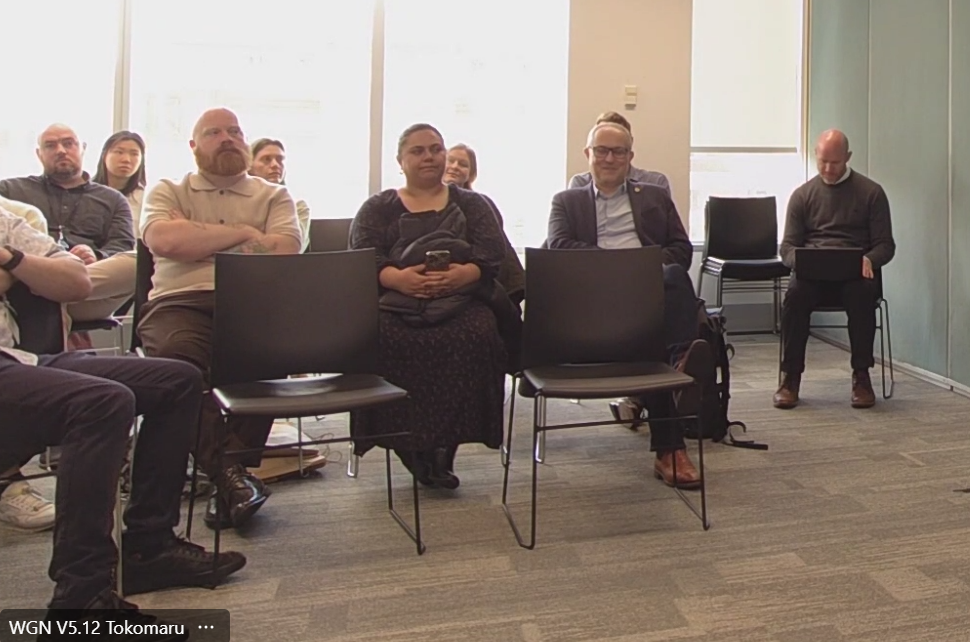
I counted over forty participants on the MS Teams livestream, mostly staff who were from other NZ public sector depts, keen to implement the Nudge Unit's tactics to their own 'customers' (us). ACC was a prominent one, along with the Ministry of Health and Education. (I will write another day about the ACC involvement).
Minimise 'Sludge'
I've written before about how to recognise 'sludge' and when the pathways towards Technocracy have been deliberately smoothed out for us:
 Ursula Edgington

In this context, the Inland Revenue were experimenting with smoothing the way for those of us who owe the Government money, to pay off our debt 'simply, quickly and easily'. The templates for the 'reminder' letters took three different formats: simplified, simplified with extra help available, and simplified in a very short form:
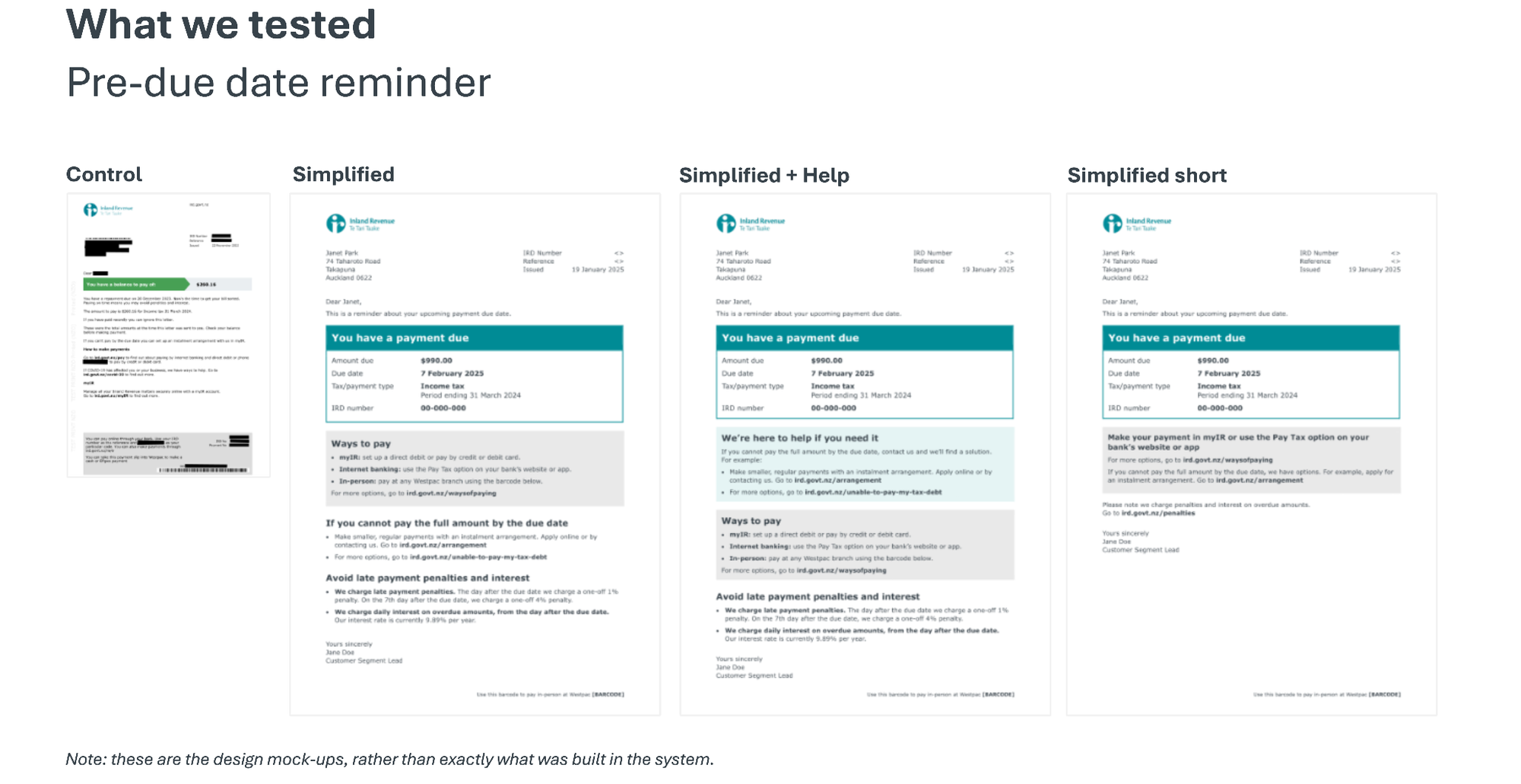
The size of the experiment was enormous - more than half a million Kiwis received letters from IRD during the test period. In contrast to the assumptions by the staff, the simplified, shortest letter was the LEAST effective. Was this because less words (regardless of what those words may mean) provide less of an incentive to pay-up? Overall, the baseline behaviour, with over half of Kiwis complying with the 'Final Notice' letter surprised me:
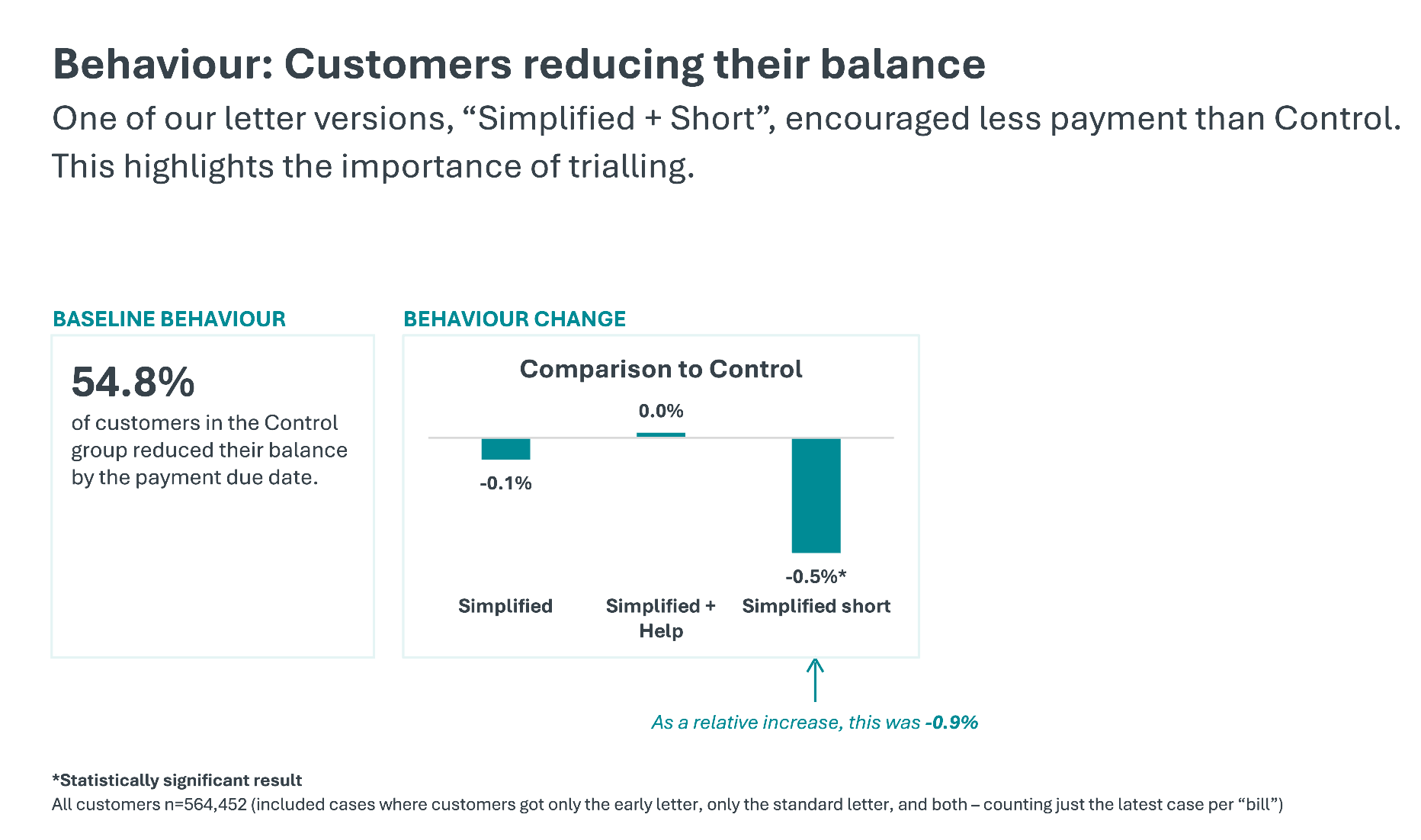
The Nudge Unit experiments confirm that individuals differ in our reactions to being told what to do, in particular when we owe money. Some people instinctively seek to clear the debt asap if they can, or at least find ways to pay in installments or similar. Others will avoid paying a debt for as long as possible, until the final notice seems like an imminent threat in some way. But most Kiwis are somewhere in the middle - eg we want to be honest and stay away from 'bad' debt, but also - and this is especially true with rising costs of living expenses - we want to make the most of the income we have. So what is the relevance of this IRD nudging experiment?
Technocracy now fully exploits any and all data that is harvested about our personal lives, our attitudes, behaviour and, of course, our bank balance. These kinds of experiments that use Nudge Unit tactics seek to eventually individualize our bills, so that each person's potential weaknesses can be leveraged to maximise effect - the aim is to extract more money from us, as quickly as possible.
Other Nudge Unit tactics are used by Councils all over New Zealand. For instance, I notice on my dog rego invoice, an incentive to pay before the deadline date is the opportunity to 'win' a year free rego for my dog. No thanks. Alternatively, if you leave the rego payment until after the deadline date, a surcharge applies. This Nudge Unit strategy cleverly gives us the illusion of choice, when the reality is, no choice exists.

Have you noticed a change in bills you receive from your Government lately? Here is an example of another Nudge Unit letter, this time from the UK, demanding payment of a TV Licence "Only 10 days to go" - how would you react to this format? Would you pay up?
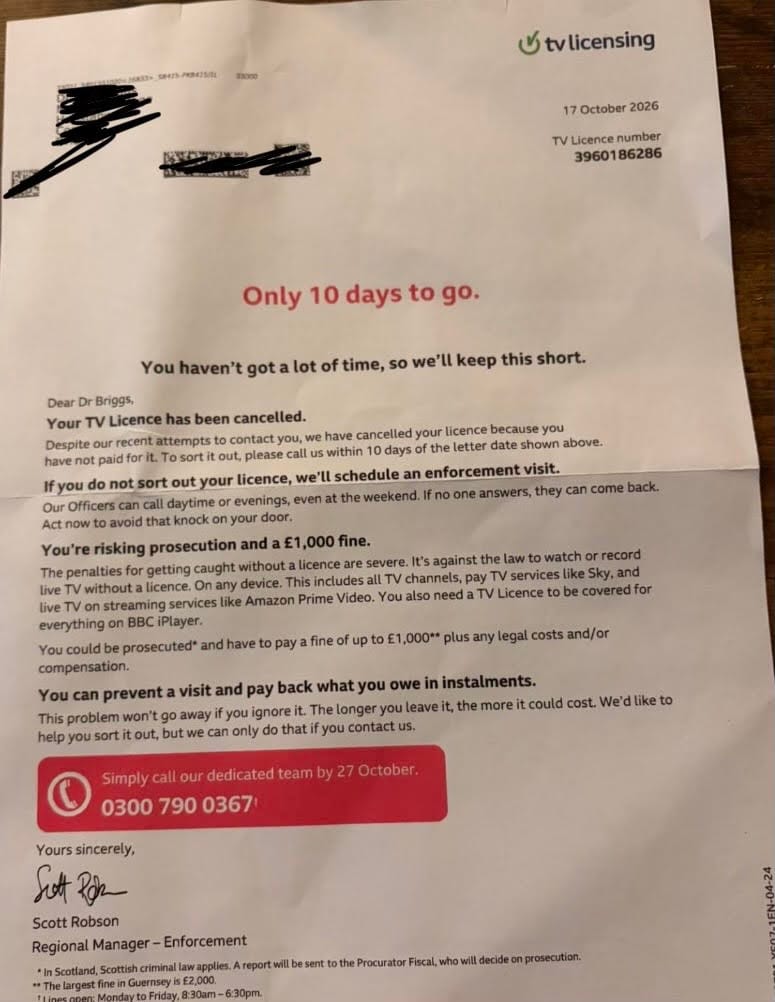
Wherever you are in the world, it's likely that the Nudge Unit in your country is strongly influencing the format, colour and tactics involved in persuading you to pay. Let me know your thoughts, as this impacts everyone - it's a global lockstep.