NZ Community Radio: my chat with Barak
After my recent article reflecting on my experiences during a local power cut, I've discovered there's a few community radio projects in New Zealand. Communities are the future, so I'm curious about these initiatives. Here's my first article raising awareness of them. For those who missed that article, I received lots of positive messages and suggestions from it and I'm very keen on more ideas...
 Ursula Edgington
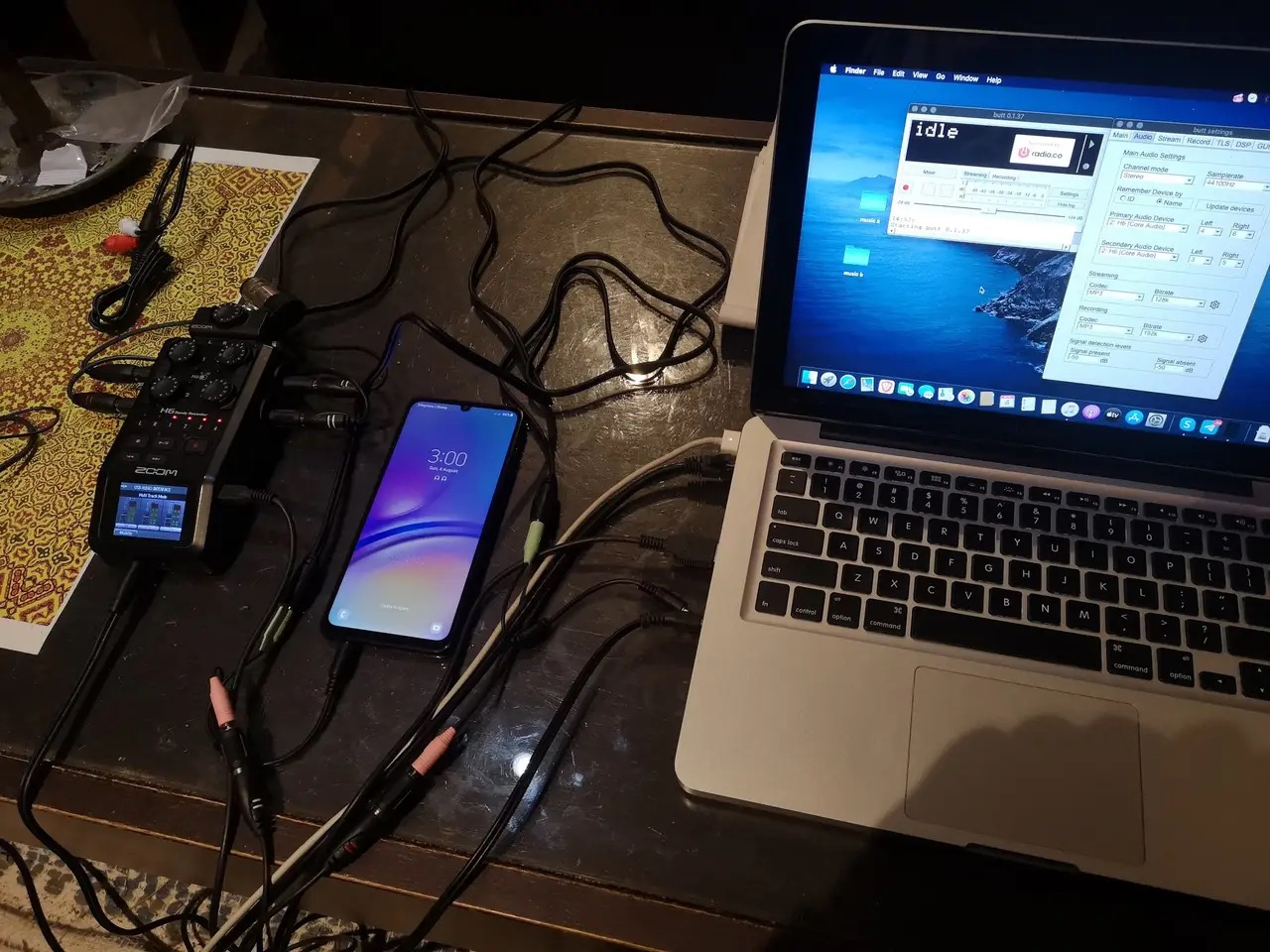
I connected recently with Barak Ford, an electrician who runs a small-scale radio project based in Northland with support from Arthur and others. You can find them under "NZ Freedomhub Radio" (Telegram) and "NZ freedom radio" (Facebook). Due to technical failures my end (urghh) the audio-visual recording of our chat failed to download. However, I managed to retrieve the transcript. I've edited it slightly for clarity, as I'm sure readers will find our 30 min chat of interest. I've also added some hyperlinks/photos about the things we discussed - from broken academia, no-jab, no-job mandates, to a new media project idea...
Barak was a great interviewer and the conversation was fun because we are both optimistic people. We hope to record (efficiently this time!) a follow-up chat very soon, so let me know any feedback, suggestions or questions for Barak, who is very much a resilient, inventive "Number 8 Wire" kinda guy, as you can see from his set-up:
Barak: Welcome! Do you want to let us know where you are roughly?
Ursula: I'm in the wet and wild Waikato. Not too far away. Yeah. Well, thanks for inviting me to chat to you. I didn't really know that you existed. A friend of a friend introduced me to your little community radio project, which was very interesting.
Barak: Yeah, thanks, do explain what you've been up to and what's going on.
Ursula: So we were talking about history and radio. I've been listening to Bill Cooper. Yeah, just amazing just how far ahead of things he was. So, yes community radio like, you know, like your project, it's just a great way to get the truth out there and to help people understand a little bit about what's happening.
Barak: And yeah, so. It was good to connect with you.
Ursula: And yeah, I'm just I'm a humble researcher. I'm definitely not a podcaster although I have been interviewed a few times now by various people and I've interviewed a couple of people myself. So a bit about me, obviously from my accent, you can hear that I'm English by birth. I lived all over the UK, travelled all over the world really over the years, and settled in New Zealand 13 years ago. And I went to work for a university and as a lecturer in the education department. I've got a bit of a story about that, but briefly I spent two years banging my head against a brick wall – in my experience it was a fairly toxic working environment. And that was probably when my journey of awakening started when… yeah, certainly that was part of it. Yeah, I mean, what we're witnessing now, the deliberate division in society of positive discrimination for certain people. But also the corruption that has crept into academia, not just in New Zealand, all over the world.
Barak: Was that political leanings or ideologies that didn't match theirs? What sort of corruption?
Ursula : So it wasn't about intellectual rigour anymore, it was the avoidance of any change and maintaining the status quo, the gravy train that is what current academia is all about.
Barak: Oh, sort of clicky. The cliques or the clubs?
Ursula: And yeah, just not a very healthy, intellectual environment. And not positive for the students. You know, I came from England with a very student-centred philosophy to my teaching and learning, and I didn't really experience that same approach anywhere in New Zealand education.
Barak: Ah, okay. Are the students treated more like units for payment?
Ursula: Unfortunately, so yeah. Yeah, there was a bit of that. Yeah, I mean, as you know, a lot of university income comes from China - and India to a certain extent. Those international students are paying a lot more than the domestic students and that's where the universities make their money. And now that's why they're struggling financially now, because they haven't got that international cohort…
Barak: Why is it? What do you think that is about?
Ursula: Lots of reasons. I mean, firstly there’s the global recession that's happening. I think there's probably also a growing recognition that New Zealand's academic quality standards aren't what they should be or could be. And a lot of the things that New Zealand prides itself on, are built on sand. You know, the ‘Clean, Green, 100% Pure’ image is just a PR campaign that's long running and hasn't got any evidence.
Barak: Yeah, it just seems weird to me, like that universities are geared mostly for offshore (students) seems to like problematic straight away.
Ursula: So, yeah, definitely, you’re right. The other thing is, that the universities here can claim academic brownie points, you know, in terms of international league tables by having lecturers that are based overseas. So either people like me who have come, you know, I've been trained and my experience was from overseas and also lecturers who are based overseas and present their lectures online. That's seen as giving an international perspective...
Barak: Okay. And so the corruption could caused by the sheer amount of offshore students really, driving things, or the monetary side of it?
Ursula: Possibly, that's one element of it. I mean the dumbing down of the curriculum and standards is a big part of the poor quality of the teaching and learning and also connected with the flawed research and publishing…
Barak: And now they're in trouble you're saying, there's less students and so it's going to be really a big down turn? I know a lot of the say in Auckland the universities they have to make themselves so much bigger to take in all these influx of students and then they've got a limited size so it must be annoying, trying to do renovations in a university and still run efficiently...?
Ursula: Yeah it's not helpful. I think they sold their soul to the devil really. Very much that issue is linked to the Public Private Partnership issue. They buy-in investment from commercial companies in exchange for providing that space/training.
Barak: So what happened at the university you were at?
Ursula: Yeah, I left that about 11 years ago and I've been freelance ever since so I'm not captured in anything by any institution. I do contract research work and workplace teaching and research and I help, you know, especially over the covid era, I've been helping various groups with their research and writing projects. Really, that takes up quite a bit of my time still, six years on.
Barak: So you've got some credentials behind you?
Ursula: Yeah, I've got lots of letters after my name, which unfortunately don't really mean much anymore because academia has totally been broken.
Barak: That’s refreshing to hear you say.
Ursula: Thanks. So I have, I mean, I started off in English, English Literature. I did my ESOL teachers certificate (Teaching English to Speakers of Other Languages). So I worked in refugee centers, for instance, in the city centers of England. Then I did my degree in sociology and lifelong learning. Then I did a Master's in adult education. I did my postgraduate certificate in adult teaching. Then I did my PhD in the quality of teaching in tertiary institution which was published as a textbook. So that was quite an achievement that I was very pleased about. And then afterwards, relatively recently, I did a Masters in Legal Studies at the University of Auckland. Just to really help me understand what was going wrong with the New Zealand education and judicial systems. To find out how things could get so broken between the teaching and learning and the outcomes in the courts and the international agreements that we're supposed to be adhering to in New Zealand.
Barak: So, you’ve got expertise in lots of different directions really?
Ursula: Yeah, I mean, I'm a social scientist so I'm looking at mainly human behaviours. So it's sociology and psychology and in particular how we learn, how we teach and the transformational nature of learning. You know, that curiosity that drives each of us, especially in the freedom movement, hopefully to learn more and more about what's happening and why it's happening.
Barak: Okay. And so where's your research led you? I mean, I was just imagining you in your previous jobs at those universities - you would have been a handful because you would know exactly what's going on...and then they'd be, oh my God, we have to listen to you but... you know what I mean?
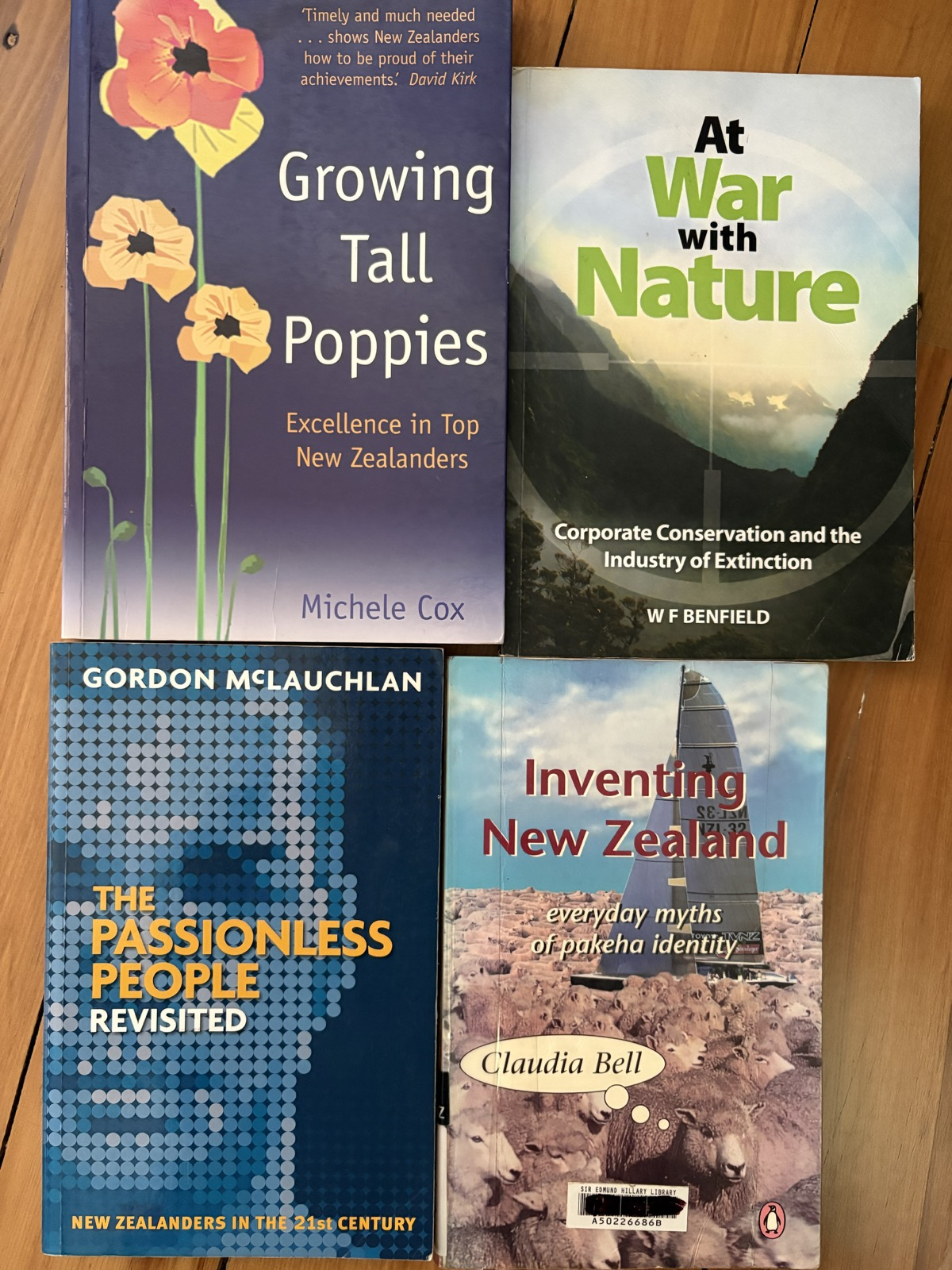
Ursula: So that's my area, that's my particular interest. Yeah, yeah, I did. It drove me to do a lot of research about the New Zealand culture to try to understand...and so books that your listeners might be familiar with like McLauclan's book The Passionless People and Claudia Bell’s Inventing New Zealand and research into Tall Poppy Syndrome...So yeah, I was very naive, Barak, at the beginning, you know. I just had this vision of New Zealand as, you know, the PR version of New Zealand, being equal opps for everybody and free and a proper developed democracy. [laughs] And that just turned out to be bullshit, to be honest.
Barak: Yeah. I think it was [more so] in the '80s. But I don't know what's happened. I guess the commercial side of things crept in the corruption, and a bit of Green ideology.
Ursula: That's right. Yeah. There's been probably a real division. I mean, I've witnessed that in England, obviously in other countries as well, where the poor get poorer and the rich get richer. I probably didn't see that happen in New Zealand because it was already here when I arrived, 13 years ago.
Barak: So going back to the universities…?
Ursula: Yeah, people acting as gatekeepers and deciding who should and should not deserve a place (on a course), you know, depending on what their background is. And then the hierarchy, you know, the people who thrive in that, get to the top and control policy and then it makes it worse, doesn't it. And that was very alien to me at the time. I was absolutely appalled at what I witnessed.
Barak: You're talking about students, as far as their access to university…?
Ursula: Yes. All kinds of contexts. Yeah. I mean, there were people in positions of power who could control, not only in terms of who was allowed on the staff and interact with the students, but also on their learning journey. You know, your face fitted or it didn't. And then the learning resources that they were providing were produced by commerce, you know, they weren't independently provided or audited or anything. Just marketing propaganda. It was a very narrow, like a contrived atmosphere of learning.
Barak: Oh yeah, like positive discrimination for race or discrimination for money.
Ursula: It's not based, as I say, on curiosity or any kind of learning for learning sake, which is what my teaching and learning is about. What's the point in learning if you don't love the subject? There's no point. It doesn't work unless you enjoy what you're learning about.
Barak: Right. Right. It's a best way to remember everything as well - if you enjoy it. But now, there's got to be a job at the end of it and well, that's the common drive, isn't it?
Ursula: Yes …and that's a good point actually because of course for the international students, they often see New Zealand universities as an opportunity to work here or to work in Australia.So they'll come here on a student's visa and then they might stay on and do a postgraduate course and then they'll get a job either here or they'll get something overseas so it's kind of a pathway for them that is relatively easy. And well, maybe it's not as easy as it was now compared to 10 years ago, but certainly it's seen as maybe an easier path to financial stability from these other countries that aren't as developed or democratic (ha! Ha!) as ours.
Barak: Yeah, I can see it's a difficult situation.
Ursula: I mean, the thing is, Barak, we've got eight universities in New Zealand and only five million in a population. I mean, most people can see it's just, it's not sustainable to have that amount of higher education institutions that should be addressing and delivering high quality outcomes, degrees, postgraduate degrees and teaching, you know, teachers and nurses, qualifications, et cetera. So it's just, it's not feasible. It's not realistic. Not without significant investment from commerce, anyway. And as I say, as soon as you've got investment from commerce, you get conflicts of interest. You get the chemical companies taking over, regulators like MedSafe and the Environmental Protection Authority and interference with policies like we saw during the covid era, you know, getting involved with the NZ Law Society or the Nursing or the Teachers Council.
Barak: Right. Yeah. Covid - Is that when things really ramped up with you with all that?
Ursula: Yeah, I mean, it didn't affect me as much as lots of other people. Additionally, my freelance work is flexible. I did have a volunteer position as a teacher at the local prison. And even though my prisoner-students generally weren't jabbed because they didn't, even though they mandated the prison officers, they didn't mandate the prisoners. And yet because I did not comply, I was not allowed on the prison grounds when the mandate came in. So that was the end of my role there, along with a few other people that helped the prison education system at that point.
Barak: Okay. That's interesting. Yeah.
Ursula: And you know, they've never contacted me since that day? Not to say, oh, can you please come back? We missed you. Yeah, nothing. Yeah, nothing. It's like I've just been memory-holed. And unfortunately, you know, that's the case with lots of people who were mandated out of their job, their paid jobs, in particular, which was heartbreaking. You know, the day that the mandates came in, you know, many mandated staff collected their belongings and left, or they were given their belongings and told to clear off. And that was it. They never had an opportunity to say goodbye to their colleagues or their students or patients or whatever.
Barak: And years of work and everything like that. Yeah, it's a pretty shocking. And this might be a good time segue into talking about the nursing group?
Ursula: So one of the groups that I like to support is the Nurses Collective NZ, which was founded at the beginning of the covid era by a lovely lady called Deborah Cunliffe. It was, I think it was originally called Nurses for Freedom and then because obviously things sort of migrated, it's evolved over time. So it's called the Nurses Collective and they do have a presence on Telegram and Facebook and I think I've got a website as well. They do really well as a support group for lots of different kinds of healthcare professionals who are still working through those problems.
Barak: What are they working on at the moment, have they been successful with any of the results of the harms from the covid era policies? Getting their jobs back etc?
Ursula: Yeah, I mean, it's been really interesting to work with them, because for some, it very much dependent upon, not only the entity that they were applying to…but I mean, some of them got their old jobs back. There's no doubt that that did happen. Some of them understandably didn't want their jobs back or didn't feel that they could go back to those kinds of environments again.
Barak: Yes, that’s understandable, I’m not surprised.
Ursula: If they later applied for a job in the healthcare industry, it really depended on what that entity was because each institutional entity had its own rules. And I've recorded some of the vacancies that were advertised, you know, even up to now, if you want to do TradeMe search, you know, in the care sector, you'll find that they'll still say on the application form, “are you up to date on your covid jabs?’
Barak: Is that right? Yeah. Really? Like, what does that mean? Like, in the last six months?
Ursula: Yeah. It's crazy. Yeah, it's still a thing. It depends who's at the top really, who makes the decisions and how/where they are, maybe, or what's going on locally. And, yeah, the nurses do a fantastic job of supporting each other. Obviously some of them did, you know, they were coerced to take the injections and some of them have suffered. You know, vaccine injured as a result. It's a very complex, very emotional matter.
Barak: Yeah. It's so interesting because of all the people, the scientific academics, you know, the idea of The Science, ‘follow the science’ and the doctors and the nurses should know more than most and many, they're still not willing to look.
Ursula: The whole thing is not talked about enough, as you know.
Barak: It's more of a cult, almost the way they... Yeah, it's pretty shocking. And there's a lot of evidence coming out now as you know, Dr. Fauci …those sort of things. There's a lot. Barry Young, all that, various court cases coming through. So there's pressure coming back and the truth is sort of peeping through. And I think another one is the sheer amount of ambulance office call outs in NZ.
Ursula: Yes. That's right. I saw that headline.
Barak: I heard a guy talking about the funerals for the people in the Far North, a lot of funerals, you know, just escalating. So the truth is sort of coming through with time.
Ursula: Yeah. There's a lot of, sadly there's still a lot of cognitive dissonance out there. And that's, again, that's one of the projects that I am helping with is that the techniques, because it's kind of, a lot of it is counterintuitive. We thought that just by presenting facts to people that they will wake up, that they will see the evidence and realize. But it doesn't work like that. If anything, it actually makes things worse, which is what a lot of people have begun to learn. So there's very strategic techniques in terms of just chipping away at people's cognitive dissonance in a way that can deprogram them, if you like, bring them to the light, away from the propaganda.
Barak: That’s interesting.
Ursula: So yeah, if anyone's interested in that, you can check out a website, ReachingPeople.net, and I'll send you the links to this afterwards, Barack. O YouTube as well, they've got a series of videos, very short animated videos. And it's just strategies of how to have those difficult conversations, what to say and what not to say in a very approachable style. It's difficult. It needs practice.
Barak: Yeah, I've got a friend, it's a good guy and we talk about it, we're pretty open. But he recently got very bad influenza or pneumonia. And I go, oh, let me guess - you had a vaccine a couple of months ago? Well, you know, it was like a couple of months ago. You know, to bite your tongue sometimes and have patience with these people because it is unbelievable that we're six years into this and still, you know, yeah. But he says “Could have been so so much worse could have been in hospital!” [laughs] Oh, and he goes “lucky I had that, you know, would have been way worse!”
Ursula: Yeah, [laughs] so common. The thing is that I have to keep reminding myself, and others is that we can't save everybody, you know, and at this point, our emotional energy sometimes gets very low. And if we get frustrated because somebody isn't seeing our point of view, then the best thing sometimes you can do is just walk away. Yeah. Because we're not going to be able to save everybody.
Barak: Or change the subject or something. Yeah. We're not going to be able to save everybody. Or agree to disagree.. And of course, when you're in a group situation, maybe at a dinner or something and you're the odd one out. So it's not, it's even harder. You know, not that I'm into conflict or debate, but it's like, there's a time for things, you know?
Ursula: Yeah. It takes time. So, I just want to quickly mention about the Australian New Zealand Freedom Network before we end. There’s a group of Australian researchers I’m in touch with who are very keen to set up an independent media platform.
Barak: So, if anybody is interested, because I know that you're getting people to help you with this project as well…?
Ursula: So, yeah if anybody is interested in this and they want to get involved in just getting research and news and interviews out there, then, yeah, just in touch with either of us. It would be entirely subscriber based so it wouldn't be any corporate funding, no advertising so that there was no interference from political or ideological entities. It would just be in response to the listeners and the readers.
Barak: And, you know, sharing the truth - across the ditch?
Ursula: Because there's so many researchers like myself who maybe haven't got massive readership. But if we join together, you know, we can have regular outputs. I know people like Guy Hachard and other writers are very keen to contribute to that sort of independent platform.
Barak: Okay. Hmm. Good one. And so what sort of people are you looking for? Are you looking for people to, you were talking about an editor?
Ursula: Yeah. So, an editor would be helpful. I mean anybody who's got skills that they think could be useful. Interviewing. Writing in particular, any of those sorts of skills would be very welcome. Just get in touch.
*recording ends*