
Broken Academia: NZ Health Research Council's Ethics and AssProf Josephine Johnston [Part 3]
![Broken Academia: NZ Health Research Council's Ethics and AssProf Josephine Johnston [Part 3]](https://cdn.mymidnight.blog/970af30e481057c48f87e101b61e6994/size/w1000/2026/09/Screenshot-2026-09-07-150913.png)
In this final part of my three-part article of another case study about NZs broken academia, I complete my story about my complaint to AUT's Research Ethics Committee. As a reminder....
In Part One, I explained my initial concerns about the research of a nurse-educator, Dr Jan Dewar at Auckland University of Technology (AUT). It was based on interviews with nurses who had been subjected to the unethical and illegal 'no jab, no job' mandates in NZ in 2021/22. I wrote to Dewar by email hoping to engage with her about the flawed methodology and lack of attention to the ethical guidelines, but was dismissed, out of hand:
 Ursula Edgington
Not happy with this, and concerned about AUT's research participants - now and into the future - I took my complaint further, and wrote in hard copy to AUTs Research Ethics Committee Chair, retired professor Peter Lineham, as I explain here:
 Ursula Edgington
Then, after some months of delay and after I received a 'fob-off' to my complaint from AUTs 'senior solicitor' (NOT Peter Lineham, who has since left his role as Chair), I took my complaint further. I wrote a letter to the regulator of these institutional ethics committees, the NZ Research Health Council, which I will outline below. Firstly....
What is the NZ Health Research Council?
The HRC "is the government's principal funder of health research — improving health outcomes, strengthening the health system, and driving scientific and economic value for New Zealand." So providing funding itself, it also has a role in overseeing the ethical ways that research is conducted. [Already, I see a problem emerging...]
The HRC plays a pivotal role in ensuring New Zealand health research is ethical and safe. We undertake safety monitoring and provide strategic advice on health research issues, primarily through the work of the following committees: the HRC Ethics Committee (HRCEC), the Gene Technology Advisory Committee (GTAC), the Standing Committee on Therapeutic Trials (SCOTT), and the Data Monitoring Core Committee (DMCC). We aim to ensure all research involving human participants meets ethical standards, is based on good science, and complies with international best practice. We also require that ethical approval from an approved ethics committee is obtained before any HRC-funded research can commence. [source]
The Minister of Health (currently Simeon Brown MP) appoints the 10-member governing Council which is administered by the Minister of Science, Research and Innovation (SRI). But in June this year, ex-banker-turned MP Brown was criticised for 'interfering' with the HRC when he changed personnel in its governance. Apparently his rationale was to do with 'ideological' conflicts with the HRCs directives for healthcare staff to have 'cultural competence' training (3 mins):
News items about Brown and HRC
Even though my complaint was months before this change, I could already see how the HRC were closely tied with Government and BigPharma. My complaint could test the relevance of the HRC's Research Ethics Committee regulatory procedures, and highlight what the specific weaknesses are. So on the 8th October 2025, I took my complaint about Prof Peter Lineham and AUT's Research Ethics Committee's lack of ethics, to the regulator of AUT's ethics entity. This is what I wrote:
I have some serious concerns regarding a Ministry of Heath funded research project and its subsequent output by AUT. Briefly, and for example:
1 The ethics application form was completed naively or perhaps disingenuously by the PI researcher.
2 The ethics application was subsequently accepted by the AUT Ethics Committee, without the obvious shortcomings or contradictions addressed (or even questioned).
3 The research project was significantly changed midway through the fieldwork, likely because of the nature of the abovementioned unaddressed issues, without agreement from, or even notification to, the institutional ethics committee (contrary to the procedures in place).
4 The subsequent academic article, despite apparently going through peer-review, reinforced the flaws and unethical stance taken by the researchers.
5 The authors have deliberately misrepresented the participants' views in the publication (probably to please their funders) further reinforcing the discrepancies obvious in point 1 above.
I have taken my concerns - in some considerable detail - to the AUT Ethics Committee Chair and after being ignored for weeks, finally received a response from AUTs 'senior solicitor' who with a few brief sentences failed to engage with or address any of the serious concerns I raised. This situation is extremely disappointing. Not only for myself as a professional, independent academic researcher, trying to uphold highest standards of ethical conduct, but also for the research participants, who were already a marginalised group and have lost (further) trust in anyone claiming to be authentically researching the lived experiences of New Zealanders, especially vulnerable Maori women.
Can you let me know whether the HRC is interested in my complaint? My aims are to ensure that this kind of unethical behaviour from the researchers does not happen again. At the moment, it would seem there are not satisfactory safeguards in place to protect research participants from harm, including further discrimination. For your information, participants have been harmed by the unethical approach of this research and its publication.
Thank you for your attention, Nga mihi, Ursula
After two months of delay and chase-up emails, I received this somewhat promising response on 19th December 2025, from Le-Shan Pomana-Wesley ['she/her'] Portfolio Lead, Maori Health Research.
The Chair has reviewed the complaint and associated letter to the AUT Ethics Committee Chair and it has been considered that this DOES FIT within the jurisdiction of the HRC Ethics Committee. The complaint has been sent to the full HRC Ethics Committee for their review. In their review they are asked to determine which of the three avenues they consider most appropriate for the complaint. These are:
a. investigate the complaint;
b. refer the complaint to a more appropriate body or agency; or
c. recommend any other action that is appropriate to resolve the complaint.
Once we have their decision, we can advise what the next steps will be.
I never heard from Le-Shan "She/her" again. I chased-up the HRC once more. This time I received another acknowledgement email from Hannah Holtkamp who claimed to be the new 'Ethics & Regulatory Lead at HRC'. Apparently there had been some considerable delay in recruiting to management positions for the HRC, hence the delay. My concerns were raised when upon looking at Holtkamp's research outputs; she authored nothing related to research ethics, but instead, articles like this one: 'Metallomic study on the metabolism of RAPTA-C and cisplatin in cell culture medium and its impact on cell accumulation'...(?) Was there no-one with genuinely relevant research ethics qualifications and experiences for this important role for New Zealand ?
Associate Professor Josephine Johnston
Then, after further delays and chase-ups, in May 2026, I finally received a written response from the HRC:
Your letter covers a variety of issues, only two of which appear within the HRCEC’s complaints jurisdiction. These issues are, broadly speaking, completion and review of minimal risk assessments and changes to the participant groups recruited under an approved research protocol. However, the specifics alleged in your letter regarding these issues fall below the threshold of evidence needed for HRCEC to consider initiating a formal investigation. At this stage, we plan to provide notice to the AUT IEC that we have received your letter. You are also welcome to submit further information. [my emphasis]
It was signed by the new Co-Chair of the NZ HRC, Assoc Prof at Otago University, Josephine Johnston who "works on a variety of ethical, legal, and policy issues in medicine and science, with a particular focus on the implications of emerging technologies in human reproduction, psychiatry, genetics, and neuroscience." (Alarm bells ringing yet?)
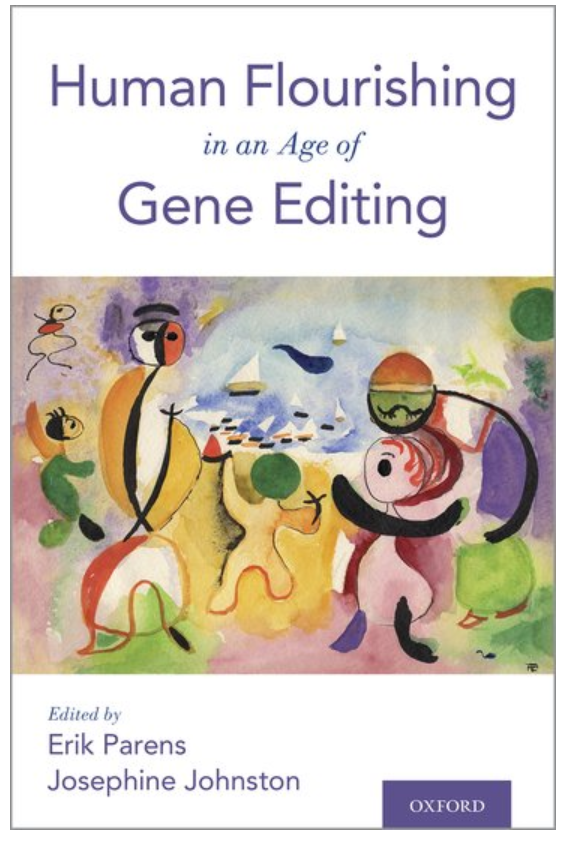
Disappointingly, there is no evidence of philosophy, history or social science in Johnston's background. Instead, we discover she's a New Zealand-trained lawyer with a master’s degree in bioethics and health law from the University of Otago and has worked as a "grant-funded bioethics researcher in North America for twenty years (!)" (that likely refers to her role at an entity called the Hastings Center - more on that below). Academically, she ticks all those necessary funding boxes, as legacy media has published her pieces in Stat News, The New Republic, Time magazine, The Washington Post, and The Scientist. Her academic publications appear in all the expected BigPharma-captured journals like the NEJM. Interestingly, she is also co-editor of this interestingly-titled book called Human Flourishing in an Age of Gene Editing published by Oxford University Press 2019 (who else?), where she encourages us to be open-minded to the 'surprises' genetic manipulation may bring...
Back in 2010, Johnston also published Trust and Integrity in Biomedical Research: The Case of Financial Conflicts of Interest by none other than Johns Hopkins University Press. Maybe that was before she realised how embedded those financial conflicts of interest are? Ironically, here's an article by Johnston with a similar title from the US-based Hastings Center for Bioethics where she is Director of Research and a Research Scholar. The Hastings Center also has its own journal. As if to confirm its own Research Director's previous argument, The Hastings Center's Annual Report outlines its main funding partners - all the familiar big corporates - JP Morgan, American Express, Vanguard, Rockefeller University, PepsiCo...and so the list goes on.

The Hastings Center is also funded by Biogen, one of the most established and top five biotech pharma employers in Massachusetts, US. Biogen is expanding rapidly and specialises in treatments for 'rare' conditions like dementia and MS. Here's the CEO Chris Viehbacher speaking on CNBC from a JP Morgan Conference. JP Morgan features in the CVs of Hastings Center's Board members, along with Prof Richard Baker of Celgene which I've written about before, in the case-study of Prof Angus Dalgleish. Unsurprisingly then, BigPharma propaganda articles feature in many outputs from Johnston's Hastings Center, in newsletters and 'journal' articles, including this 'no-jab, no job' pro-covid vaccine mandate article from as recently as September 2025. Then there's this one, promoting the 'safe' use for pregnant women of the highly-profitable US pain-killer, Tylenol.
Johnston also trains healthcare staff via the US NIH online training facility CITI Program. Here is an extract from one of these, where Johnston presents about the 'ethics' of experimental CRISPR gene editing technology (10 mins):
Returning to my AUT complaint, I replied to Johnston, to ask her what specifically the so called 'thresholds' were for the HRC to request an investigation. I have had no response.
Summary
That's the end of my journey with a complaint about a poor-quality, pro-covid jab, unethical health research project, funded by the NZ Ministry of Health. Here's my five outcomes/findings:
- The principal researcher of the flawed research, Dr Dewar, an educator of nurses at AUT, was awarded a promotion in January 2026, with a new role as Assoc Prof at another university in NZ (Victoria, Wellington). She has also been nominated as a member of the pro-jab Board for the Nursing Council.
- The Editor of the Journal where Dewar published her research 'findings' Prof Bruce Curtis, dismissed my complaint and claimed that a valid peer-review had been conducted, potentially allowing more unethical research to be published.
- Retired history and theology professor Peter Lineham, who was Chair of AUTs Research Ethics Committee at the time, has now apparently left his role. He never responded to my complaint, but instead, passed it to the institutional lawyers.
- The Health Research Council, which should serve as regulators, overseeing the ethical behaviours of NZ universities' researchers, took seven months to respond to my complaint. They decided that my evidence did not meet the 'threshold' for any investigation, however declined to tell me what that threshold is, nor what further evidence they need.
- Finally, the new Chair of the HRC has multiple roles with conflicts of interest. Assoc Prof Josephine Johnston heads a US entity partly funded by BigPharma companies (and investment banks) that promotes pharma products and participation in clinical research trials.
The connections are clear between all these individuals, their activities, identities, roles and sometimes income - to the ongoing drive towards public policies that profit BigPharma, such as 'no-jab, no job' mandates. Universities, non-profits, MPs, journals, regulators, and educators - they all share an objective (whether unwittingly or not). Overall, although incredibly time-consuming, frustrating and with disappointing outcomes, I am pleased to put these facts on public record. Academia is broken - as this single case-study of my complaint about an academic research article shows. Ethical guidelines are ignored, university procedures are dismissed, peer-review is flawed. Academic staff are disinterested and many have financial conflicts of interest. Lawfare is also used to silence dissent.
It is essential for any health research to be firmly established in ethical guidelines by staff who genuinely care about their participants. What hope is there for students of these institutions, aspiring to 'do good'? What about the future of health research in New Zealand? Is my case study presented here, representative of other research projects too? What can we do to mend broken academia and ensure that the HRC is fit for purpose?
Thank you for reading this, I appreciate your comments, either below or via email.