
Broken Academia: Prof Peter Lineham's Research Ethics Committee [Part 2]
![Broken Academia: Prof Peter Lineham's Research Ethics Committee [Part 2]](https://cdn.mymidnight.blog/970af30e481057c48f87e101b61e6994/size/w1000/2026/08/Screenshot-2026-08-31-112641.png)
This is part 2 of 3 of a case study that records my complaint about a peer-reviewed article published by Dr Jan Dewar of AUT and colleagues. After my attempts to get answers from the authors and then the journal editor failed, I escalated my complaint about the research - which seemed to have veered away from the ethical guidelines - to Prof Peter Lineham. He was, until very recently, Chair of Auckland University of Technology (AUT) Ethics Committee (where, also until recently, Dewar was based). Yes, both have now left AUT.
Back in July last year, I complained in hard copy, directly to Lineham because his Committee had approved Dewar's research ethics application, so the buck stopped with him. As I explained in Part 1, the article was poor quality in terms of methodology, theoretical framework and conceptual analysis but was published anyway (no surprises) by the NZ Journal of Social Sciences Online.
 Ursula Edgington
Why this (still) matters
Describing himself as an historian, Emeritus Prof Peter Lineham is an 'expert' on Christianity, cults, Human Rights and LGBTQ+ (ironic, I know). I notice that Lineham has recently been deleted from the webpages of the AUT Ethics Committee. In his place as Chair is Dr Barbara Meyers from the Catholic Theological College with the deputy chair position now vacant. Interesting.
I'm reproducing my whole letter of complaint to Prof Lineham for the record. This is because like so many who try to expose poor quality academic outputs, my response was not from Lineham, but instead from the University's senior lawyer. Presumably attempting to bully me into silence. (It didn't work). I need to record 'what happened next', which concerned my complaint being escalated to the Health Research Council in my third and final part of this article (stay tuned).
Quick Read Option
First, if you don't have the time or inclination to read my whole letter below, here are the six basic points of my complaint about Dewar et al.'s article:
- There were serious errors and omissions on the original Research Ethics Application.
- There is a contradiction between the author's stated theoretical framework and the one actually used for analysis.
- The issue of censorship and propaganda was completely excluded from the research and article's content.
- Similarly, lawfare and Human Rights legislation issues were completely ignored throughout the research and publication.
- Poor quality (biased) citations used (non-academic) and overall lack of robust evidence.
- Contrary to the AUT ethics policy, significant changes to the structure/balance of the research were made without any resubmission/review by the Committee.
Finally, you can skip to my three, relatively simple recommendations to AUT, that would mitigate the risk of harm to research participants going forward. This would include staff like Dewar undergoing additional training in ethics after a review of their own guidelines and policies. (But that's meaningless now that Dewar has moved to Victoria University, Wellington).
My Letter of Complaint (July 2025)
Dear Professor Peter Lineham,
Re: Complaint: Dewar et al ‘Hidden behind a cloak of silence and exclusion’: A qualitative study of healthcare professionals and mandated COVID-19 vaccinations in Kōtuitui: New Zealand Journal of Social Sciences Online (2025) Link
I write this in good faith. The purpose of my complaint is not for negative intent. I do not seek to cause any offence, nor to create personal defensiveness. I am not receiving payment or other benefit from any person or entity for spending time, energy and resources raising this complaint. My objective is only to raise awareness, through authentic curiosity, of unintended consequences, particularly harm, caused by the publication of the above article.
Secondarily, my hope is to help others learn from their mistakes and thereby prevent such harm from reoccurring. Overall, the breakdown of trust between researchers (whether employed by an institution or not) and the public is detrimental for us all, and our duty as professionals should be to act with integrity and respect and to build levels of trust whenever possible (Josselson, 1996).
This letter sets out six points of concern, with subsections of examples with citations. It ends with a conclusion, including three recommendations for your consideration.
With my aims front of mind, I believe that most researchers are ethical and authentic in their intellectual curiosity. Isn’t that why we write? I understand you undertake this Ethics Committee Chair role as a volunteer, Peter? We therefore share a genuine research interest in ethical (theological?) complexities. For many years I have been actively engaged with aspects of ethics for different research methodologies, have participated in research on ethics (e.g. Kara, 2018) and published about educational research ethics myself (Edgington, 2014, 2015). My published PhD involved interviewing tertiary teachers and their managers using an innovative technique (Edgington, 2016).
You’ll agree that none of us can be aware of all possible repercussions on research participants. However, part of any valid ethical framework (whether institutionalised or not) is to reflect and engage with offers of dialogue about these potential consequences in good faith. That is why, for example, the work of scholars who fictionalise research methodologies, e.g. Clough (2002) are so valuable. Only when we problematise potential scenarios, can we all learn and sometimes become aware of crucial complexities that were previously unknown - or even deliberately hidden from us.
I seek to raise awareness of these contexts for Dewar et al. Although adopting a title ‘hidden behind a cloak of silence’ for their article, it is tragically ironic that these researchers were apparently unaware of the rationale, methods and extent of that ‘cloak of silence and exclusion’ (Kheriarty, 2022). This is why it is so vital for me to write this letter, because knowing how we have caused others injury – emotional or physical - is the first step to acknowledging that error, making amends and preventing further harm when possible. This is surely the primary aim of any Ethics Committee?
This letter will help explain some of this context with references. The depth of understanding will be up to the individual researchers to uncover. After studying this phenomenon over the past five years, I recognise there can be no immediate realisation or resolution in this space. I can only hope and pray that a shared understanding will develop over time.
There are numerous problematic issues connected to my complaint regarding the lack of attention to ethics within this publication. I acknowledge that the Editor of the Journal in question, Professor Bruce Curtis (University of Waikato), states in his email to us that the article has been double-blind peer-reviewed, in line with procedures. However, that point is irrelevant. Why? Because for decades, Peter, we have been made aware of the increasing concern about the validity of any peer-review process, and the academic publishing system more broadly. (For examples of this, see (Angell, 2000, 2005; Kory, 2023; Kypri, 2015; Martin, 1999; McCrabb et al., 2021; Smyth, 2017). As I and others have pointed out, these weaknesses of the system are particularly accentuated in the sparse population of New Zealand (Edgington, 2023).
The following six points summarise my specific concerns about the poor attention to ethics within this research and its associated published article:
1. Errors and Omissions on the Original Research Ethics Application:
a. The researchers’ original Ethics Application provided misleading information. For instance, it stated that the participants would not suffer ANY emotional distress (section: Minimal Risk Assessment’ question 3) [extract below from OIA response]:
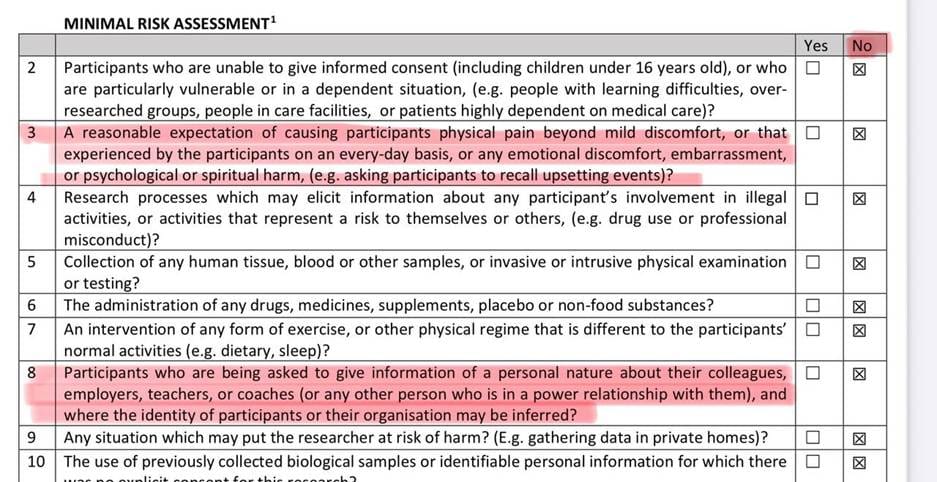
And I am also confused about the researchers’ response to Question 8? The crux of the investigation involves very personal information (‘vaccination’ status) about not only themselves, but because of who manages to retain their job or not, the ‘vaccination’ status of colleagues and managers.
Tragically, many of the individuals impacted by the covid era mandates suffered immense emotional distress. Some tragically took their own lives. Even if, understandably, the researchers had been victims themselves of the intense propaganda and censorship, after the first interview with a participant, they would have become aware of the extremely sensitive, emotional nature of the research questions. I note that in the published article, para 3 of 'Findings' the authors state that ‘all participants cried’ during the interviews. I acknowledge how time-consuming completing any Research Ethics Application is, plus the processing wait before endorsement. But we all have a duty of care to our fellow human beings and dismissing that duty to ‘save time’ by reducing support to an offer of a helpline, is simply unacceptable and potentially dangerous. Empathetic options were available.
b. In question 8 of this same ‘minimal risk assessment’ section, the researchers claim that participants are not being asked to give any personal information about their colleagues, employers or others. Obviously, this research is, by its very nature about personal health decisions: whether someone has chosen or not to participant in a clinical trial of a genetic intervention. It is extremely confusing and concerning for me, how the implicit aspect of this research could be completely ignored, not only on an Ethics Application, but later, by other professional researchers. In section I.1.7. optional counselling services are dismissed on the basis that ‘time has passed’ since the mandates. This also highlights the lack of emotional intelligence and sensitivity by the researchers of the participants’ experiences.
2. Paradox in the Theoretical Framework.
a. The authors claimed to adopt a Māori worldview, to quote from the Ethics Application:
“[this] qualitative design informed by a te ao Māori perspective, decolonisation and intersectionality to guide and interpret the findings.”
Yet the authors of the article repeatedly claim that apparently all the authors and bewilderingly, ALL participants were 'pro-vaccination.' I fail to see how this phrase can be valid (which ‘vaccinations’?) nor how it is relevant, and by stating this (impossible to substantiate) subjective claim, tension is immediately raised in respect for te rongoa approach.
Firstly, in the inherent power-relationship between interviewers and participants – what was the ‘assumption’ by the interviewer to this subtext, and how was the participant expected to ‘respond’ to that assumption? Dewar in her brief response to my initial email about this issue, acknowledges the tension, but paradoxically claims this inherent contradiction was ‘not relevant’ because it was not mentioned by any of the interview participants (!)
b. Secondly, as many qualitative researchers have pointed out, maybe precisely because it was not spoken aloud, this tension formed crucial context to the narratives (Armstrong, 1987; Ashman, 2008; Ochberg, 2002; Wengraf, 2001)? What ‘goes without saying’ is often central to what is articulated (James & Biesta, 2007). In section D3 of the AUT Ethics Application form, it is stated: “We also intend to interview Māori, Pasifika, and non-Māori, non-Pasifika groups separately because we are aware of their differing experiences of COVID-19 and vaccination.” The mind boggles! What was the basis of this ‘awareness’? I draw your attention to the dangers of unaddressed assumptions that are explicitly referred to in the HRC Guidelines as follows:
“All research teams/units/institutions/communities need to identify how their own beliefs and value systems may differ from those they wish to involve in their research. This will require having clear processes and procedures in place that allow for the inclusion of different cultural values and beliefs within the research agenda. This will provide other cultural groups and their viewpoints with the ability to influence the way in which the research problem is defined and thus the way the research is designed, conducted, analysed and disseminated.” (HRC Guidelines (2021) S2.1.7. pp 9) (my emphasis).
c. I note that in Section E2.2 of the Ethics Application it is stated that despite significant consultation with other ‘experts’, the methodology remained unchanged at the behest of the funder (The Ministry of Health). Also, that in section K2 on ‘Conflicts of Interest’ none are noted. I view this entry as disingenuous, because the Ministry of Health implemented the ‘vaccine’ mandates and was also funding this project, with a view to ‘informing future mandate policy’. Was this the ideological lens (arguably the opposite to the claimed Māori worldview) through which the authors were engaged? Considering my complaint, this is a concern.
3. Censorship and Propaganda
a. I suspect that the researchers were (are?) unaware of the political and military context of the research in which they engaged. Evidence of this obliviousness lies in the absence in their article (or Ethics Application) of any reference to the Behavioural Insights (Economics) Team (BIT) or 'Nudge Unit' messaging (Dolan et al., 2010). Whilst I acknowledge that the existence and roles of these individuals and entities, their history, rapid expansion and funding were all topics strongly supressed during the ‘Emergency Powers’ of covid era, there is now ample free access to explicit evidence of the significant impact BIT policies had on global Governments’ covid response, policy and public perceptions (e.g. Corbett, 2005; Hayward, 2022; Hughes, 2024; Klotz, 2023). Indeed, I have published about this in the New Zealand context myself (Edgington, 2025).
b. Taking this point more broadly, was it possible that in the case under complaint here, none of the authors, nor proof-readers, nor the Ethics Committee members, nor the two peer-reviewers, nor even the editor of the journal were aware of the growing academic literature available about the censorship and propaganda at that time? I suspect this is unlikely. Or was there a deliberate avoidance of what Dewar termed a ‘contentious issue’ i.e. ‘uncomfortable truths’, because that would have risked the dissenter being stigmatised, and potentially labelled as ‘Outgroup’? As an historian and Christian, Peter, I trust you understand the philosophical significance of these well-established and predictable human psychological behaviours (Arendt, 1958; Koonz, 2003). Whatever the reasons for the ethical flaws in this research, the end result is a naïvely-framed article, contrived to a point of being patronising and upsetting, not only for the participants and their families and associates, but also to those (like me) who have voluntarily been supporting these individuals (and hundreds like them) for over four years. The discrimination and gaslighting symbolically continues within this article. If the censorship and propaganda really was ‘beyond the scope’ of the article, then at the very least, the authors had a civic duty to acknowledge an issue that had significant influence upon the outcomes and suggested the need for further research.
4. Lawfare and Human Rights Ignored
a. There are (were) robust laws in place in New Zealand, based on UK caselaw. For example, every individual employee has a formal, legal employment contract which outlines the requirements and responsibilities of both parties. For the record, there was never any employment contract that included a requirement to take part in a clinical trial, as that runs contrary to international Human Rights. It’s against the law for any NZ employer to discriminate because of race, colour, nationality or ethnic origin gender, sex or sexual orientation, marital or family status, employment status, age, religious belief or political opinion, disability, participation in union activities, or if you are affected by family violence. Perhaps now the ‘fog of war’ has passed, some can see more clearly that those rights should override any authoritarian requirement to comply with an experimental medical treatment, especially one that was unnecessary, unsafe and ineffective (e.g. Hunt et al., 2023; Thacker, 2021).
b. The NZ Bill of Rights Act (1990 s5) sets down the Human Rights of all New Zealanders. The Employment Relations Act (2000) is designed to provide the legal framework specifically for relationships between employees, employers and unions. It promotes the concepts of good faith and fair process, including mediation during resolution of employment problems and governs the personal grievance process. The covid era was not an excuse to suddenly, and without rationale or due process, abolish all these laws. However, as the participants’ interviews revealed, that is exactly what materialised. Reasons for this are complex and related to the symbiotic relationships and revolving doors of power between all the ten major legal companies [Large Law Firms NZ Ltd] and NZ Government. Again, the authors’ reference to the numerous legal and social contracts, including union memberships presented within the narratives, that existed to protect nurses and other healthcare workers from discrimination, which were deliberately disregarded during the ‘no jab, no job’ covid era, are conspicuous by their absence.
c. To understand the seriousness of my complaint, it is essential to read some of the judgments and current cases under the Employment Relations Authority and Employment Court, entities designed to help resolve employment relationship problems. Just because this important caselaw is not published in the media, does not mean that it doesn’t exist (e.g. see Krissy Luis De Souza v Māori Womens Welfare League Inc (Te Ropu Wahine Māori Toko Te Ora), 2024; Yardley v Minister for Workplace Relations and Safety, 2022). Of course, as Dewar rightly pointed out, time has passed, and as a result, many mandated employees who were inevitably on long waiting lists post-mandates to be heard at the Employment Court, have since signed Non-Disclosure Agreements, in exchange for financial compensation. This adds to the importance of extensive literature reviews prior to preparing for research of the kind Dewar et al embarked upon, and the due diligence of investigations into sources of information. On that topic, I now turn to my next point; reliable sources of information:
5. Lack of Robust Evidence
a. In Section 2 above, I explained the authors omission of a crucial element of the mandate era, the BIT. This knowledge also adds meaning to the appropriateness of the citations the researchers used. Poor quality and/or not peer-reviewed texts adds to the unethical framing of the research by reinforcing the same powerful forces that Bardosh (2022) describes.
For instance, 'The Conversation' were one of thousands of captured media outlets which were partners of the ‘Trusted’ ‘Google News Initiative’ (Martin, 2025). Funded by wealthy entities like the Bill and Melinda Gates Foundation (Gavi), these platforms were censoring facts and promoting misleading marketing that was pro-vaccination (e.g. McCrae, 2025). New Zealand media were captured by the same entities, via the Public Interest Journalism Fund (PIJF) (see for example Media Policy Team, 2021; New Zealand On Air, 2023).
b. Supporting my suspicions of the researchers’ lack of knowledge of BIT and PIJF etc I was astonished that this sentence (below) in the article was without a citation presumably because it was assumed to be a universal truth:
"During the global COVID-19 pandemic, Aotearoa New Zealand (Aotearoa), like many countries, experienced widespread demand for health services that threatened to collapse the health system."
Looking more closely, this sentence is a generalisation that uses unscientific, emotive language, e.g. “many” countries (which exactly?) “widespread demand for health services” (how widespread, how is this quantified, which services specifically (emergency, antibiotics, GP appointments?). This phrase “threatened to collapse the health system” appears to be political propaganda or an unacceptable assumption completely void of evidence. And Dewar’s response to my request for a citation for this statement began with similar emotive language:
“Health systems around the world, including those in Aotearoa, were placed under extreme pressure due to the COVID-19 pandemic.”
This maybe a belief held by Dewar, but evidence does not support this. Covid did not impact NZ population at all until after the ‘vaccination’ roll out (a topic for another day). Yet Dewar goes on to say:
“This statement reflects the widespread concerns, nationally and globally, about the capacity of health infrastructures, and what was happening globally, where people were dying at great rates.”
Sadly, again, this is emotive propaganda. And tragically, there are more excess deaths now in NZ and many other countries than at any time prior to or during covid. This is evidenced over time in diverse population data (Fenton, 2021; Hansard, 2024; Hatchard, 2021; Quinn et al., 2025; Rancourt et al., 2023).
“Schipps and Rus (2021) could be used as a reference to this statement – see published article.”
Without the full citation, I’m unable to identify what article Dewar is referring to here. However, let’s look for a moment at the evidence that the covid virus itself was causing death. Almost all covid deaths in NZ resulted from more than one co-morbidity and/or lack of appropriate early treatment. At least one death was actually from a gun-shot but was attributed to covid postmortem (New Zealand Herald reporters, 2021). The single suggested source by Dewar is not sufficient when so many sources indicate other causation. Over the last five years, many academics from different disciplines have published research confirming this statistical trickery (Canadian Covid Care Alliance, 2021; Dowd, 2022; Godlee & Abbasi, 2021; Leake & McCullough, 2022; Lerman, 2024; Malhotra, 2022; Wolf, 2022).
6. Significant Changes to the Structure/Balance of the Research
a. There were significant changes to the structure, format and balance of the research because of the absence of two of the three participant groups. These were Human Resources staff 'off-boarding' the mandated nurses, and management involved in public health policy and process.
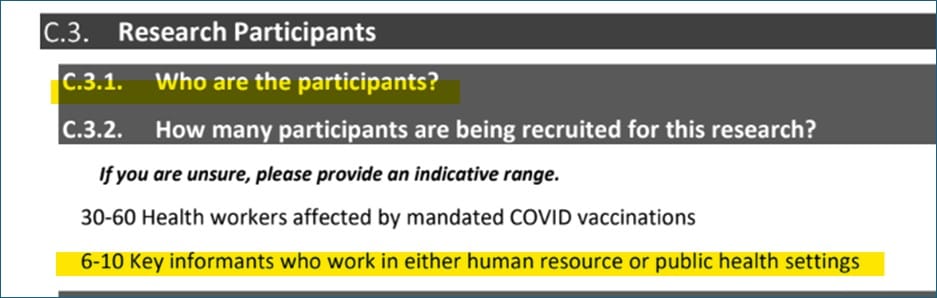
The reasons why the researchers were unable to recruit these participant groups were not explained in the article. However, the unwillingness of these participants would have been clear, if the researchers had been familiar with the extensive literature I have summarised in sections 1-5 above, namely lawfare, censorship and propaganda. In a nutshell, when due process of employment law was not followed, why would HR staff volunteer (be allowed to) explain how and why that happened? (Could they be held personally legally liable?)
b. Without investigating the important reasons why this participant group could not be recruited, the research went ahead anyway, without changes to the participant information sheet or informing AUT Ethics Committee. The outcome, in the form of the article, inevitably therefore presents a skewed perspective that lacks the full picture of crucial contextual matters, such as those I have listed above. Dewar does not provide any explanation for this failure and this is problematic. For example, as set out in the HRC Guidelines:
“If significant variations to the research proposal are to be made, or the interim results of the research indicate that it may not be ethical to continue, the principal investigator should approach the ethics committee which approved the research proposal for its comment and further discussion before undertaking any continuation of the research.” (Section 2 pp8)
Finally, as you can understand, Peter, there are numerous important philosophical and psychological issues that form the basis of my complaint about the lack of attention detail in the ethics of this research. I re-emphasise that the objective of this complaint is to raise the quality of research ethics in New Zealand and ensure this harm does not reoccur. The result of this problematic research is a published article that, whether intentionally or not, misrepresents and misinterprets some of the participants' narratives and reframes them in ways which run contrary to the values and perspectives of this group. These are New Zealanders who have already been unfairly stigmatised and are victims of discrimination and prejudice – maybe repeatedly. Many of these individuals are highly qualified, committed professionals, devoted to caring for others. They were unfairly excluded from their vocations without even an opportunity to say goodbye to their patients or colleagues. Some have lost not only their jobs, but their family and friends, homes and health.
As Chair of the Ethics Committee, now that I have raised these concerns, you have a unique opportunity to reconnect with these participants, to acknowledge the shortcomings of the researchers and to begin to re-establish some trust. With that in mind, here are my three recommendations:
Three Recommendations
· I urge you, Peter, your colleagues and these researchers to read through at least some of the references I have provided. I’m confident these will provide crucial insights for further ethical research.
· I would like to assemble a meeting regarding this matter, ideally face-to-face, or virtually if necessary, so that a dialogue can begin, any questions can be raised and concerns clarified. This meeting could be between you and I, Peter and/or involve the researchers. Deborah Cunliffe, Founder of Nurses for Freedom (now the Nurses Collective NZ) has also offered to participate if appropriate.
· Improvements could be made to the AUT Research Ethics Application Form, so that areas of cultural sensitivity and conflicts of interest that I have pointed out as weaknesses here, can be more easily understood and identified, articulated and addressed by the researchers and Committee members in the future.
I look forward to hearing from you, after you have had time to digest this letter. Perhaps two weeks is sufficient?
Yours sincerely, etc. (references on this PDF attachment):
AUT responds - with Lawfare
By October 2025 I still had not received a response from Lineham, so I chased it up again. And then on the 8th October 2025, I received this short response - not from Prof Lineham - but from AUT's "Senior Solicitor" Nicky Caunter [she/her]
Dear Dr Edgington, Re: your letter dated 30 July 2025 addressed to Professor Lineham.
Further to your recent (3 September 2025) email correspondence with Andrea Vujnovich, we confirm a copy of the above letter sent by courier was received by Dr Vujnovich’s office on 11 September 2025. Your letter primarily relates to a publication resulting from AUTEC approved research by Dewar et al. (2025). To comment on researcher publications is out of scope for AUTEC.
You state in the second paragraph of your letter that your objective “is only to raise awareness, through authentic curiosity, of unintended consequences, particularly harm, caused by publication of the above article.”
Your letter concludes with three recommendations. In response to those recommendations: Thank you for the references that you have provided. Your objective to raise awareness has been met through your letter and providing references for further reading. A meeting is not required or necessary. The AUT Research Ethics Application Form is consistent with all other Institutional Ethics Committees approved by the Health Research Council Ethics Committee.
Kind regards, Nicky

I'm sure you'll agree, a disappointing outcome. I tried again to engage Nicky or any AUT staff in a conversation about this complaint - with no response. This was contrary to AUTs own complaint policy guidelines as they need to acknowledge whether an investigation was undertaken, and what the results were. It seemed to me that no-one at AUT was interested in respecting research ethics, harm caused to research participants or accurate publications of research outcomes. The potential harm caused to AUTs research participants is therefore likely to be repeated.
So, my final pathway was to escalate my complaint further to the NZ Health Research Council (HRC). As part of their role they accredit the Institutional Ethics Committees (IEC), and are overseeing the Ethics Committees of all institutions in NZ by ensuring they adhere to their guidelines and address any complaints appropriately. But do they?
And there begins the final part of my experiences of fighting the machinery of the broken and captured New Zealand academia. "Tune in next time..." for the last article in this three-part series, as I explain how and why the HRC is also not fit for purpose.
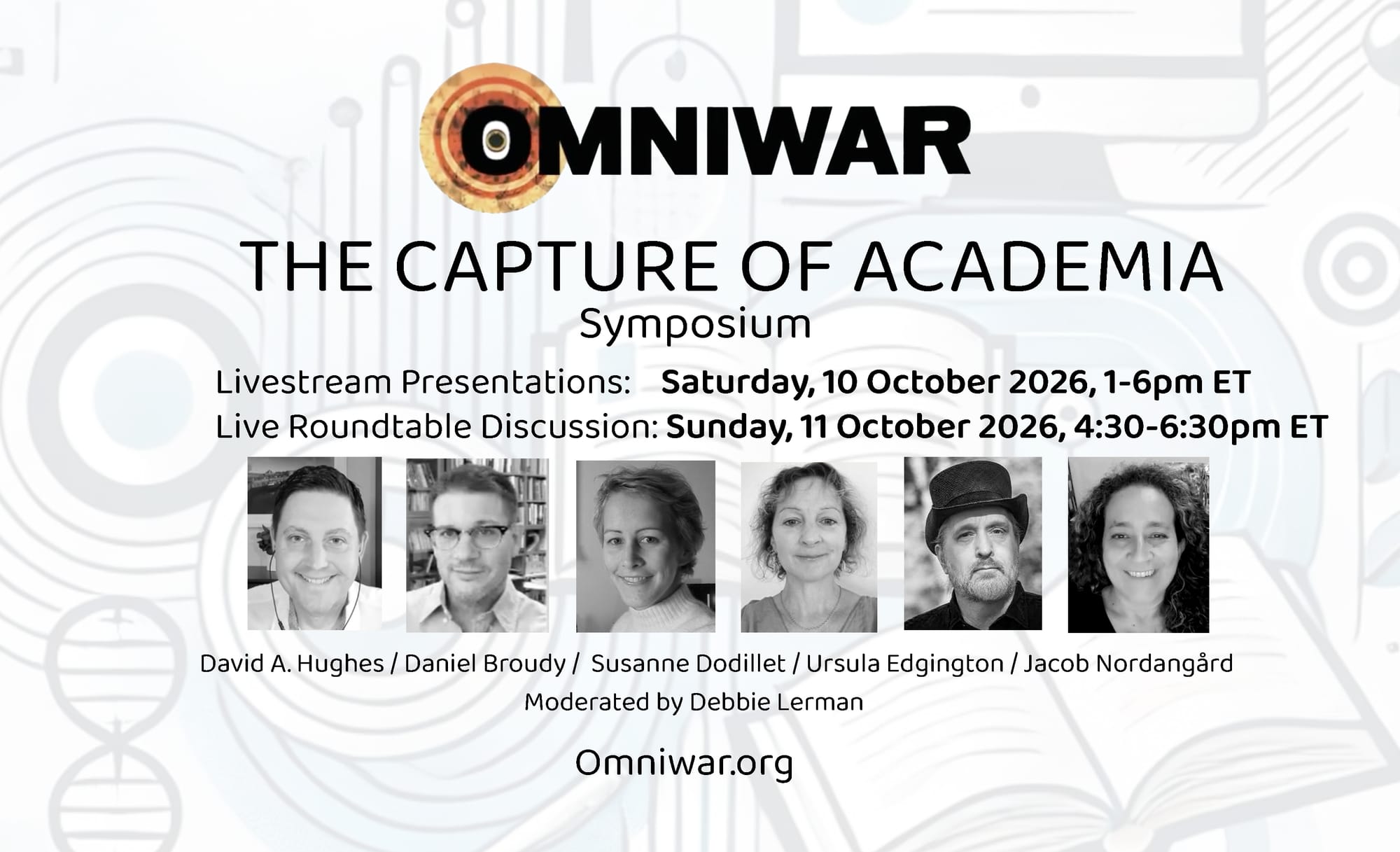
On a more positive note, I'll also write soon about an upcoming FREE international online event I have been invited to take part in, which raises awareness about this topic - 'The Capture of Academia'. Please register for details at Omniwar.org:
Thanks for reading and supporting my work - please share anything you find useful to your own networks - censorship is rife.