
Tips for Conversations with Propagandists [& their victims]
![Tips for Conversations with Propagandists [& their victims]](https://cdn.mymidnight.blog/970af30e481057c48f87e101b61e6994/size/w1000/2026/06/edwin-hooper-TJ9rBJAAguQ-unsplash.jpg)
"Smart people don't ask dangerous questions..."
...ran one of Taylor Sheridan's lines in a Yellowstone spin-off. Because that's what the corporate-captured authorities would prefer. But what happens when a 'freedom fighter' also instructs you to...
Shut up, stay in your lane, or else... ?
And as I've written before, there are strategic methods - astonishing, universally-effective ones - that ensure a narrative is controlled, that any 'leaks' are limited and dissenters, silenced. MINDSPACE sets the methods out clearly. Whether it's in schools, academia, healthcare, politics or 'alternative media', the rules are always the same because we are all 'only human' (at the moment at least!) and vulnerable to the same psychological influences.
Life as a truth-seeker and activist asking 'dangerous questions' is tough. Since living in New Zealand, and seeing the corruption close-up, I've been calling-out fraud for 13 years. Unlucky for some. I've experienced, analysed, and written academic and non-academic articles about the toxic NZ work environment, including Tall Poppy Syndrome. And in the pre-covid era presented my research multiple times, internationally.


As a result of me asking 'dangerous questions', I've been interviewed at home by the police twice (2014 Operation Concorde), had a further visit from two police officers after a (fake) 'complaint' about me in 2020 (older and wiser by then - they got no further than my front doorstep). I've been bullied, gaslit, threatened, discriminated against and employment-blacklisted after being exited from my vocation. I was legally gagged by a university. I've even been threatened online with personal violence. And so it continues.
I don't write this to brag about being a victim. Others have bravely suffered far more than me, from lawfare or worse. But I won't be intimidated by puppets of corporate greed. Nor will I be silenced by those who seek to manipulate or close down conversations. Some of us have a distinct advantage when speaking truth to power: we are not anyone's employee. Our independence is genuine. My motive is as an educationalist - it is my civic duty to do whatever I can.
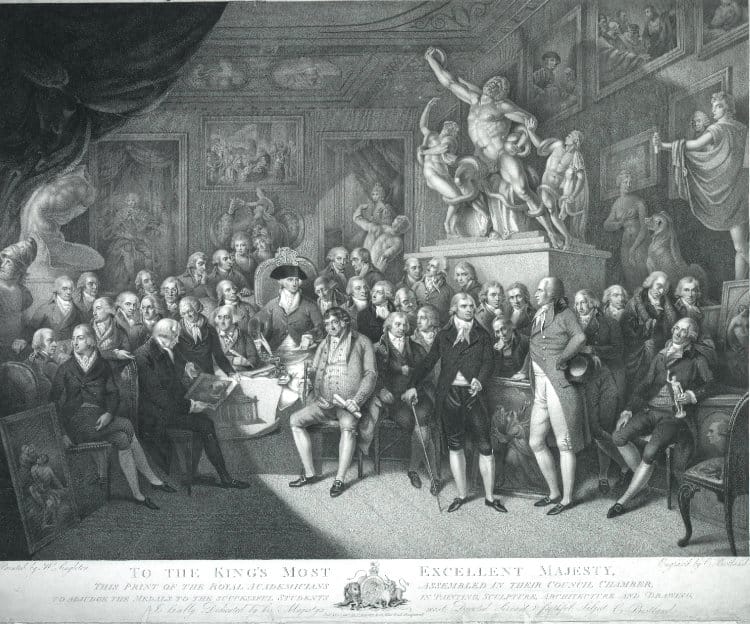

Five Essential Debating Skills
Debating is a lost skill, it seems? And that's no coincidence. I've been witness to both the UK and NZ curricula slowly but systematically excluding the vocabulary of intellectual debate; theoretical lens, ethos, proposition/hypothesis, rhetorical structures, false analogy (note that phrase), register or tenor, concession, refutation...etc. I'm confident that words and phrases like these, that were commonly used not that long ago, during my college and undergrad days, would be met with vacant stares by most young people today. Without the words of critical thinking, how can these skills develop?
Let's first re/visit the essential elements of every good quality debate. Teasing out the meanings of some of the vocabulary I list above, below are the five main points from David Charalambous' team's excellent resources on ReachingPeople.net. These reflective questions are proven to be successful ways to improve outcomes during 'difficult conversations':
- Is the argument relevant (not a generalisation)?
- Are the debater's facts incorrect? (it's not personal, it's the statement that needs correction).
- What explanation is provided (is it specific enough)?
- Does the argument have coherence (flows into, and is logical in similar contexts)?
- Is the debater focusing on an important point (explanation maybe correct, but something else demands higher priority)?
Alongside these debating tips (and there's more!) that we all need to practice - both on paper and with our voices - we could also be conscious (in this New Abnormal) of ways these debating strategies are often subverted to be used against us (ironically, even by those who we share ideas with, and support).
According to Prof Brian Martin, people seeking to expose wrongdoing often fall into seven common traps:
• Trusting too much (of others, or 'the authorities')!
• Not having enough evidence.
• Using the wrong style.
• Not waiting for the right opportunity.
• Not building support.
• Playing the opponent’s game.
• Not knowing when to stop.
The current global chaos we are living through desperately needs more courageous people to speak truth to power. But tragically, when trying to present a problem, through a 'dangerous question', our debating skills are not good enough. As Prof Martin reminds us, we have to try to think like those who are trying to silence dissent. Painful though that might be. That's because, many of those in positions of power, genuinely believe they are 'doing the right thing'. Ironically, sometimes our questions actually reinforce another person's delusions, rather than stimulating curiosity that could lead to change. And learning which questions to ask and when, is crucial to winning this Mind War (30 mins):
As Prof Martin writes in Whistleblowing: a practical guide documenting and exposing a problem also becomes more effective when potential solutions are also offered. So when carefully-worded questions, with solutions are repeatedly silenced, that could mean that bad faith is involved. What happens next may be outside our control, but we can still learn what to expect and have a plan in mind.
Here is Prof Martin's summary of the stages of standard responses after dissenters complain:
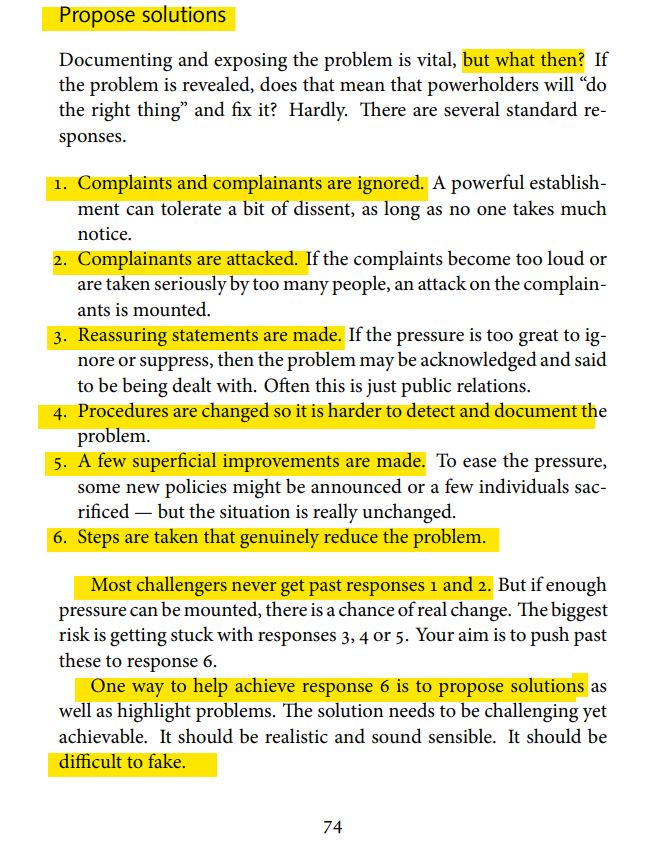
I have some useful examples to share, that provide evidence of how these debating tactics are deliberately subverted, in an attempt to silence dissenters - including these six standard stages Prof Martin describes. But that is the content of another article.
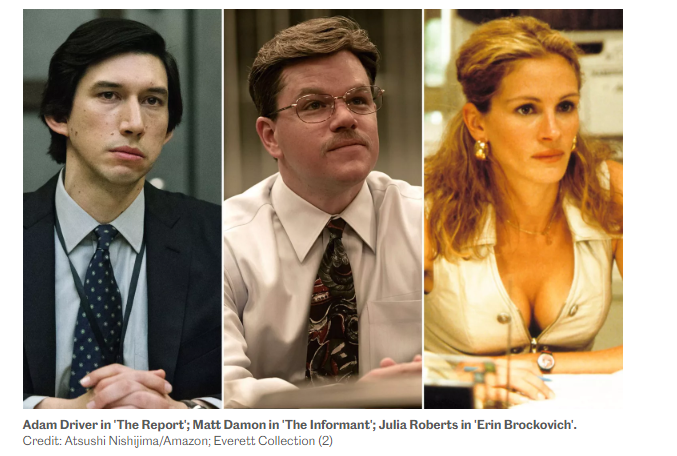
Over the years there have been plenty of books, movies and documentaries about whistleblowers and how powerful forces have tried to silence them. Do you have a favourite? Please comment below! But our knowledge of the Corporate Playbook and their PsyOps increases every day. And once we see that elephant in the room, we cannot 'unsee' it. Sharing this knowledge is essential, to overcome the global propaganda machinery.
Thank you for reading and sharing. You can support my research writing with a one-off tip HERE