
Peer Reviewing & Academia's Era of "Settled Science"
Publishing and reviewing journal articles and conference papers is a thankless task and getting worse
In today’s post, I reflect on an (anon) education article I have peer-reviewed this week, and a conference paper that I submitted, that was (of course) rejected. I’ve written before about the ways universities are utterly corrupted. But I’ve focused mainly on academia’s research grants, institutional bureaucracy and regulatory capture, rather than specifically published academic journals. So here goes.
If you are new to my Substack, please note my previous work that provides context to this post, for instance I’ve used case-studies like the one about an email I sent to purple-haired Kiwi-covid ‘expert’, Sioouxzsiee Wiles:
 Ursula Edgington, PhD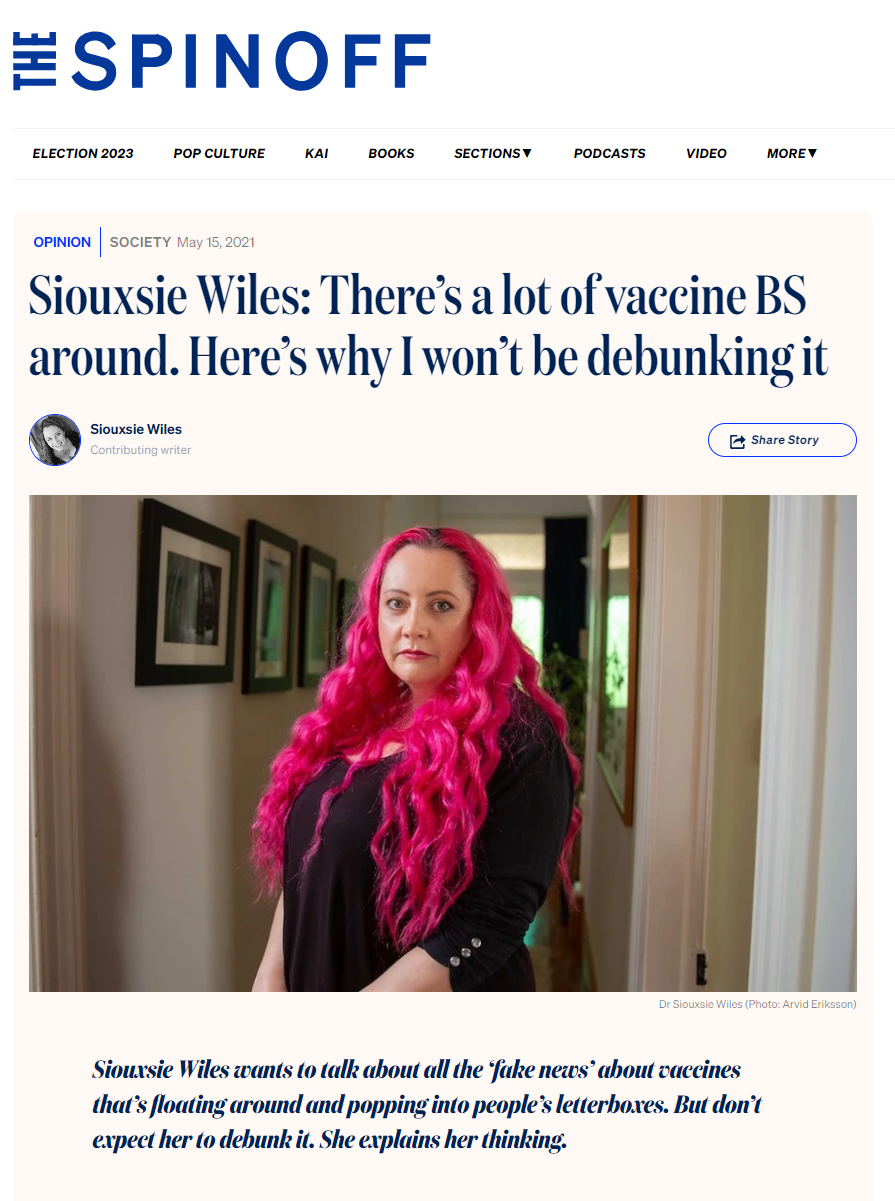
..And the purple-haired expert was one of many captured individuals I wrote about here, when they promoted the illusion of consensus about covid:
Ursula Edgington, PhD
…and I’ve also researched the shocking numbers of conflicts of interest that UK ‘expert’ and self-proclaimed ‘(fake)freedom fighter’ Prof ‘Gus’ Dalgleish has accumulated:
Ursula Edgington, PhD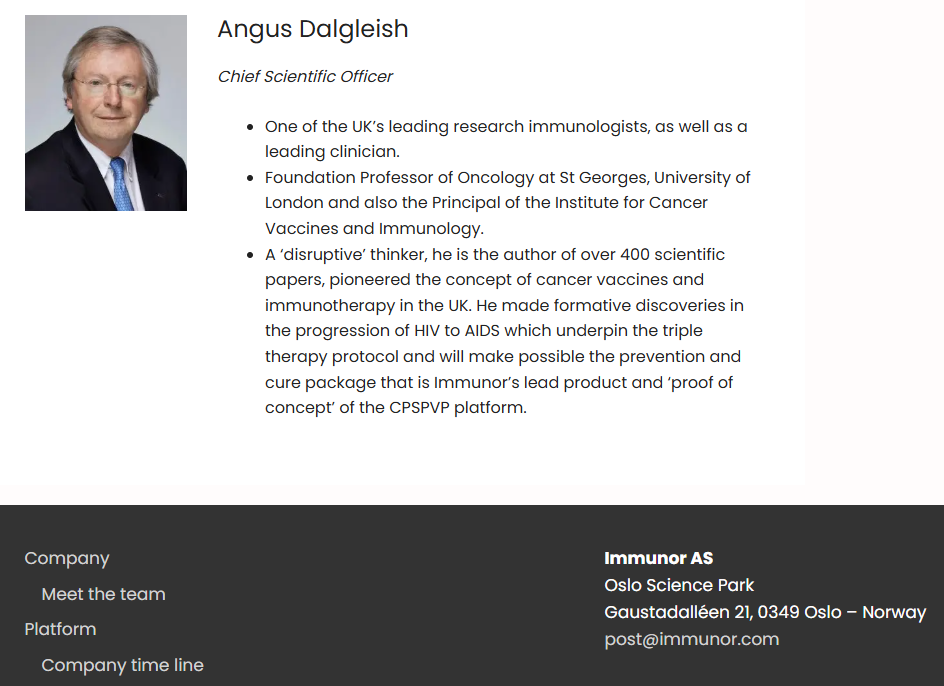
More recently, and on the same theme, I published two articles about the NZ covid inquiry pro-narrative submitter, Prof Graham Le Gros of the Malaghan Inst at Victoria, University of Wellington:
Ursula Edgington, PhD
Peer-reviewing journal articles
So now let me turn for a moment to the peer-reviewing process. Remember this is usually completely voluntary and without any financial benefit. For those unfamiliar with this world, let me briefly explain (only slightly tongue-in-cheek) one of the ways this happens in our New Abnormal World:
Professors needing to push a specific narrative (or product/service) particularly if it’s a profitable spin-off-newly-patented ‘innovation’ (either in academic kudos and/or $$$) as a result of a PhD project, urge their student(s) to (re)write-up a paper promoting said ‘innovation’ (with themselves as a co-author, even though they have not written it).
Ethics Application(s) for the research being presented are already completed and signed-off by the University’s Committee with minimal investigation - all in the interests of moving at ‘The Speed of Science'. Box tick.
An appropriately-picked ‘high impact factor’ (IF) (‘acclaimed’ in terms of citing its own articles) Journal Editor (probably a past PostGrad student of said Prof) is sent a pre-emptive ‘heads-up’ email stressing the importance of a forthcoming submission (for their editorial career).
Editor makes the right cooing noises and receives said article, and identifies the ‘important’ names (eg past senior colleagues and/or a similarly-influential ‘experts’) are co-authors and that the editor him/herself is (thankfully) heavily cited in the article. [Mutual ego-stroking continues] Box ticked.
Article is anonymised (but not enough to make it less-than-obvious to an expert in that discipline area, who the authors actually are) and sent out to peer-review to those individuals who the Editor knows will:
provide a short, sweet and favourable review, so s/he can progress to publications with the minimum of time/stress, and
endorse them as a ‘good editor’ so that more articles are submitted/published, s/he can obtain a career progression and hence the Journal improves in its IF ‘rating’.
Academics, usually in salaried positions, with very little time between lecturing, meetings, meetings-about-meetings, marking, marketing, applying for research grant funding and writing their own articles, receive the article to peer-review and after a few months of putting it off, eventually log an exaggeration of the admin time taken to read and create a feedback report to the Editor.
Editor collates the peer-review reports and decides (regardless of the content of the said feedback) to request the authors make ‘minor submissions’ to their article and resubmit within a specified deadline.
Authors eventually get around to making these small amendments and corrections and resubmit the article, which is then accepted as is, or re-sent to the original peer-reviewers, or others - before being published in a volume of the journal a few months later. Job Done!
This whole process can often take many months, even a year, sometimes much more than a year. As you can see, it is costly in time and resources, outside the ‘measurable outcomes’ of any job description, and understandably, generally not highly-valued by many of those involved. Getting your first academic article published is an achievement, but it quickly become a hoop-jumping exercise that can be strategically played over and again.

And those articles which do not toe the line of whatever the pro-narrative of that discipline is? Instant rejection. QMU Emeritus Professor et al have written about this phenomenon at length, including the rescinding of already-published articles that are subject to ‘a complaint’.
The latest article I completed for peer-review was from an international educational journal that has a high impact factor (6.75 and rising) and is a multi-disciplinary volume. The article’s authors (I discovered from a little digging) were from an Eastern European institution, presenting quantitative research conducted in the USA. Strange. It was well-written (which makes a pleasant change) with no obvious signs of AI being used to create it (although no doubt the authors’ first language was not English and therefore I’d expect grammar was enhanced with it).
I’m often disappointed by the articles I get sent to peer-review. They can be lacking any theoretical framework, the methodology flawed and/or the quality of writing is poor. But this this article’s content I found shocking and bewildering. And I’d like to share four specific points from my peer-review report:
- the (anon) authors claimed to be able to distinguish (using their questionnaire) staff who were using ‘effective’ teaching and learning methods vs those using ‘ineffective ones’. There was no middle ground or accepted nuance to these strategies that they claimed were ‘letting students down’.
- even though the submission was to an international journal specialising in multi-disciplinary approaches to educational research, the article focused entirely on results from a small online statistical questionnaire.
- four times in the article, the authors referred to ‘settled science’ by claiming that certain teaching and learning methods were effective and others, not. The implication was that those using what they considered ‘ineffective’ methods were uneducated or even stupid. The authors made no reference to what research ‘suggested’, or areas of any ambiguity.
- the authors were from Europe, presenting research from the USA, to be published in an Australasian-based intl journal - yet made no reference at all to any cultural differences or cultural competence of the teachers’ strategies.
Were these significant weaknesses in an article the result of an academic desperate to get another version of his/her research published? Maybe. Is it possible that the authors simply hadn’t read the journal, or realised the audience or scope? Maybe. Why didn’t the Editor of the journal reject the article immediately upon receipt, recognising its inappropriateness for this audience? How much time is wasted by a freelance academic-in-exile like me, unpaid, reading articles that simply do not add any ‘new knowledge’ and exhibit a frightening naivety about the history, context, culture and political complexities of teaching and learning? The mind boggles.
- Will this article be published in this journal anyway, regardless of my highly-critical review? Probably.
Remind me again why I spend time peer-reviewing articles?
At this rate, it won’t be for much longer. But one rewarding aspect of this civic duty is including lots of otherwise-censored work in the peer-review report list of citations, including books for instance, and articles from We can at least try to chip away at the cognitive dissonance.
Ursula’s Writing Gets Rejected (again)
I couldn’t resist responding to a recent Call for Papers (CfP) from a ‘professional society’ I used to be a member of in the UK and BC: The Society for Research into Higher Education (SRHE):
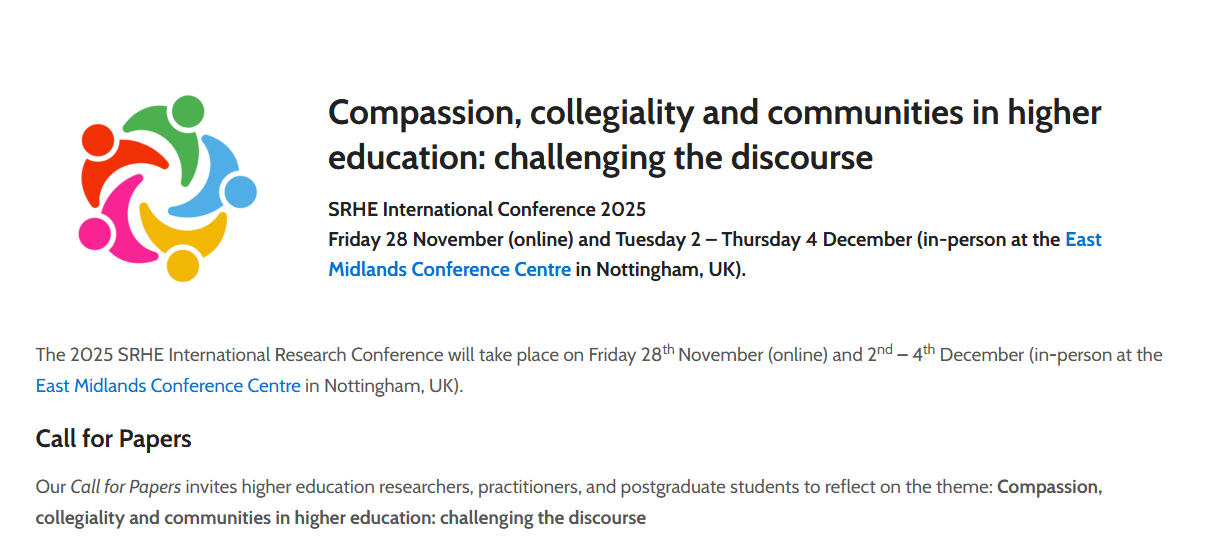
Calling for a debate around ‘Compassion, Collegiality and Communities’ in universities seems to cry-out for an inclusion of the Submissions to the NZ Covid Inquiry Royal Commission that I co-authored for the NZ Nurses Collective and NZ Teachers Speaking Out with Science (NZTSOS). Even though I knew it would be instantly rejected, I wrote and submitted it anyway. Here is the abstract:
Teachers and Nurses in New Zealand: The Harms from Stakeholder Capitalism
This paper questions the premise of this conference theme - highlighting the negative impact of stakeholder capitalism on academic practice, work, careers and cultures (Edgington, 2023). Academics, students, professional service staff and leaders are complicit in accepting and repeating specific discourses, simultaneously silencing dissent (Martin, 1999; McCrabb et al., 2021; Shir-Raz et al., 2022). These powerful forces prevent compassion, collegiality and communities in higher education, creating instead a toxic university (Fleming, 2021; Smyth, 2017). In turn, this impacts on graduates’ workplaces, where bullying and discrimination have been normalised for educationalists, healthcare professionals and others.
Set in the context of the covid era in New Zealand, an anonymous, mixed-methods online survey was sent to teachers and nurses whose employment was terminated due to the Covid19 Vaccination Order (‘mandates’). Participants (n=282) were highly qualified. Research outcomes provide evidence of how elements of stakeholder capitalism, including propaganda, censorship and conflicts of interest, prohibits compassion, collegiality and communities in academic workplace culture and beyond.
For those interested in reading it, here is the full paper (1200 words):
I would have liked to have been given an opportunity to present to the SRHE international audience, the findings from the Nurses Collective NZ, such as these extracts I published here. Or the Teachers’ Submission, that I published extracts from here. But sadly, possibly only the peer-reviewers saw it.
Unfortunately, as expected, my paper was rejected, with no feedback provided. Clearly the Conference title was disingenuous; the organisers don’t want to be educated about how universities are NOT the compassionate, collegial communities of practice they claim to be. But this won’t stop me writing about it and raising awareness. Why not Buy Me a Coffee so I can continue to try to wake people up? Thank you to all who have supported my ongoing efforts.