
NZ Red Cross and the Charity Grift

According to its website, the "New Zealand Red Cross is part of an international humanitarian movement that began in Europe in the 19th century in response to the devastating impact of war." And I'd like to begin by acknowledging the good that Red Cross do - undoubtedly, people do benefit and many are helped and supported by the staff, volunteers and services that NZ Red Cross provide.
In this article, I'll take a closer look at the NZ Red Cross because - as many of us have come to realise - charities are often not at all what they seem. Here's a snippet of NZ Red Cross claims, for those who aren't familiar (2 mins):
As Sonia Poulton recently pointed out in her exposé of the international and particularly the UK Red Cross entities, the perverse nature of these 'charities' is that their 'success' is measured by the continued 'need' for their services. So, just like the cancer charities, it's paradoxically in their best interest to maintain the status quo. In this case, it's the 'humanitarian response to the devastating impact of war'.... As this Military-Industrial-Complex tightens its grip on us all, it's more important than ever to recognise the entities, including the 'charities', which are an implicit part of its deceptive machinery.
For convenience, I clipped the segment of Sonia's research into the Red Cross here (1 hour):
Often, global, 'non-profit' entities are run by wealthy corporate individuals who have multiple conflicts of interest. The contrast is stark: there are a few senior executives benefitting from large salaries, properties and expense accounts, whilst grass-root volunteers give (as the Red Cross itself describes) "countless hours of their own time". Enormous amounts are spent on fundraising propaganda; coercing the already-cash-strapped public to donate from our tax-paid income. Next time you're asked to give - maybe ask some questions first?
The investigations into the dark-side of various charities are numerous, and I have published some of these exposé myself - for instance this one about NZ St John's which runs our ambulance service:
 Ursula Edgington
NZ Red Cross: some context
New Zealand Red Cross states its charitable purpose is to improve the lives of vulnerable people by mobilizing the power of humanity and enhancing community resilience. They aim to "achieve our mission through the delivery of our three core services pillars - Migration, International and Emergency Management - and through other community services."
The NZ branch of the Red Cross has been operating for over a hundred years:
When the First World War broke out in 1914 and our service personnel joined the war effort, many here called for Red Cross to be formally set up in New Zealand. Governor-General Lord Liverpool called a meeting, and in 1915 the New Zealand Branch of the British Red Cross was born. The first tasks were to collect funds, food parcels and medical supplies to send to troops overseas.
Red Cross groups worked closely with the Order of St John throughout the war. When it was over, the two organisations implemented First Aid programmes and set up vocational training for returned servicemen. They also provided relief during the 1918 influenza pandemic and the 1931 Hawke's Bay earthquake.
In 1932 the New Zealand Red Cross became a national society being officially recognised by the Government. Today, it is one of the largest providers of First Aid training in New Zealand, and operates more than 50 Charity Red Cross Opp' Shops across the country that "support local communities and raise funds for our activities." Let's interrogate those claims.
Income and Expenditure
The NZ Red Cross explains on its website how some of its programmes helping resettle former refugees are partially funded through Government contracts and grants. I find that claim to be misleading, looking at the details of those enormous grants. For instance, here is one contract released under OIA that reveals NZ's Ministry for Business Innovation Employment (MBIE) funds the Red Cross >$22 million over six years:
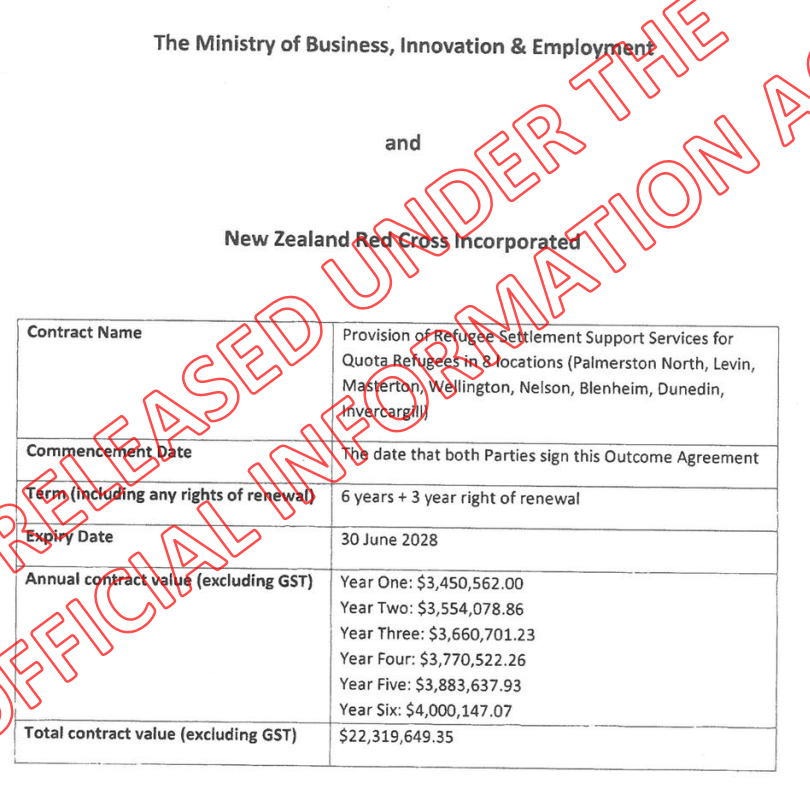
Another Government dept, the Ministry of Social Development (MSD) also have a $8 million agreement with the Red Cross. There are many others.
More domestically, the Meals on Wheels delivery service is (also) supported by volunteers and (substantial) funds from Te Whatu Ora - Health New Zealand. Also nationally, thirty-nine 'op' shops (not 'more than 50') are managed by approx 1,500 volunteers.
Like many large charities, its general annual income (e.g. in sales from their op shops and donations etc) is roughly equal to their annual outgoings (eg staff salaries, travel and expenses). So in 2024/5 for example, from the approx $55 million that went through the books for the Red Cross, approx the same was spent, including ~$35 million in 'payments to employees'. But focusing on this small element of a charities activities can be misleading, because...
The entity's current assets stand at approx $20 million, but its NON-CURRENT assets (that is, capital that is (very deliberately) 'tied-up' in land, property and investments etc) are over $120 million in 2024/5. The NZ Red Cross Foundation is a separate entity that manages these investment funds that support the NZ Red Cross operations. The market value of those total funds under management increased from $69.9 million (2023) to $74.5 million in 2024/5. Detail from current Red Cross accounts is in the below screenshot:
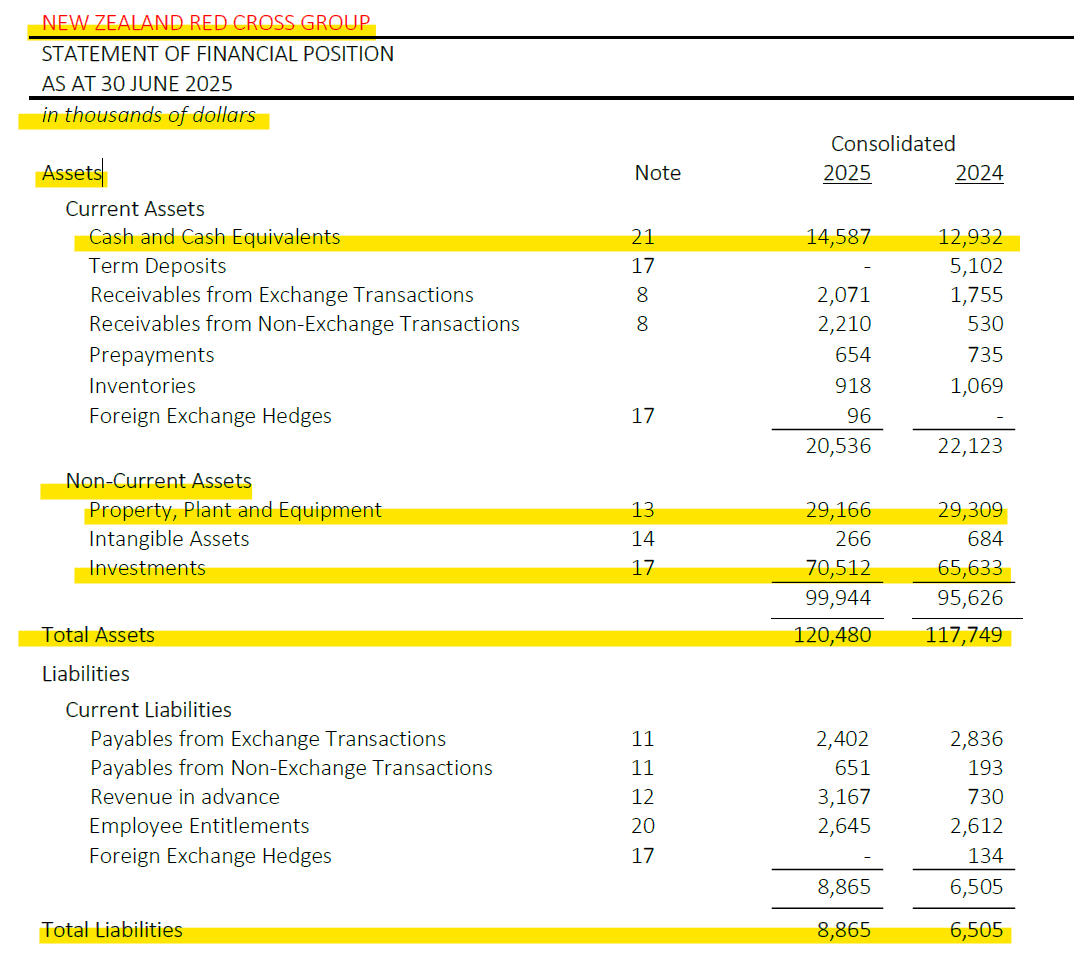
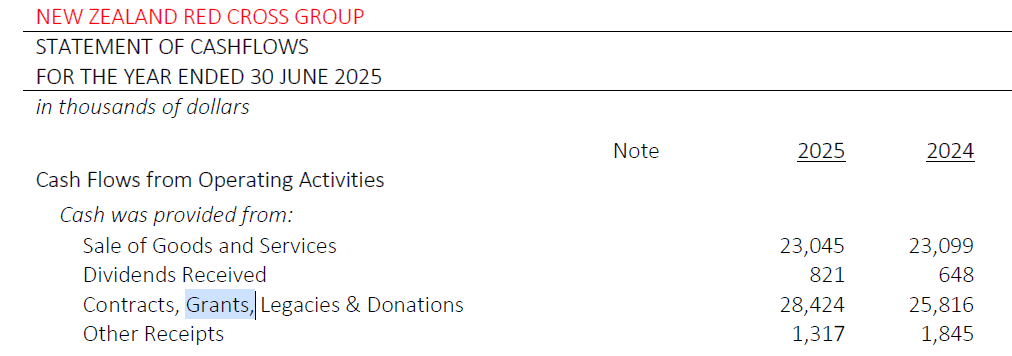
So we can see above that the total of current assets is $20,536,00 and the total of non-current assets = $99,944,000. In contrast, the liabilities are low, at around $8 million. This balance sheet seems to leave the Red Cross secure with well over $100 million. Does this seem like a lot of money when most of the work is carried out by volunteers? NZ is not a primary destination for refugees (as I'll show in a moment). Sales from goods and services (including Op shops, presumably) equalled $23 million and 'Contracts, grants, legacies and donations' are lumped together and total $28 million:
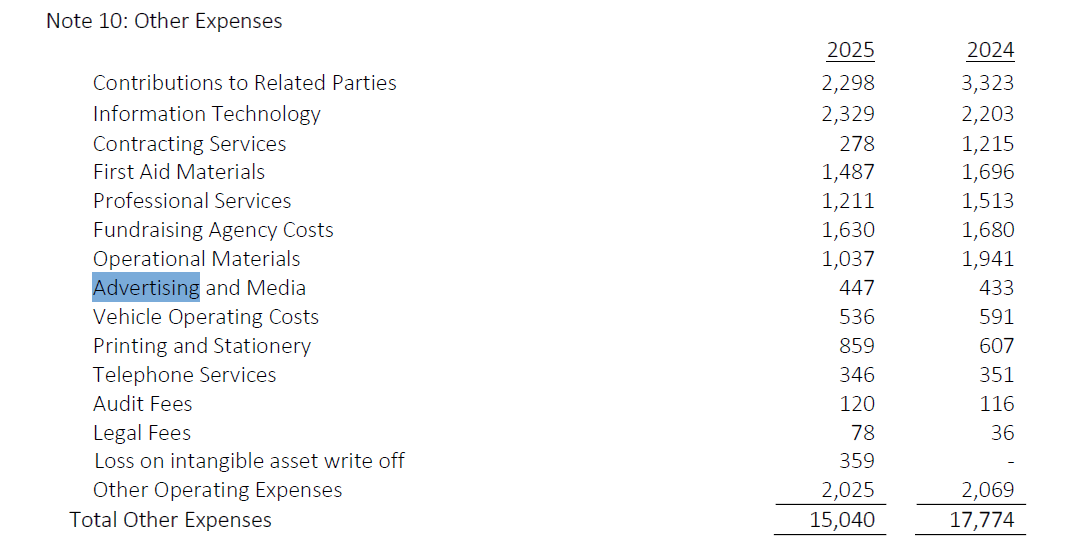
The Annual Accounts for NZ Red Cross is ambiguous in places. For instance, we can see that 'contributions to related parties' totalled $2.3 million, although it's unclear who those parties are? A similar amount was spent on 'I.T.' - again, not sure what type of IT that relates to (could it be surveillance)? A total of $447,000 was spent on advertising and media in 2025:
It was interesting to see that the numbers of trained volunteers [n = 869] providing support to refugees to NZ [n = 868] are on roughly a 1:1 ratio, which of course makes this a successful initiative. (I wish student:teacher ratios were like this too!)
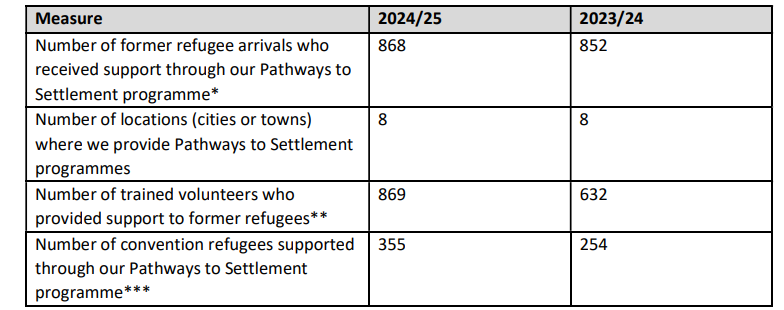
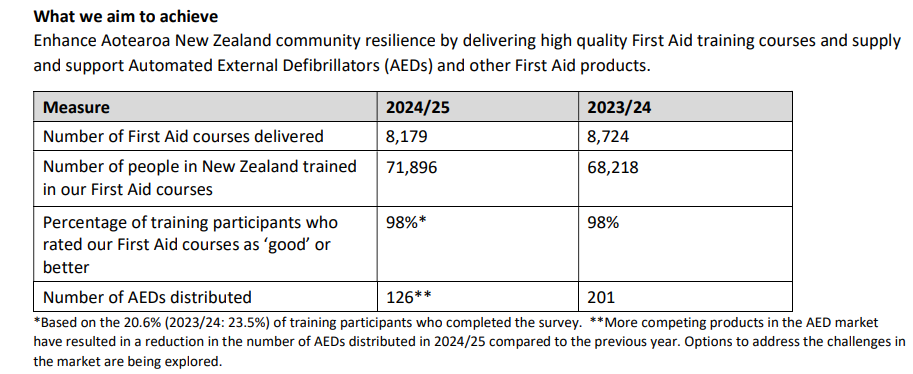
It was also interesting to read (see above screenshot from the latest Annual Accounts) that the Red Cross revenue from delivering first aid training and AEDs in the community has reduced - due to the over-supply in our small NZ marketplace. This again links to my previous research into St John's, which also provide these same services under the 'charitable' banner.
NZ Red Cross and Covid
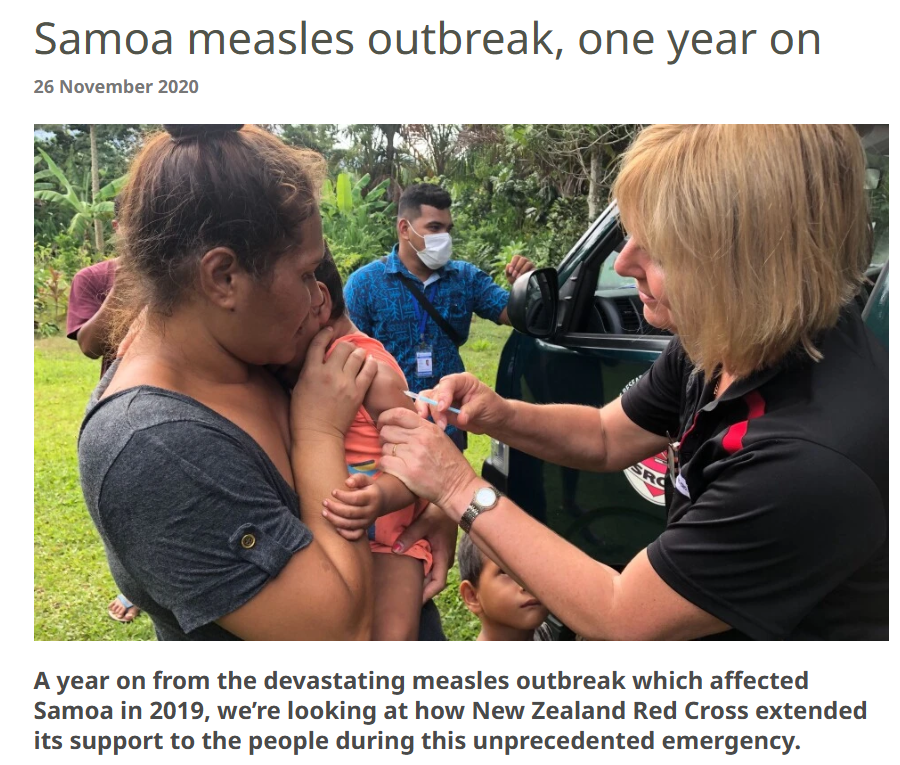
As I explained above, the NZ Red Cross is funded substantially by Government funds, including the Ministry of Health, MSD and MBIE and exists as a tax-exempt entity because of adherence to the NZ Government criteria. It should come as no surprise then, to learn that the NZ Red Cross fully complied with the various covid era totalitarianism, including applying the illegal 'vaccination mandate'. In fact, the NZ Red Cross were front and centre with the outbreak of measles in Samoa in 2020 and the subsequent inevitable 'vaccination' campaign:
And therein lies a whole other rabbit hole.
The NZ Covid-19 Government Subsidy for compensation because of the covid era 'response' was paid in the form of a Government Wage Subsidy, which the Red Cross stated was in excess of $3 million. In their Annual Accounts we can see that in 2020 the Wage Subsidy paid to the Red Cross was $2,488,000. Bearing in mind how wealthy the Red Cross is, with in-excess of $100 million in assets in NZ alone, this seemed an unfair claim - especially when so many roles at the Red Cross are unpaid? I wonder who that subsidy was for? In 2021 the Government paid a subsidy amount of $654,000. Yet in 2022 it was still being claimed: $61,000 in 2022 $64,000 in 2023 even in 2024, $7,000 was awarded to the Red Cross is covid era subsidy payments. Bewildering. And if you want to become a Red Cross volunteer today? Yup, get vaccinated!
People at the Top of Red Cross NZ
Let's now have a quick look at some of the individuals heading-up this 'charity' that has so much wealth and influence with Government:

Reuben Tucker is a banker trained at (of course) MIT and was appointed General Manager Institutional & Business Banking at banking giant Westpac in August 2022. He oversees Westpac New Zealand’s businesses on institutional, corporate and commercial levels, including agribusiness. As well as this role, and his role at the Red Cross, in 2023 he joined the Board at Cure Kids New Zealand’s largest charitable funder of child health research. When commenting recently on Linkedin about Westpac's recent Report into NZ healthcare he emphasised his support for PPPPs:
"...there are also other opportunities for the private sector to contribute more meaningfully, particularly in areas such as the upgrading and building of new facilities; consolidation of IT systems; and providing new digital equipment."
Indeed. And this statement makes perfect sense when we consider the contracts Westpac have with Government to supply the rescue helicopters, including the ones that shuttle patients between hospitals:

And Westpac ask for your donations of course, because there's no profit in banking.

John Dyer was appointed National President of Red Cross NZ in 2025 after a long career in the military. He served for over twenty years in the New Zealand Army, in training, management, and command roles. Later he was a United Nations military observer and was awarded the NZ Gallantry Decoration for an act of bravery in 1999 in Sierra Leone.
Warren Johnstone is another Board member and also an auditing accountant at financial corporate BDO, a company that specialises in AI-enhanced bespoke digital solutions for their tax-savvy customers. Incidentally, BDO was set up after the amalgamation of Binder (UK), Dijker (Netherlands) and Otte (Germany) accountancy firms, creating a US$15 billion global giant operating in over 150 countries. Humanitarian services for vulnerable people needs AI Fintech to oversee operations. Not.
Perhaps conscious of the image of their Board, Dan Wilden was appointed to the Red Cross 'National Youth Representative' last year. I expect he has a challenge on his hands in those meetings because the names listed on the Executive Board make it clear how the Red Cross operates a revolving door of power for senior Government roles. For instance, Sarah Stuart-Black (who signs the Government contracts) was Director of Civil Defence Emergency Management in the National Emergency Management Agency (NEMA) and its predecessor, the Ministry of Civil Defence and Emergency Management. Apparently she was central to the legislative and policy changes that include the Emergency Mobile Alert system (that no-one can opt out of). Here's Sarah giving a presentation to the Ethnic Advantage conference last year:
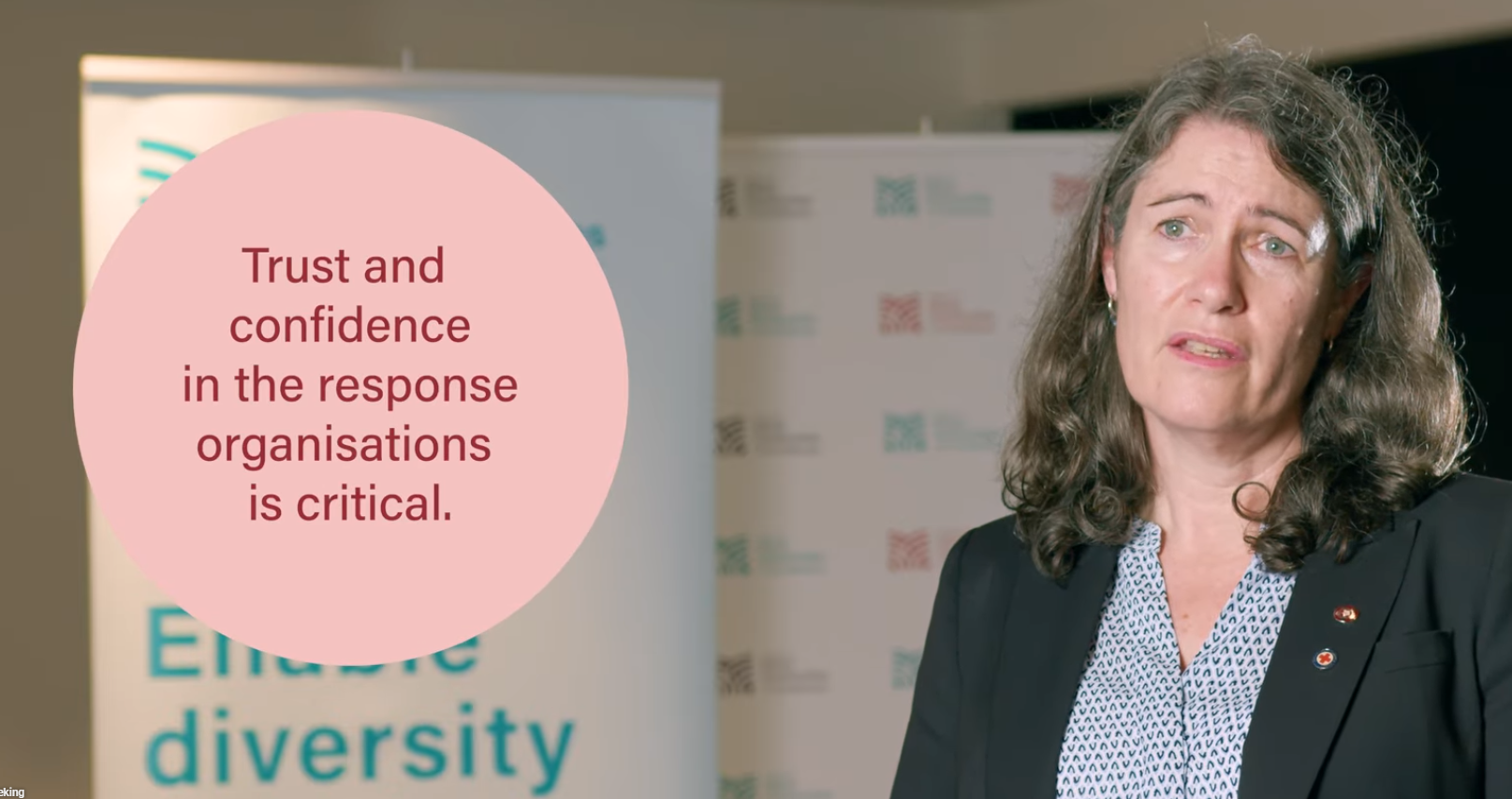
It's difficult to imagine having any trust or confidence in ANY NZ entity, especially 'response organisations' like the NZ Red Cross.
If you haven't yet listened to Sonia Poulton's research on the wider issues of the Red Cross, I highly recommend it.