
Mandated Healthcare Workers: Submission to the Covid Inquiry by The Nurses Collective NZ
Extracts from another Submission (Full Report is a PDF at the end) to the NZ Gov Covid Inquiry from Healthcare Professionals including Nurses, Midwives and Carers.
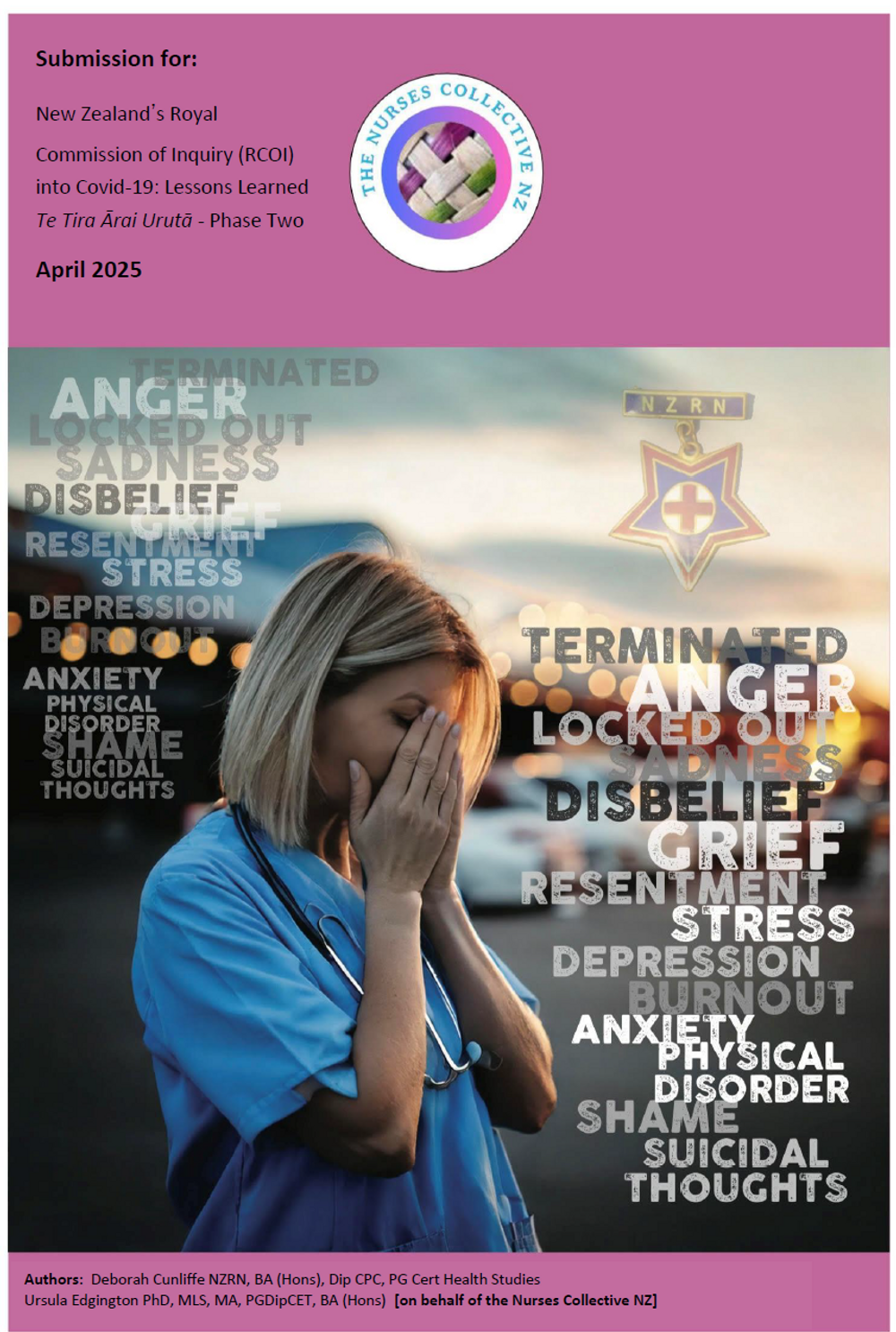
This is for the PUBLIC RECORD. I have taken some extracts from the full report - for references and further details, please see the PDF attached at the end of this post. Feedback and further info very welcome. I am not on social media. I was banned from Linkedin. Thank you for RESTACKING and/or sharing this post to raise awareness of these censored voices.
****************************************
“My shift ended at 11pm. At 11.05pm I walked off the ward. I didn’t turn back; I couldn’t turn back. I knew no-one was there to say goodbye. No cards, no flowers, no cake. Just a general feeling they were glad to see the back of me. To them, I represented someone to be fearful of.” [Mandated surgical nurse of 8 years]
The era of government responses to covid was for many nurses and other healthcare professionals (HCPs) the most divisive and traumatic periods in modern New Zealand nursing history. No matter what personal beliefs individuals held regarding the ‘lockdowns’, the 'safety, efficacy and effectiveness' of the vaccine or the ‘legality of the mandates’, it is evident that few nurses escaped this era unscathed. Whilst thousands of nurses, carers and midwives applied for various exemptions from the Vaccination Order, hundreds lost their hard-earned and much-loved roles, hundreds more were coerced to into taking the covid vaccine, and an unknown number live with bereavement and/or vaccine injuries. Findings from this survey indicate that wherever individuals see themselves positioned along the continuum of compliance or dissent, many still struggle with the repercussions of their decisions…
The Nurses Collective NZ was established in 2021, originally as Nurses for Freedom NZ. Our initial objective was to support each other, as mandated nurses, carers and midwives, to return to work following the covid era, and specifically the healthcare workers’ Covid-19 Public Health Response (Vaccinations) Order 2021 mandate. Having largely achieved this objective, the current focus is to address other issues affecting safe, ethical, effective and autonomous nursing practice. This includes giving a voice to those negatively impacted by the covid era policies and guidelines, who may still feel alienated and even blacklisted from the healthcare sector.

Our submission, presents results from a recent online survey of our members. Survey outcomes revealed evidence of the physical, professional and emotional impact of the covid era vaccination mandates on nurses, carers and midwives during the period February 2021 and October 2022. There have also been serious, longer-lasting consequences, as explained throughout this report…….The participants articulated extremely personal, emotional situations in their responses to the survey questions. Understanding the intense concerns from participants who wanted to maintain their anonymity and privacy, all identifying factors within the raw data were redacted prior to analysis, to avoid any possibility of linking data with individuals. Other potential identifiable aspects of the data (e.g. locations) have also been redacted or the outcomes consolidated with sensitivity to the results.
The Nursing Council of New Zealand (NCNZ) Competencies (2007) and Code of Conduct for RN’s describe skills and activities undertaken by this cohort of professionals. Both the Code of Conduct and Competencies for nurses and those applied by midwives are holistic and contextual, reflecting all aspects of their lives to include experiences before, during and after the mandates. To mirror these broader themes therefore, and to assist the RCOI Commissioners with a deeper understanding of the impact on mandated nurses, carers and midwives, this submission integrates four domains which broadly align with NCNZ Competencies (2007), which are:
1. Professional responsibility
2. Management of nursing care
3. Interpersonal relationships
4. Interprofessional health care & quality improvement.
Each of the narratives used to support the evidence in this report, has been chosen for inclusion because of connection(s) with one or more of these four domains….The Code was published thirteen years ago in 2012, and is framed around four core values – respect, trust, partnership and integrity – and eight primary principles. It is a practical document that clearly describes the conduct expected of nurses. Without the public's trust and confidence in the profession, nurses cannot fulfil their role effectively. “This means that what is personal and what is professional will inevitably overlap.”
Most respondents faced ‘the worst time of their lives’ during covid-19; some re-lived the trauma by completing this survey; ALL maintained their professional competencies and Code of Conduct during the pandemic and proved not only their worth to be called ‘Registered Nurses/Midwives’ but the right to serve their patient populations especially when others failed to carry out their professional obligations.
A Note on Methods
The self-reported statistical and narrative data collected in this anonymous, online survey was commissioned by The Nurses Collective NZ…. Responses were received from 142 nurses, carers and midwives gathered via publicly available social media channels 3rd- 17th March 2025. The survey included multiple-choice options as well as an option for some free-text responses. Some members also sent longer responses via a secure email address set up specifically for any queries.
NB The quotes used throughout this report were genuine responses within the survey. Because the respondents were anonymous, the quotes used are not necessarily directly attributable to specific individuals. Therefore, where quotes are used, we have attached these to an appropriately representative profile of a member; this ethical approach upholds the integrity of the data and allows insight into the members’ views and experiences, without compromising the confidentiality of the participants.
Some Context
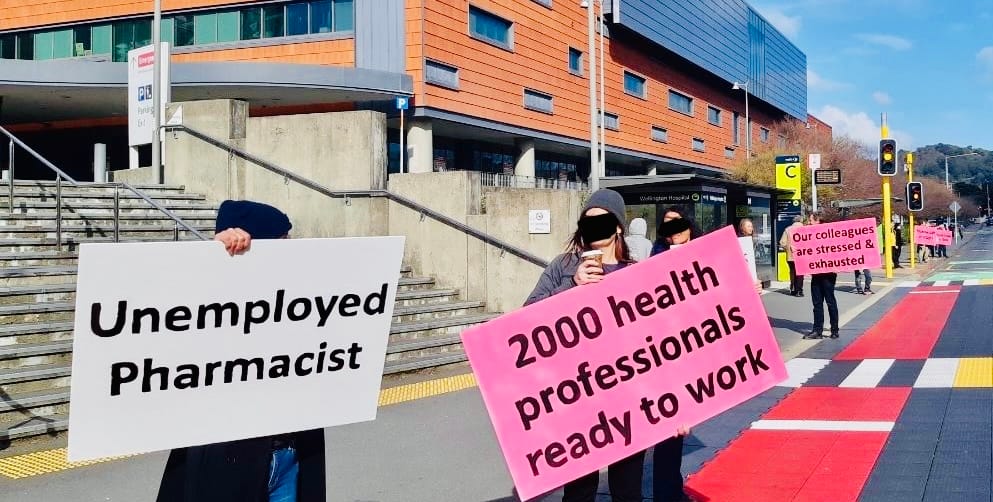
On 25th October 2021, the Covid-19 Public Health (Vaccinations) Amendment Order (No.3) was enacted (see Appendix 2) The interpretation of this legislation at the time, suggested that all health and disability sector workers should be ‘fully vaccinated’ (two doses of the injections). Subsequently, in November 2021, 621 Registered Nurses, Registered Midwives and Carers were terminated, stood down or resigned from Te Whatu Ora.
200 independent Lead Maternity Carers (LMC’s) and 500 IDEA Support workers chose not to take the covid vaccine. Hundreds, maybe thousands of others from organizations also chose not to comply. Many more simply ‘walked away’ from their vocations or voluntary positions, sadly, none of these are captured by OIA requests. Nurses tell us they ‘walked away’ often because they saw the scrutiny, hatred and professional isolation their colleagues were subject to. The reasons for this division are described in more detail below.
Retrospective Official Information Act (OIA) requests (e.g. Ref H2022009529) reveal that thousands of public sector workers impacted by the mandates, applied for a temporary exemption (six months) under the law at that time. Yet despite the reality of the situation, the ongoing rhetoric persists that ‘only a few were impacted’. This false narrative is unhelpful if the fractured nursing workforce is to recover from the vaccinated v unvaccinated debate. To date, Te Whatu Ora have done little to manage this scenario. Instead, despite the risk/benefit analysis, it appears that the authorities consider the covid vaccination could form part of the ‘standard suite of vaccinations going forward.’ Considering the weight of evidence that would usually contradict this decision, their reasons remain unclear.
Exemptions for the Mandate
Applying for an exemption took significant courage not only due to the bureaucracy and lack of privacy involved, but also because of the stigma and abusive treatment mandated nurses were subjected to, from their employers, colleagues and the general public. Most requests for an exemption were either refused by senior managers within the staff member’s sector, or the application was later rejected by ‘the Panel’. It’s clear that senior leadership teams, who were not patient-facing; did not understand the true impact of losing experienced staff in their endeavour to enforce rigid application of a fluid and ever-changing mandate.
Over 8,000 HCPs were approved for an SSD and/or Medical Exemptions, but for unknown reasons, disproportionate numbers of exemptions were awarded to those who worked in the private healthcare sector. Within a few days, the option to apply for an exemption was revoked, leaving many staff members with no option but to comply, resign, or have their employment contract unfairly terminated.
Time has not healed the pain and division…
“I worked as a covid vaccinator and now suffer from profound guilt and anxiety in case I caused any injury to children or pregnant women. I was told it was safe and effective despite me questioning it all the way through. I feel absolutely terrible”. Mandated Vaccinator
In November 2025 it will be four years since the mandates were implemented. To date, many experienced nurses, carers and midwives remain unwilling or unable (physically and/or psychologically) to return to work in the health sector. Many have also lost trust in their employers and unions and the ability of government agencies to respect them, represent their views or protect them from potential harm. Previous New Zealand analysis enabled by data from Statistic NZ’s Integrated Data Infrastructure, Inland Revenue Department’s Employer Monthly Schedule and the Ministry of Health’s COVID-19 vaccination register was presented in a misleading way. This has caused nurses to be distrustful when responding to requests for information from outsiders and even to make formal applications such as seeking WINZ (welfare) benefits. For some, submitting evidence to the RCOI will be avoided because of potential (real or perceived) consequences…
Many legal and academic voices were […] voicing alarm at the Human Rights issues being eroded by these mandates. This did not include the Nursing or Midwifery Councils of New Zealand or unions. At this time there also remained no widespread awareness of the intense censorship and propaganda being employed in New Zealand and elsewhere….
Most nurses who failed to comply were stood down from the 16th November 2021. Few exemptions were granted on medical grounds, even for those with serious reactions to previous vaccines, contradicting the first tenet of healthcare to first, do no harm. To the best of our knowledge, no exemptions were allowed on religious or human rights grounds, despite numerous appeals for discussion and options especially relating to the role of human rights in an emergency scenario. For many mandated nurses these discussions took place with managers and HR staff in local hospitals, that is, until they were told they could no longer attend these meetings in person and were threatened with trespass orders. Despite medical conditions, human rights or faith-based objections, hundreds of nurses could not save their jobs and support public health measures.
Globally, the Behavioural Insight Teams (BIT)’s ‘Nudges’ were widely used during the covid era, and no-one was immune, including nurses, carers and midwives. Regrettably, many HCPs not only allowed themselves to be influenced but encouraged their patients to respond likewise, despite basic principles such as ethics, informed consent and the right of autonomous individuals to make rational decisions free from coercion. The result of ‘nudge’ tactics in New Zealand went over and above ensuring Kiwis bought into the narrative but also damaged reputations of those who dared to point out the seemingly obvious manipulation.
“… I was constantly being told to take the vaccine which constitutes extreme coercion & psychological pressure - through work & personal emails, people talking to me, the radio, the tv, mailers etc. I watched others being coerced and giving-in to the pressure or threat of losing their job. One person told me that getting the vaccine made them feel like they were assaulted as they did not want to consent but felt they had no choice.” Midwife of 11 years
Pro-vaccine messages (explicit and subliminal) were all-pervasive from social media influencers, celebrities and ‘experts’ many of whom had no more expertise than the ordinary Kiwi. ’Respected' clinicians in white coats, offered vouchers to impoverished communities, removed healthy alternatives and normalised what was, in fact, far from normal. Nurses, midwives and carers alike were misled into believing they were doing the right thing, even though, in most cases, this was tremendously at odds with their professional code of conduct and competencies.
“Intense pressure was placed on me to have an injection. The doctors I worked with were saying to patients within my [range of] hearing, that the unvaccinated should be rounded up by the police. One staff member suggested jabbing people as they walked past…” Nurse with 15 years’ experience…
Mandated nurses, midwives and carers entered 2022 with little hope. Having lost their jobs and income and with no support from their regulatory bodies or unions, they’d also had little, if any, contact from ex-colleagues and employers since being forced to leave a job they loved. In addition to the combined loss associated with losing jobs and professional identities, this cohort were also unable to enter into the collective loss and grief New Zealanders experienced during this time; trying to circumnavigate post-covid challenges and make sense of what had happened during this period.
“I lost friends, my business, the home I rented… I lived in a concrete garage with no money, no support. I went into major depression. I was isolated, mentally hurt, insulted by other health professionals, discriminated against…” [mandated midwife, 10 years’ experience]
We remind the Commissioners that like many other New Zealanders, even nurses that were pregnant or breast-feeding were not granted an exemption and felt forced to take the vaccine. Those who had specific medical conditions, where introducing any new intervention would ordinarily call for extreme caution, were told to report to Emergency and prepare to be resuscitated if needed. This inhumane policy ran counter to every aspect of nurses’ ethical, professional competencies and basic human compassion. How did our developed, democratic society allow this to happen?
Our Submission provides some valuable insights for the RCOI, that have not previously been investigated or reported. Namely the censored stories of those who did not comply with the mandates, or those who did, but later regretted their decision, for a variety of complex reasons. In summary, we have shown…
• The ways in which these nurses, carers and midwives were unfairly discriminated against, shunned, censored, shamed and bullied by their colleagues and others.
• Examples of how the previous conventions of informed consent were ignored and the procedures for attempting to obtain an exemption from the mandates were flawed, corrupt or completely absent.
• An overview of the facts around the unethical manipulation and coercion that was deployed by the Government’s ‘Nudge Unit’, which used behavioural science techniques of propaganda, censorship and subliminal messaging to scare the population and force compliance.
• The majority of participants in our survey, all negatively impacted by the vaccine mandates, were highly qualified and experienced healthcare professionals, and therefore their absence was (and remains) a significant loss to the local communities they served.
• Many of the healthcare workers mandated out of their work have still not been able to return to that work. The qualitative and quantitative data presented here have shown this could be because of ill health, continued vaccine policies in some roles, a sense of distrust, shame or fear of a repeat of the traumatic experiences they lived through.
• The immense personal and professional costs of the Government’s covid era policy decisions, where individuals have been bereaved or physically harmed, families divided, colleagues lost valuable expertise and people have suffered trauma that remains unacknowledged and unaddressed.
• Our healthcare system is in crisis with considerable damage ongoing as a result of the covid era decisions and policies. Indeed, New Zealand society in general remains extremely divided and traumatised because of the unfair, unjust and unethical vaccine mandates.
• Nurses Collective NZ can identify and explain the many complex challenges experienced by member participants as highlighted in this report and despite the themes summarised above, a spirit of resilience and transformation continues to inspire us to have hope in positive outcomes.
The Nurses Collective Recommendations
The Nurses Collective NZ believes the covid era highlighted existing challenges in the NZ health systems. Our findings presented here furthermore underscore the need for structural and systemic change and adaptations in healthcare delivery and nursing strategy in general. We therefore suggest to the RCOI and regulatory bodies the following areas for immediate action, closer analysis, future research and review:
1. A formal Government apology needs to be published for the nurses, carers and midwives who were negatively impacted by the mandates, and full unconditional reinstatement offered for their prior roles without prejudice.
2. A formal non-discriminatory policy could be provided regarding the role of unvaccinated nurses, carers and midwives in supporting any future health requirements.
3. A comprehensive, independent review is required of the role of the Nursing Council and any future workforce status requirements such as vaccination policy.
4. The Nursing Council could work in partnership with other research entities to investigate the adverse event reporting from the nurses, carers and midwives who received one or more doses of the vaccine.
5. A confirmation of the respect of informed consent protocols when aiming to communicate health interventions within the workforce.
6. The rights of nurses, carers and midwives to prescribe to freedom of thought, speech, opinion, conscience and religion regarding vaccinations.
7. A full review of the ethics of interventions via national and international Behavioural Insights Teams, including private consultants.
8. Health workforce analysis and review relating to the use of mandates in general.
9. Accountability measures for the failed duty of care towards unvaccinated healthcare staff by regulatory bodies.
10. The role of Te Whatu Ora in taking reasonable steps in accommodating unvaccinated nurses, carers and midwives once the mandates were lifted.
“No unvaccinated nurse will ever work for Te Whatu Ora [Health NZ] again.” Said S. McGlashan, Human Resources at Te Whatu Ora Wairarapa, Oct 2021.
“The mandates may have eroded trust in the government. Even after the mandates were lifted, the employment and earnings of unvaccinated workers never fully recovered” Mandated Carer 5 years
“Colleagues treated me like a criminal or just with apathy, like we had personally offended them. We were told the private hospital we worked at wouldn't apply for exemptions as it wasn't a "good look". The day we left they were putting up "100% vaccinated" stickers on the doors. Worked there for 7 years, no leaving tea, no thank you for working so hard. Kicked out, leave your swipe [card], clean out your locker like a bad secret, like I had done something awful like harm a patient. One day I was in charge on the ward, a well-respected nurse with many years of experience and not so much as a patient complaint - the next day I was told if I returned to my hospital I would be trespassed, and the police would be called. No one reached out and asked how I was, how I was going to pay my mortgage, send my children to school. It was just like I was banished.” Mandated RN 10 years
“I have lost faith in NZ Nursing Organisation (NZNO) for not supporting our right to choose or deny a medical intervention. It feels like society is divided into two groups who have an opposing opinion regarding the covid vaccinations.” Ex NZNO Member
“I lost my job for refusing the vaccination, I felt my rights were violated I felt helpless to do anything about it, NZNO was appalling. I felt coerced and then betrayed by them, I had to fight to get representation from them when I was to be served my dismissal, when in a vulnerable and grief-stricken state”, Ex NZNO Member
“I was aware of many colleagues who were not allowed to return to work, they were effectively fired with immediate effect. Conversations in the workplace were tense, covid discussions took place frequently but there were many opinions and some people who became aggressive and bullying to get their point across. My husband and I had similar viewpoints but I was bullied and belittled by him in order to toe the line and get the vaccine so we could pay our mortgage, even though neither of us wanted it. Some friends and family didn't want to know me after I had it. I felt that I could not freely make my own decision about whether or not to vaccinate, and I felt my privacy was breached by having to share my vaccination status with all and sundry. I was damned if I did, and I was damned if I didn't.” (Vaccinated nurse, 25 years’ experience)
You can read the full report (83 pages with full references and graphs etc) at the PDF included below. THANK YOU for sharing this Article and/or this Submission with anyone you think would benefit from a Truth Bomb.
Many generous readers have made a one-off donation recently and you can too so I can pay it forward to nurses and teachers who need support. Thank YOU so much!