Lost in a Generation: the truth about WW2 and propaganda theory
Personal reflections - on reading another Nazi-era autobiography and my own family connections to that era.
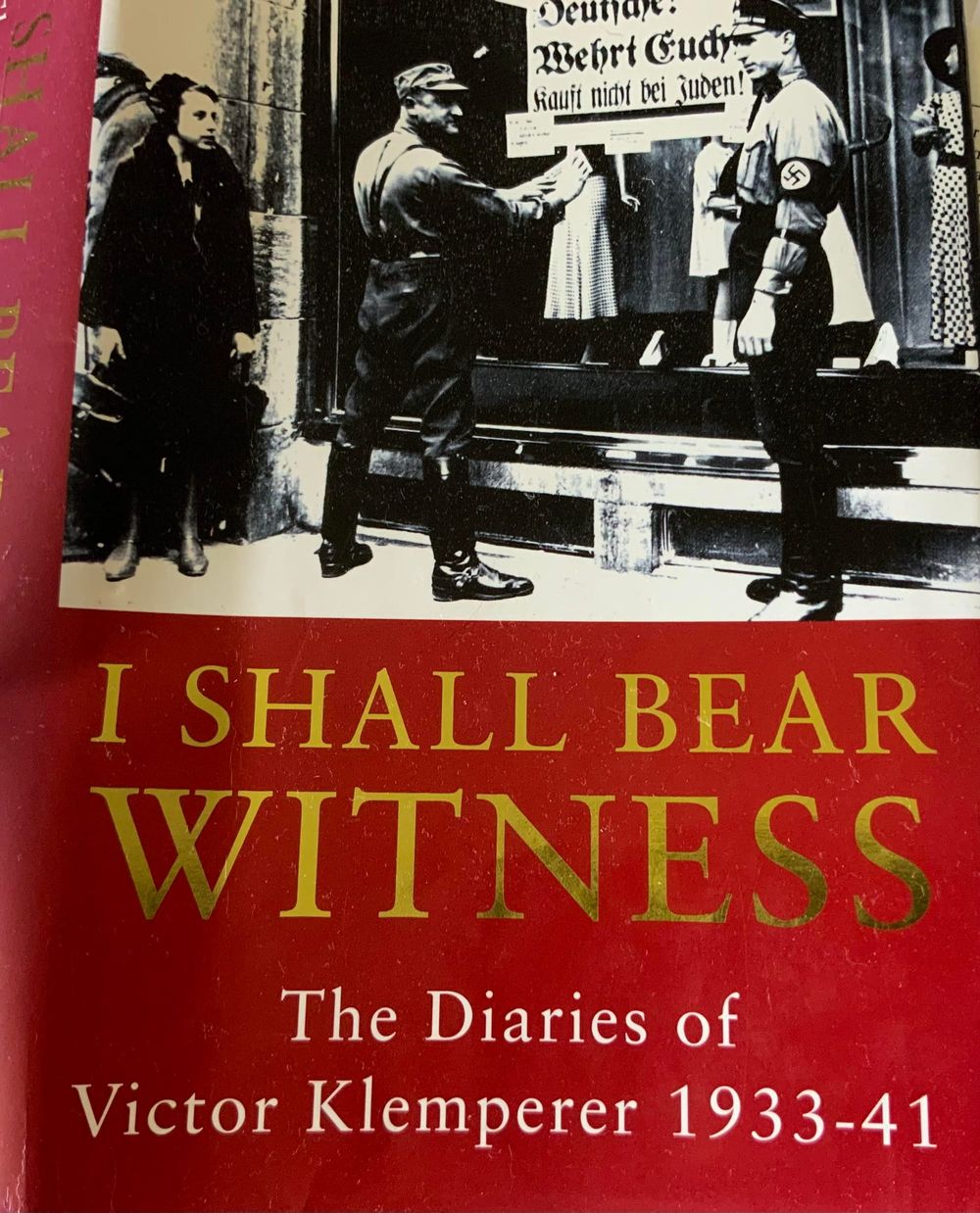
I’m just finishing another book recommended by in one of his lectures about propaganda theory: “I shall bear Witness”: The Diaries of Victor Klemperer 1933-1941.’ As the translator explains:
“The Diaries […] chronicle in unparalleled detail the progressive elimination of every private space, the arbitrary cruelty towards those whom the regime defined as Jews, finally the operation of an opaque apparatus of extermination, working slowly, stretching out time to impose an agony of anticipation.”
There are profound parallels between this prologue to the holocaust and the dystopian world we are living through today. But as an educationalist, I’m left wondering:
· Why didn’t we learn ANYTHING about the psychology of totalitarianism at school? (honestly, I was a fairly bright kid, I’m sure I would’ve remembered?)
· Why weren’t we provided with insights from those (still alive at that time) who had witnessed the groupthink, propaganda and mass formation in (for example) Nazi Germany?
· How could ALL my past teachers (and I moved schools A LOT throughout my childhood), especially my history teachers, NOT have prioritized this knowledge in their lessons – or at least given some hints?
· And later, why was there nothing taught in Teachers’ Education classes or postgrad?
In those times (1970-80s) my (British) teachers had much more flexibility than they have today. There was no distractions of tech and much less bureaucracy. I know, because not only did I live it, I’ve subsequently studied and published about those changes, in detail. Yes, lots of time was ‘wasted’ in play, but we were given lots of learning opportunities back then, curiosity was largely encouraged - in stark comparison with the woke agenda and lack of focus and discipline in schools today (especially here in New Zealand’s education sector, which heartbreakingly is falling further and further behind every year). Importantly, a large part of this failure for the next generation is because the fundamental and crucial skill of reading has been sacrificed to the God of ‘convenience’ i.e. technology along with an apparent total ignorance of the inevitable addiction to it. BTW I discussed this topic with the New Zealand Initiative recently (30mins audio only) here:
I’ve learned over the past four years that there’s actually stacks of literature – voices from the past – trying to warn us about today’s tragic situation. And I’m not just talking about the BigPharma exposés like the Netflix docos about Oxycontin or Fentanyl.
More recently published, Prof Nathan Stoltzfus, Advisory Chair, Genocide, Holocaust and Disaster Studies at the Council for Global Cooperation explains in his book Hitler's Compromises: Coercion and Consensus in Nazi Germany:
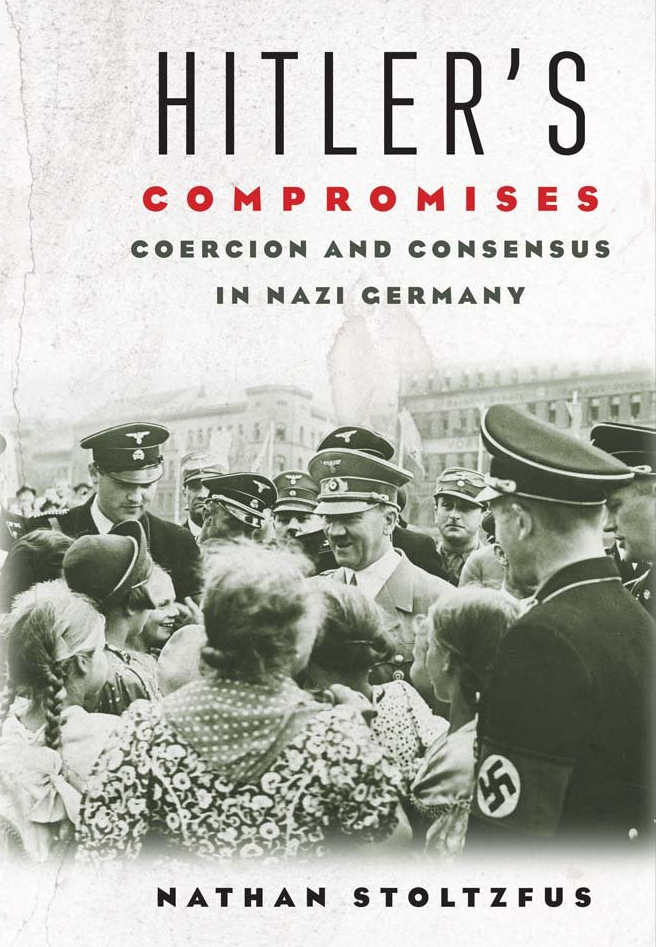
Hitler sought to convince the German people to believe in Nazism so they would perpetuate it permanently and actively shun those who were out of step with society. When widespread public dissent occurred at home—which most often happened when policies conflicted with popular traditions or encroached on private life—Hitler made careful calculations and acted strategically to maintain his popular image. (from the book, my emphasis)
But it wasn’t only Hitler of course, he had a skilled team of ‘Nudge Unit’ equivalents around him, and the ordinary people carried out their evil work “just doing what I’m told”…Highly recommended (1 hour) doco about this very topic here:
Going back to Victor’s diaries, these make fascinating reading, not least because they were never designed to be published. And because he was a journalist and an academic of language and history, he presents a unique insight. He describes the practical realities of those everyday matters, going to dentist, fixing the car, doing the dishes, between the ‘slowly boiling frog’ atrocities of the Nazi empire. That roller-coaster ride that we are on, trying to keep a balance between living and truth-telling, preparing for an unknown and enjoying life, music, gardening…while WW3 rumbles on in the distance.
Over many years in Victor’s diaries, the reality of the WW2 situation grows more frightening for Victor and his family. He gets fired from his job at the University in 1935. He occasionally buys a newspaper to ‘see what lies they are printing this week’. He gets into debt. Another day he is told he can’t enter the Reading Room of his local library. Another day he falls out with a close friend because of how fervently his friend believes the propaganda - that ‘Hitler is a good leader’. Many of his friends and family move overseas ‘before it’s too late’ as they put it.
And so on, until….until.
Until it is too late, and the 160,000+ Jews like Klemperer, still ‘waiting’ (for a saviour who never came?) were trapped in Germany and a new law forbid them from leaving.
Well, we know how it ends.
And now we also know how it begins again.
If there’s one thing we must focus on in our parallel communities it’s teaching the children Propaganda 101. And the only way to do that, is by reading books, I mean actually hard copy, published texts. As the translator of Klemperer, Martin Chalmers, writes:
“People (during the 1930s-40s) put down on paper what they could not say openly. In Germany, as elsewhere, many diaries were published in the years immediately after 1945; then later there were numerous autobiographical accounts, the number increasing once more in the 1980s and 90’s as survivors of the earlier period took stock of their lives.”
People felt they could not say certain things openly - they self-censored. For fear of shame or other consequences…. It wasn’t easy back then, to get an audience and support. Today podcasters gain massive audiences and as has pointed out, it was one of Joe Rogan’s long-form conversations that chipped away enough of his wife’s cognitive dissonance to allow them to reconnect. That’s why passionately promotes Truth Speech as a way to challenge totalitarianism.
To go back in time, just a quick search on any bookseller’s site/shop and you will find hundreds, maybe thousands of historical records detailing the everyday lives of those caught-up in the Nazi era. I encourage my students to do this; seek out these books.
One of these books, by Kiwi (later Prof) John Borrie, includes details of my own maternal (British) Grandfather, Cyril Hamersma, (an artist) who was, like John, in Service in a Greek hospital when they were captured by German forces on 1941. John was a newly qualified surgeon from Dunedin, NZ. (You see how everything is connected?) Cyril was a British private and served with the Royal Army Medical Corps in Greece. Both men spent most of WW2 as a POWs in Stalag VIIIb.
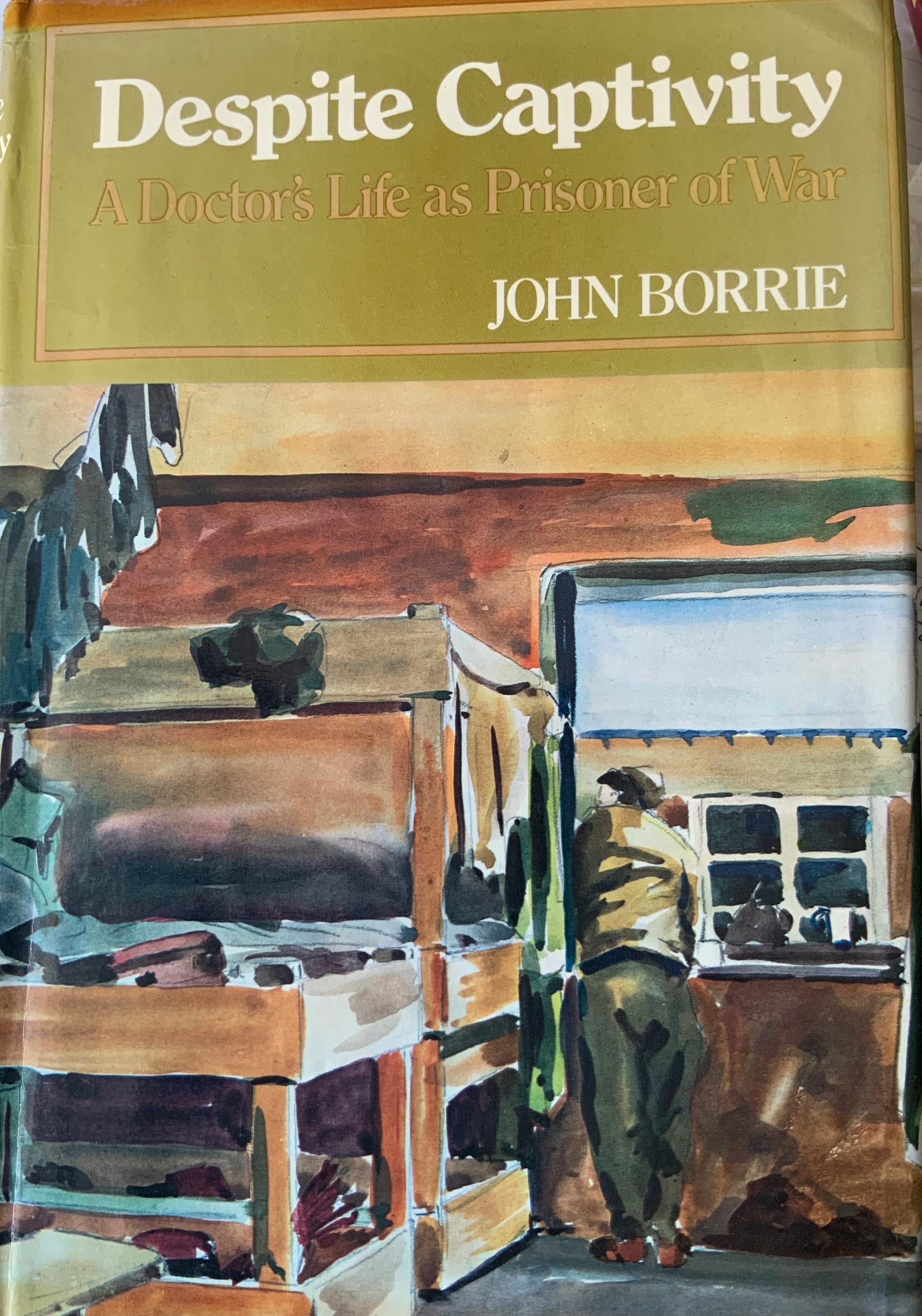
The Imperial War Museum has an extensive archive of these artefacts, and as the common story goes, it was sadly only after my Grandfather’s death (1994) that I discovered the extent of his wartime experiences and paintings through reading this book and listening to his (tape) recordings through the Imperial War Museum’s Oral History project, now available here as part of a large digital collection.
Incidentally, I’m sure both the ‘Prof’ (as John was later known) and my grandfather would be horrified (for different reasons) to discover today that the University of Otago is not only totally captured by BigPharma, but that now our Ex-Finance Minister, Grant Robertson, with zero experience or quals in Higher Education, has been appointed its new VC. Urghhh!
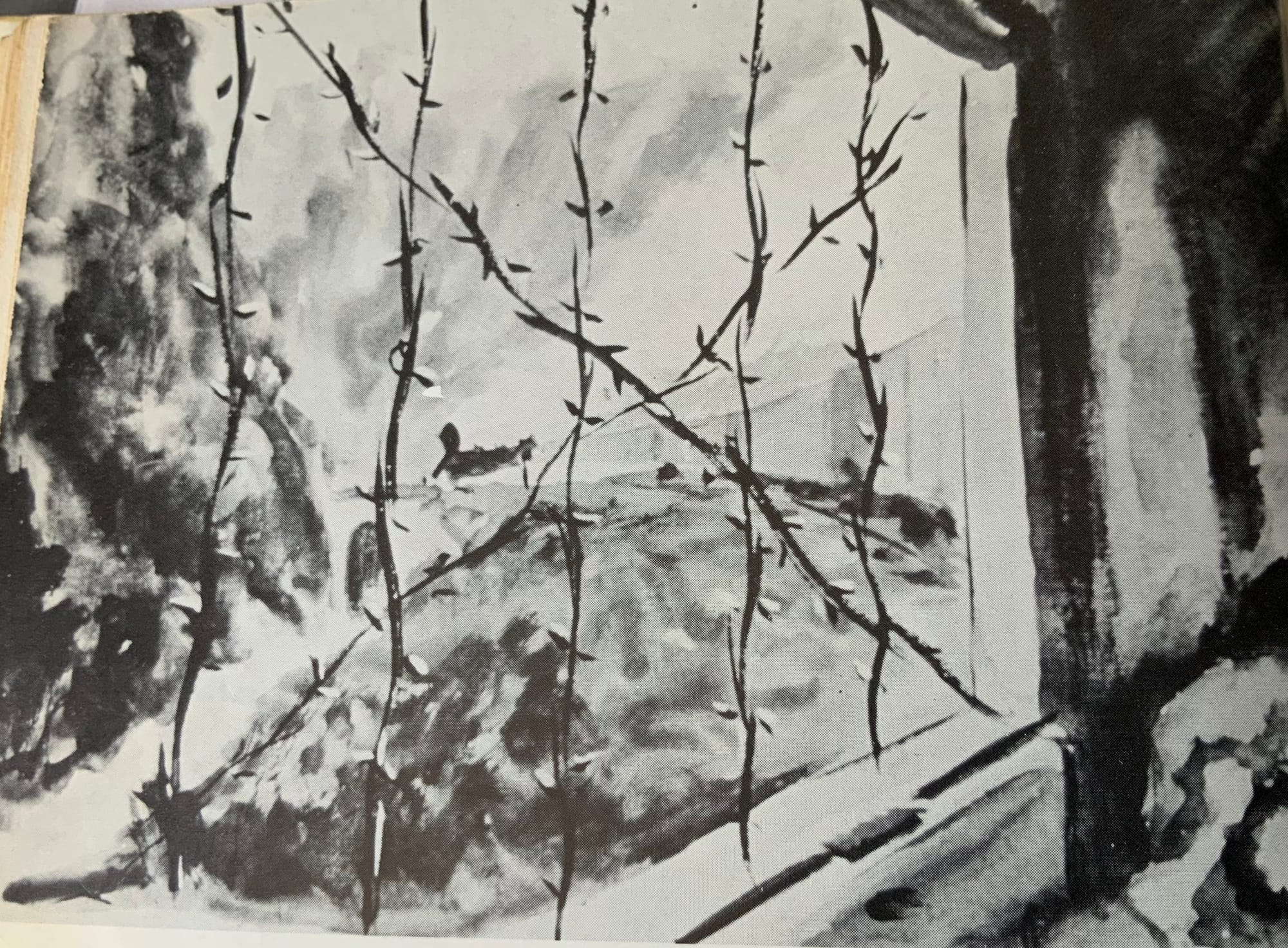
When the Internet first became commonly used all those years ago, tracing family history was the most popular hobby for many amateur researchers. I have to wonder what might have happened differently in the covid era, if we had all focused our attention less on our personal heritage, and more on the psychological warfare so many of our grandparents and great-grandparents were subjected to.
And most importantly, what clues could we have picked up so we could learn from their experiences today?